Haryana CM Office to Form Natural Farming Committees in All Districts
Synopsis
The Haryana government will form 'Prakriti Shri Ann Prerak Kisan Committees' in all 22 districts to guide farmers toward natural farming through direct field-level outreach and government-farmer coordination, the Chief Minister's Office announced on 9 July 2026.
Key Takeaways
The Chief Minister's Office of Haryana announced the formation of Prakriti Shri Ann Prerak Kisan Committees in every district of the state on 9 July 2026 .
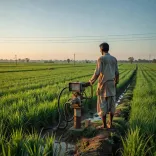
The committees will operate in all 22 districts of Haryana, reaching farmers directly at their fields.
Their mandate includes direct dialogue with farmers, motivating adoption of natural farming, and strengthening government-farmer coordination.
The move builds on the Paramparagat Krishi Vikas Yojana launched by the Government of India in 2015 to promote organic and natural farming clusters.
Haryana's wheat-rice belt faces long-standing challenges of soil degradation and groundwater depletion from chemical-intensive cultivation.
Similar district-level natural farming outreach models exist in Andhra Pradesh , Gujarat , and Madhya Pradesh .
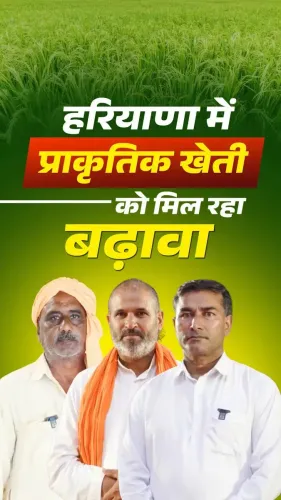
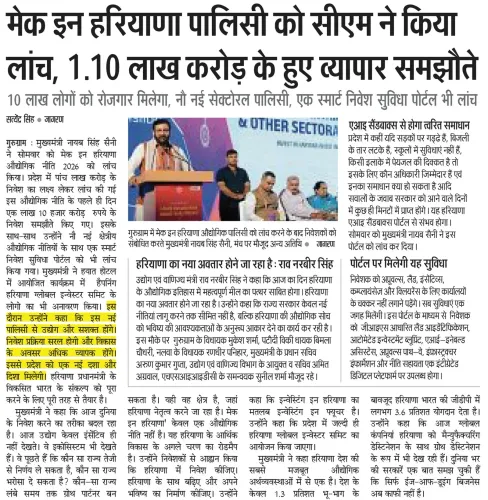
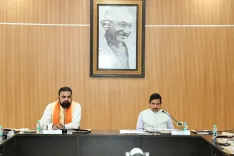
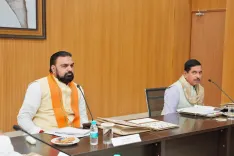
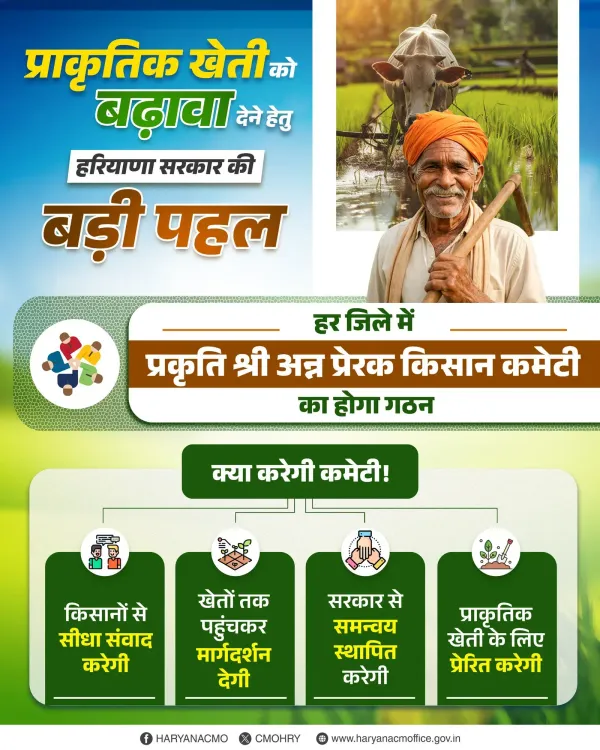
The Chief Minister's Office of Haryana announced on Thursday, 9 July 2026 that the state government will constitute 'Prakriti Shri Ann Prerak Kisan Committees' (Natural Farming Motivator Farmer Committees) in every district of Haryana, marking a significant step toward turning natural farming into a mass movement.
The official post stated: 'प्रदेश के प्रत्येक जिले में प्रकृति श्री अन्न प्रेरक किसान कमेटी का गठन किया जाएगा' — 'A Prakriti Shri Ann Prerak Kisan Committee will be formed in each district of the state.' These committees will establish direct dialogue with farmers, reach them at their fields, provide guidance, motivate them to adopt natural farming, and build strong coordination between the government and the farming community.
Context
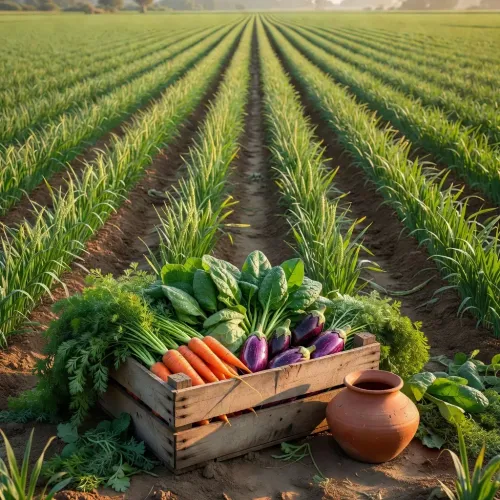
Haryana is one of India's most intensively farmed states, anchoring the country's wheat-rice belt across its 22 districts. Decades of chemical-intensive cultivation under the Green Revolution model have left visible scars — degraded soil health, depleted groundwater tables, and rising input costs that have squeezed farmer margins. The state government has framed natural farming as a corrective to this trajectory, positioning the new committees as a grassroots mechanism to accelerate adoption at the field level.Policy Backdrop
The announcement builds on a broader national policy push. The Government of India launched the Paramparagat Krishi Vikas Yojana (PKVY) in 2015 to promote organic and natural farming clusters among small and marginal farmers. Haryana's district-level committee model deepens that framework by creating a dedicated institutional layer between state policy and individual cultivators. Comparable state-level programmes have been rolled out in Andhra Pradesh, Gujarat, and Madhya Pradesh, reflecting a national consensus that sustainable, low-external-input agriculture requires structured extension support — not just financial incentives. The proposed Prakriti Shri Ann Prerak Kisan Committees are designed to fill precisely that gap: peer-to-peer outreach by motivated farmers, backed by government coordination, rather than top-down directives.Stakeholders and Impact
The primary beneficiaries are Haryana's farming households, particularly small and marginal cultivators who bear the highest burden of input costs and soil fatigue. By embedding committees at the district level, the government aims to ensure that guidance reaches farmers directly in their fields rather than remaining confined to agricultural offices or training centres. For the broader rural economy, a shift toward natural farming could reduce dependence on chemical fertilisers and pesticides, lower production costs over time, and open access to premium markets for chemical-free produce. Soil restoration, if achieved at scale, would also address the long-term groundwater crisis that threatens agricultural viability in the region.What's Next
The immediate focus will be on the operational roll-out of these committees across all 22 districts. Key questions — including the committees' precise composition, funding arrangements, and performance metrics — are yet to be officially detailed. Observers will watch whether the initiative is accompanied by linked budgetary allocations in the state's agriculture budget and whether measurable changes in the area under natural farming are recorded over the next two cropping seasons. The government's ability to sustain farmer engagement beyond initial outreach will determine whether this initiative achieves the 'mass movement' scale it has set as its goal.Point of View
Not one-off training camps. Framing the initiative as a 'jan andolan' (people's movement) is politically deliberate, echoing the Centre's own language around schemes like the Soil Health Card and PKVY. The committee model, if resourced adequately, could serve as a replicable template for other Green Revolution states grappling with the same soil-and-water crisis. The real test will be whether these bodies develop genuine farmer agency or become another layer of bureaucratic coordination.
NationPress
9 Jul 2026
Frequently Asked Questions
What is the Prakriti Shri Ann Prerak Kisan Committee in Haryana?
It is a proposed district-level farmer committee announced by the Haryana government on 9 July 2026. Each committee will reach farmers at their fields, guide them on natural farming practices, and coordinate between the state government and farming communities across all 22 districts.
How many districts will have natural farming committees in Haryana?
The Haryana government plans to form these committees in all 22 districts of the state, ensuring grassroots-level coverage across the entire state.
What is natural farming and why is Haryana promoting it?
Natural farming is a chemical-free agricultural practice that avoids synthetic fertilisers and pesticides. Haryana is promoting it to address soil degradation, groundwater depletion, and high input costs caused by decades of intensive cultivation under the Green Revolution model.
Is there a central government scheme for natural farming in India?
Yes. The Paramparagat Krishi Vikas Yojana (PKVY) , launched in 2015 by the Government of India, promotes organic and natural farming clusters among small and marginal farmers. Haryana's new committee structure builds on this national framework.
Which other Indian states have similar natural farming programmes?
Andhra Pradesh , Gujarat , and Madhya Pradesh have comparable state-level programmes promoting low-external-input agriculture, reflecting a broader national shift toward sustainable farming in intensively cultivated regions.