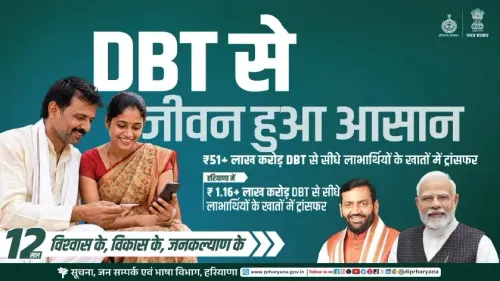
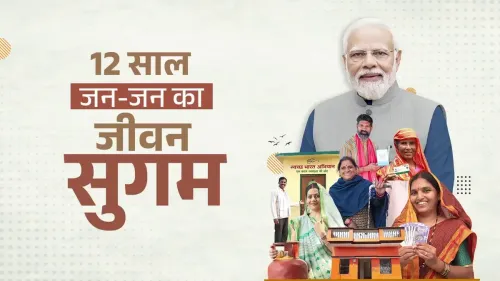
Haryana CMO marks 12 years of development, flags water and roads push
Synopsis
The Chief Minister's Office of Haryana has marked twelve years of BJP governance and two years of a renewed mandate by spotlighting clean drinking water, road networks, and air connectivity as the cornerstones of a modernising state.
Key Takeaways
The CMO Haryana posted a stock-taking message on 18 October 2026 , framing twelve years of governance as a development journey.
The post highlights clean drinking water , stronger foundational infrastructure, and improved road and air connectivity as key achievements.
BJP has governed Haryana since 2014 ; the 'two years of new resolutions' signals a distinct second-phase agenda within that tenure.
Haryana borders Delhi and hosts major urban centres — Gurugram and Faridabad — where connectivity and water supply are high-stakes delivery challenges.
Upcoming state budget presentations and project-completion reports will provide verifiable data against these infrastructure claims.
Twelve years of building and two years of fresh resolve — that is the frame Haryana's Chief Minister's Office chose on Sunday, 18 October 2026, to take stock of the state's infrastructure journey, spotlighting clean drinking water, stronger foundational systems, and improved road and air connectivity as the pillars of a modernising Haryana.
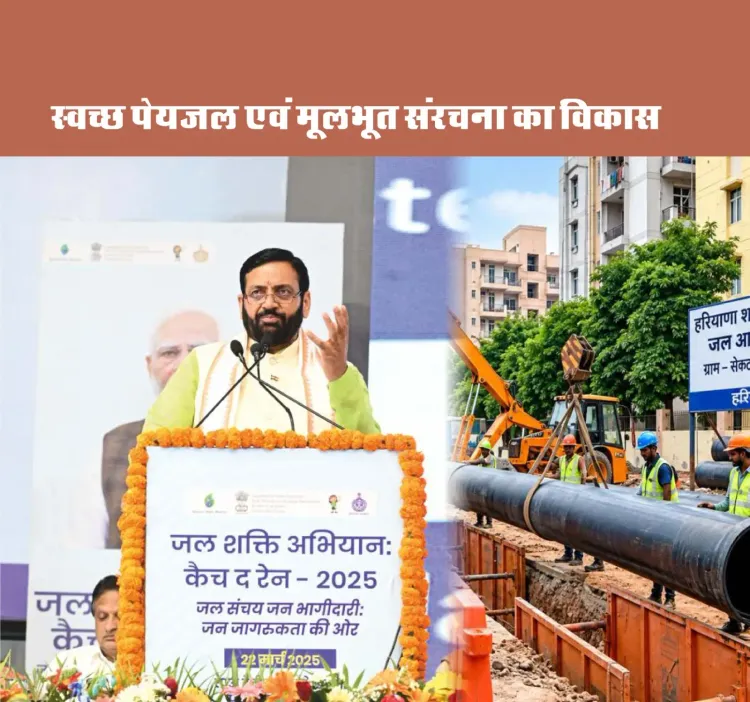
The post, shared on the official CMO Haryana X account, declared: 'Swachh peyjal, mazboot moolbhoot dhancha aur behtar sadak va hawai connectivity se aadhunik Haryana ka nirman, nagrikon ka jeevan ban raha adhik sugam' — meaning 'through clean drinking water, strong foundational infrastructure, and better road and air connectivity, modern Haryana is being built, making citizens' lives increasingly easier.'
Twelve years, two governments, one infrastructure thread
Haryana has been under BJP governance since 2014, when the party came to power on a platform centred on infrastructure and basic-amenities delivery. The current framing of 'twelve years of development' maps squarely onto that tenure — making this an explicit record-card moment as the government looks back at what it has built and forward at what it has pledged.
The 'two years of new resolutions' referenced in the post points to a fresh mandate within that longer arc — a government signalling it is not coasting on legacy work but has set a second-term agenda with its own targets. Water, roads, and air links are the chosen headline metrics.
Water and connectivity: the twin pressure points for Haryana's 30 million residents
For a state that borders Delhi and sits at the crossroads of India's northern heartland, the stakes on water and connectivity are tangible. Haryana's urban corridors — Gurugram, Faridabad, Ambala — demand the kind of road and aviation infrastructure that supports both commuters and commerce. Rural belts, meanwhile, have historically lagged on piped drinking water access, making that a politically and practically loaded commitment.
State governments across India have increasingly linked local delivery to national programmes on roads, aviation, and drinking water — and Haryana's framing is consistent with that broader pattern of periodic stock-taking by ruling parties. The messaging aligns infrastructure spending with citizen quality-of-life, a framing that has proved durable in state-level political communication.
What the next fiscal cycle will reveal
The real test of these assertions will come in upcoming state budget presentations and project-completion reports for roads, airports, and water-supply schemes. Watchers will look for hard numbers: kilometres of road laid, households connected to piped water, and status updates on airport expansion projects in the state.
Haryana has set the narrative; the balance sheet will follow.
Point of View
Roads, and aviation as headline metrics is deliberate — these are areas where central scheme funding intersects with state execution, allowing the government to claim credit for both. At twelve years, the BJP in Haryana faces the challenge of sustaining a 'change' framing while being the long-incumbent power, making citizen-welfare language — 'lives becoming easier' — the natural rhetorical pivot. The credibility of the pitch will ultimately rest on the numbers that emerge in the next project-completion cycle.
NationPress
18 Oct 2026
Frequently Asked Questions
How long has BJP been in power in Haryana?
BJP has governed Haryana since 2014 , making 2026 the twelfth year of its rule in the state.
What infrastructure projects is the Haryana government highlighting in 2026?
The Chief Minister's Office of Haryana is highlighting clean drinking water access, strengthened foundational infrastructure, and improved road and air connectivity as its marquee development achievements.
What does 'two years of new resolutions' mean in the Haryana CMO post?
The phrase refers to a fresh mandate or renewed commitment within the BJP's longer governance tenure in Haryana, suggesting a distinct second-phase agenda set approximately two years before the October 2026 post.
Which major cities in Haryana benefit from road and air connectivity improvements?
Urban centres such as Gurugram , Faridabad , and Ambala are among the key beneficiaries of Haryana's road and aviation infrastructure push, given their proximity to Delhi and their role as commercial hubs.
How can citizens track Haryana's infrastructure progress?
Project-completion reports and the state budget presentations are the primary official sources for verifiable data on roads, airports, and water-supply scheme progress in Haryana .