CM Himanta plans Orunodoi advance to shield women from loan sharks
Synopsis
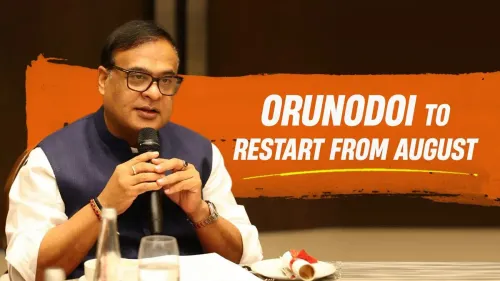
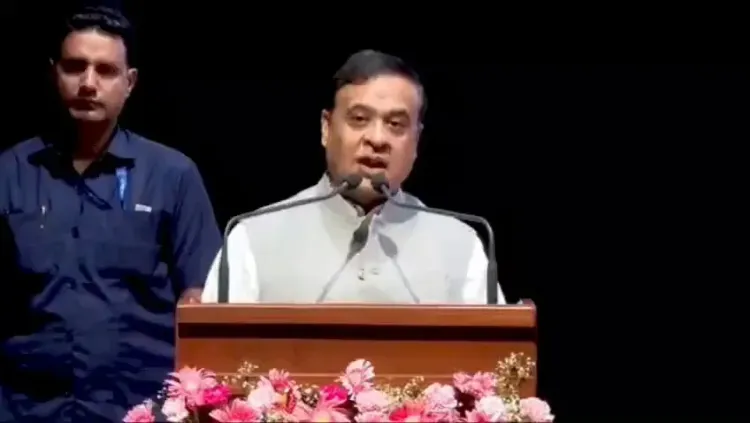
Assam CM Himanta Biswa Sarma has proposed letting Orunodoi beneficiaries draw advances against their yearly cash entitlement, adjusted in later months — a move aimed at eliminating dependence on informal moneylenders for low-income women across the state.
Key Takeaways
Assam CM Himanta Biswa Sarma announced plans on 1 August 2026 to introduce an advance facility for Orunodoi scheme beneficiaries.
Women will be able to draw against their yearly entitlement, with the amount adjusted in subsequent monthly instalments.
Orunodoi , launched in October 2020 , provides monthly cash transfers — initially Rs 1,250 — to women heads of low-income households in Assam.
The stated goal is to protect beneficiaries from informal moneylenders by giving them interest-free liquidity from their own entitlement.
Detailed operational guidelines, including maximum advance limits and adjustment schedules, are yet to be released by the state government.
A quiet but consequential idea is taking shape in Guwahati: Assam Chief Minister Himanta Biswa Sarma has announced plans to allow Orunodoi scheme beneficiaries to draw an advance against their yearly cash entitlement — a facility designed to cut off the moneylender before she ever gets a chance to knock on the door.
What the advance facility actually does
Under the proposed mechanism, a woman enrolled in Orunodoi will be able to access a lump sum drawn from her future monthly entitlements, with the amount adjusted automatically in subsequent months. No middlemen, no compound interest, no collateral — just her own entitlement, unlocked early. CM Sarma described it as a measure to 'save our mothers from loan sharks and assure them liquidity when they need the most.'
The logic is direct: a medical emergency, a school fee deadline, a crop failure — these do not wait for the calendar to turn. Informal lenders do not wait either, and their rates rarely do the borrower any favours. The advance facility, if operationalised, short-circuits that cycle entirely.
Orunodoi's six-year run as Assam's flagship women's transfer
Launched in October 2020, Orunodoi began as a direct cash transfer of Rs 1,250 per month to women heads of households from economically weaker sections. The scheme sits at the centre of the BJP-led Assam government's welfare architecture and has steadily expanded its beneficiary base across the state's 126 assembly constituencies.
The proposed advance feature is not a new scheme — it is an engineering upgrade to an existing one. That distinction matters. It requires no fresh enrolment drive, no new database, and no additional targeting mechanism. The pipeline already exists; the idea is simply to let water flow backwards through it when a family needs it most.
A model other states have approached, rarely perfected
Conditional advance mechanisms tied to state welfare entitlements have appeared in scattered form across India, but consistent, well-designed implementation has remained elusive. The challenge is always operational: ensuring repayment adjustments are processed cleanly, preventing over-draws, and keeping the system legible to beneficiaries who may have limited banking literacy.
Detailed guidelines — eligibility thresholds, maximum advance quantum, adjustment schedules — are yet to be released by the Assam government. Those details will determine whether this remains a promising announcement or becomes a genuinely replicable model for other northeastern states watching from the sidelines.
For now, the signal is clear: Assam is betting that the most effective anti-poverty tool is not a new scheme, but a smarter version of the one already in a woman's hands.
Point of View
CM Sarma is engineering liquidity flexibility into an existing one — a subtler but potentially more durable form of welfare delivery. If operationalised cleanly, it could become a template for northeastern states grappling with the same informal-credit trap. The political dividend, however, depends entirely on execution: a poorly designed adjustment mechanism could erode beneficiary trust in the flagship scheme itself.
NationPress
15 Sept 2026
Frequently Asked Questions
What is the Orunodoi scheme in Assam?
Orunodoi is an Assam government direct cash transfer scheme launched in October 2020 that provides monthly financial support — initially Rs 1,250 — to women heads of households from economically weaker sections.
What is the new Orunodoi advance facility announced by CM Himanta?
CM Himanta Biswa Sarma has proposed allowing Orunodoi beneficiaries to take an advance against their yearly cash entitlement, which would then be adjusted automatically in subsequent months, removing the need to borrow from moneylenders.
Who will benefit from the Orunodoi advance plan?
Women already enrolled in the Orunodoi scheme — primarily from low-income households across Assam — are the intended beneficiaries of the proposed advance facility.
When will the Orunodoi advance scheme be launched?
No launch date has been announced yet. The Assam government is expected to release detailed operational guidelines, including eligibility and repayment adjustment rules, in the coming months.
How does the Orunodoi advance protect women from loan sharks?
By allowing women to access their own future entitlement early, the facility gives them emergency liquidity without interest or collateral, reducing the need to turn to informal moneylenders who typically charge high rates.