HP CM Office: 2.56 Lakh Farmers Now Under Natural Farming
Synopsis
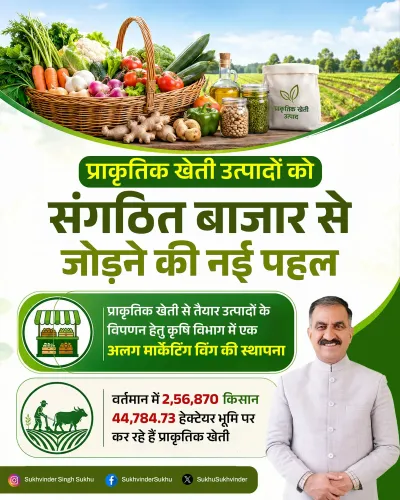
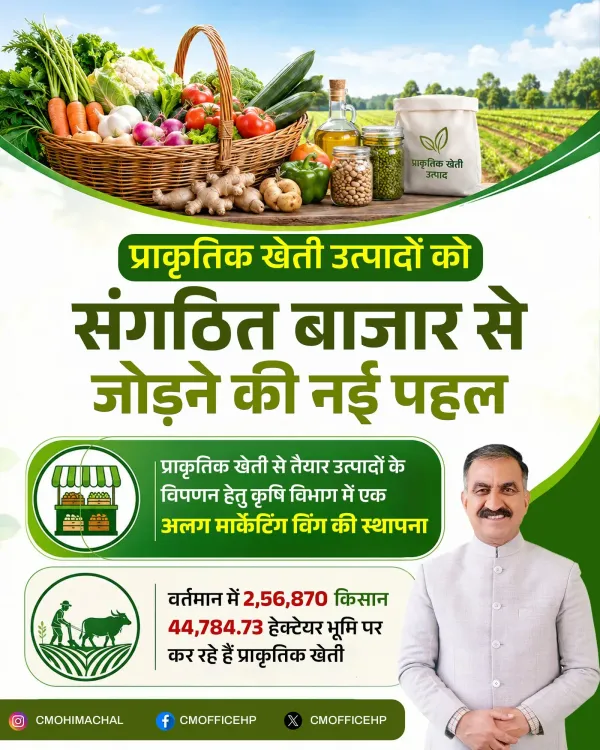
The Himachal Pradesh CM Office announced on 8 July 2026 that 2,56,870 farmers are now practising natural farming across 44,784.73 hectares, reflecting the Sukhu government's push to lower input costs and protect soil fertility in the hill state.
Key Takeaways
2,56,870 farmers in Himachal Pradesh are now engaged in natural farming as of 8 July 2026 .
These farmers collectively cultivate 44,784.73 hectares of land under chemical-free methods.
The Sukhu government frames natural farming as a strategy to raise farmer profits while reducing cultivation costs.
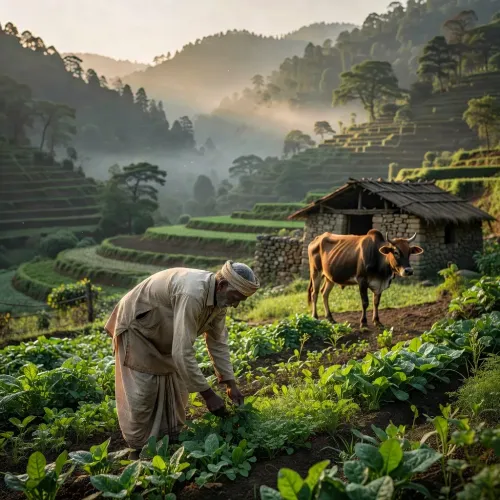
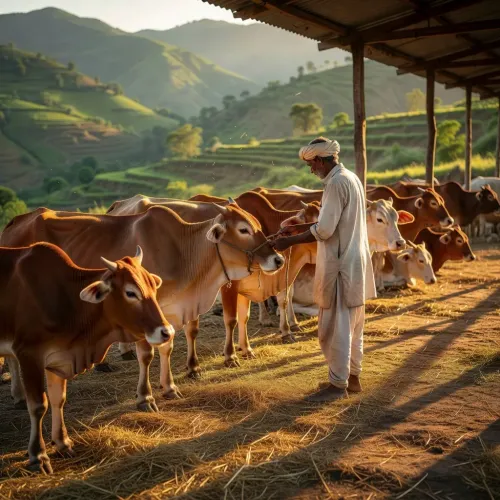
The state's Prakritik Kheti model uses cow-based, zero-chemical inputs suited to Himachal's hilly terrain.
The initiative aligns with the central government's Paramparagat Krishi Vikas Yojana , launched in 2015 to support organic farming clusters.
Future steps include expanding farmer training, organic certification linkages, and dedicated market access for natural produce.
The Chief Minister's Office of Himachal Pradesh announced on Wednesday, 8 July 2026 that the state government's sustained push for natural farming has brought 2,56,870 farmers onto 44,784.73 hectares of land under chemical-free cultivation, underscoring the administration's twin goal of protecting soil health and raising farm incomes.
The post, shared in Hindi, states: 'धरती की उर्वरता और किसान की समृद्धि, दोनों एक-दूसरे से जुड़ी हैं' ('The fertility of the earth and the prosperity of the farmer are interlinked'). It adds that the government is 'continuously working to ensure farmers earn more profit at lower cost.'
Context
Himachal Pradesh is a predominantly smallholder agrarian economy where fragmented hill terrain makes chemical-intensive cultivation expensive and ecologically damaging. Rising input costs — fertilisers, pesticides, irrigation — have long squeezed margins for small and marginal farmers who form the backbone of the state's rural economy.
The state government under Chief Minister Sukhvinder Singh Sukhu, in office since December 2022, has made natural farming a flagship agricultural priority, positioning it as a structural solution to farmer indebtedness and soil degradation rather than a niche practice.
Policy Backdrop
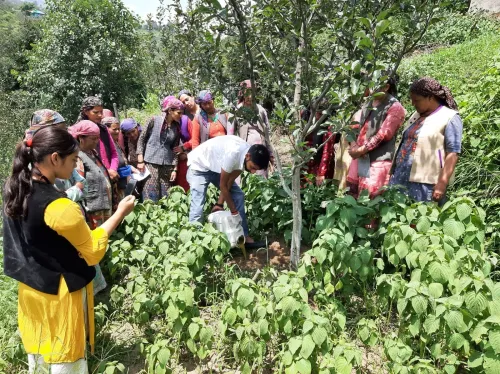
Himachal Pradesh's natural farming drive draws on the Prakritik Kheti model — a zero-chemical, cow-based input approach — that the state has promoted through training camps, extension services, and farmer outreach. The method is associated with the work of Subhash Palekar, whose techniques have been adopted by several Indian states.
At the national level, the Paramparagat Krishi Vikas Yojana (PKVY), launched by the Government of India in 2015, provides cluster-based support to states for organic and natural farming transitions, including certification assistance. Himachal's expansion aligns with the scheme's framework of reducing dependence on external chemical inputs through local resource use.
Multiple Indian states have scaled natural farming since the mid-2010s in response to shared pressures: soil degradation, groundwater depletion, and the financial burden of synthetic inputs. Himachal Pradesh's hilly geography makes it particularly suited to this transition, as chemical runoff causes disproportionate ecological harm on slopes.
Stakeholders and Impact
The 2,56,870 farmers now practising natural farming represent a significant share of Himachal Pradesh's agricultural community. Covering 44,784.73 hectares, the programme's reach spans both subsistence and commercial growers, with the potential to reduce household expenditure on inputs while improving long-term soil fertility.
Small and marginal landholders stand to benefit most directly, as natural farming's reliance on on-farm inputs — cow dung, urine-based preparations, and locally available biomass — cuts the cash outlay that drives many rural families into debt. For consumers and markets, the shift also opens pathways to premium organic and natural-produce segments, provided certification and market-linkage infrastructure keeps pace.
What's Next
The state agriculture department is expected to outline further expansion targets in upcoming budget and policy announcements. Key milestones to watch include the scaling of farmer training camps, formal linkages with organic certification bodies, and the development of dedicated market channels for naturally farmed produce from Himachal Pradesh.
If the state can couple area expansion with robust output marketing, the programme could serve as a replicable model for other hill states seeking to balance ecological sustainability with farm-income growth — a challenge that remains central to India's broader agricultural policy agenda.
Point of View
Ecology-first agricultural identity for the state — a positioning that carries both policy substance and political utility ahead of future electoral cycles. By anchoring the message around soil fertility and farmer prosperity as inseparable goals, the communication attempts to reframe agricultural support not as subsidy-dependent welfare but as a structural productivity shift. This mirrors a broader national pattern where state governments compete to demonstrate sustainable agriculture credentials, especially as input costs and soil health emerge as live voter concerns in rural constituencies. The real test will be whether area expansion translates into verifiable income gains and whether market infrastructure can absorb the growing volume of naturally farmed produce.
NationPress
8 Jul 2026
Frequently Asked Questions
How many farmers are doing natural farming in Himachal Pradesh?
According to the Himachal Pradesh CM Office, 2,56,870 farmers are currently practising natural farming in the state, covering 44,784.73 hectares of land.
What is Prakritik Kheti in Himachal Pradesh?
Prakritik Kheti is a state-promoted natural farming model in Himachal Pradesh that uses zero chemical inputs and relies on cow-based preparations and locally available biomass to maintain soil fertility and cut cultivation costs.
What is Paramparagat Krishi Vikas Yojana?
Paramparagat Krishi Vikas Yojana (PKVY) is a central government scheme launched in 2015 to promote organic and natural farming through cluster-based farmer groups, training, and certification support across Indian states.
Who is the Chief Minister of Himachal Pradesh?
Sukhvinder Singh Sukhu is the Chief Minister of Himachal Pradesh, in office since December 2022 . His government has made natural farming a key agricultural priority.
Why is natural farming important for Himachal Pradesh farmers?
Himachal Pradesh's hilly terrain makes chemical-intensive farming expensive and ecologically harmful. Natural farming reduces reliance on costly synthetic inputs, helping small and marginal farmers lower expenses and improve long-term soil health.