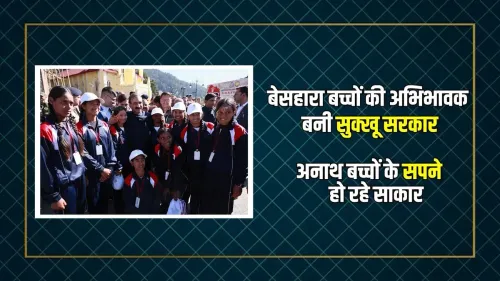
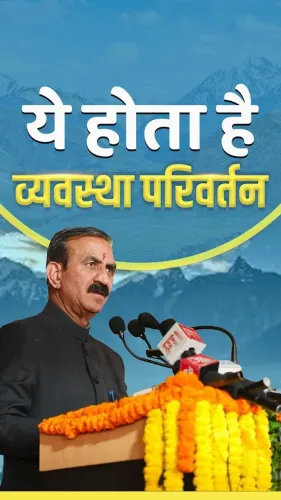
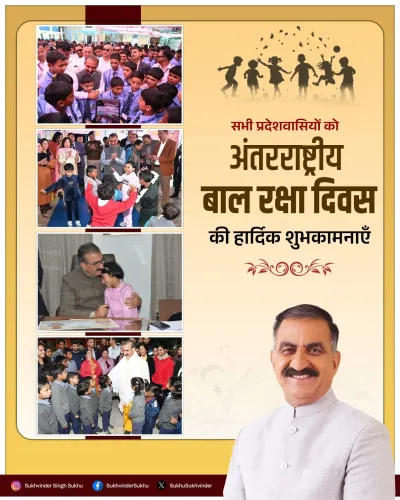
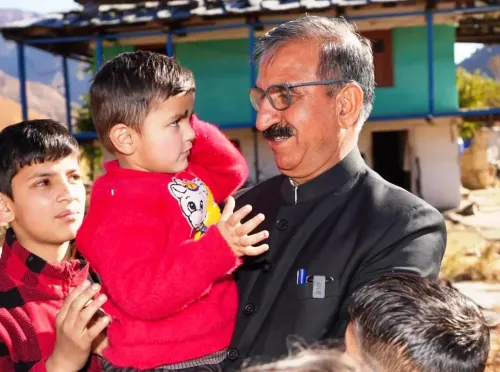
HP CM Office: 6,000 orphans get 'Children of State' status
Synopsis
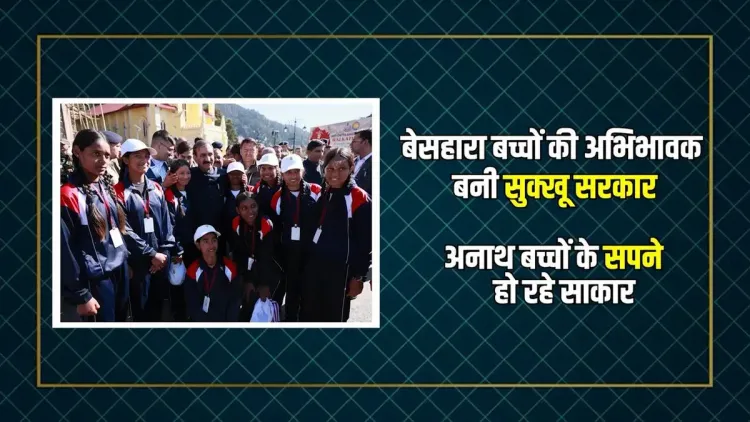
The Himachal Pradesh government is conferring 'Children of State' status on 6,000 orphaned and destitute children under the Mukhyamantri Sukh-Ashray Yojana, guaranteeing housing, food, education, coaching, and pocket money until age 27 — one of the most comprehensive aftercare commitments by any Indian state.
Key Takeaways
6,000 children in Himachal Pradesh are being designated 'Children of State' under the Mukhyamantri Sukh-Ashray Yojana.
State support covers housing, food, education, coaching, and pocket money — a comprehensive aftercare package.
Entitlements are guaranteed until beneficiaries reach the age of 27 years , covering higher education and early career years.
The scheme draws on the framework of the Juvenile Justice (Care and Protection of Children) Act, 2015 and aligns with the central Mission Vatsalya programme.
The 'Children of State' framing redefines the state's role from welfare provider to legal guardian , with significant legal and social implications.
Implementation outcomes — enrolment, completion rates, employment transitions — will be the key metrics watched by welfare observers and legislators.
The Chief Minister's Office of Himachal Pradesh announced on Wednesday, 1 July 2026, that the state government is conferring 'Children of State' status on 6,000 children under the Mukhyamantri Sukh-Ashray Yojana, guaranteeing them comprehensive support — from shelter and meals to education, coaching, and pocket money — until the age of 27 years.
Context
The official post, shared in Hindi, states: 'Mukhyamantri Sukh-Ashray Yojana ke tahat hamari sarkar 6,000 bachon ko 'Children of State' ka darja dekar unke jeevan mein suraksha, samman aur apnatva ka vishwas de rahi hai.' ('Under the Mukhyamantri Sukh-Ashray Yojana, our government is giving 6,000 children the status of Children of State, instilling in their lives a sense of security, dignity, and belonging.') The announcement signals that Himachal Pradesh is formalising state guardianship for orphaned and destitute children — treating them, in the government's own framing, as wards of the state rather than mere beneficiaries of a welfare transfer.
The scheme's scope is notably broad: the post explicitly lists housing, food, education, coaching, and pocket money as entitlements, all secured until the beneficiary turns 27. This age ceiling is significant — it covers undergraduate and postgraduate study cycles and extends into early career years, a deliberate design choice to prevent young adults from falling through the cracks the moment they leave institutional care.
Policy Backdrop
The legal scaffolding for this kind of state guardianship traces back to the Juvenile Justice (Care and Protection of Children) Act, 2015, which empowered state governments to assume parental responsibility for orphaned and abandoned children. The central government's Mission Vatsalya scheme, launched in 2021 by the Ministry of Women and Child Development, further encouraged states to build robust aftercare systems and reduce long-term institutionalisation.
Himachal Pradesh's move fits squarely within a broader national pattern: states across India have been progressively extending aftercare support beyond age 18, recognising that abrupt exits from child-care institutions leave young adults vulnerable to poverty, exploitation, and social exclusion. The 'Children of State' designation goes a step further by reframing the relationship as one of guardianship rather than charity — a distinction with both legal and psychological weight.
Stakeholders and Impact
The primary beneficiaries are orphaned and destitute children currently in state care across Himachal Pradesh. For this cohort, the scheme promises continuity: the same support that sustains them through school will follow them into college, vocational coaching, and the early years of employment-seeking. The pocket-money provision, though modest in isolation, addresses a documented gap — young adults leaving care often lack the small liquidity needed to navigate daily life.
Ancillary stakeholders include district child welfare committees, state-run residential schools, and coaching institutions that will operationalise the entitlements. Budget allocations and administrative capacity at the district level will determine how uniformly the scheme's guarantees translate into lived experience for all 6,000 enrolled children.
What's Next
Attention will now turn to state budget documents and annual progress reports that track beneficiary enrolment, educational completion rates, and eventual transition to employment. The credibility of the 'Children of State' pledge will ultimately be measured by how many of the 6,000 children complete higher education and secure livelihoods — data points that welfare observers and opposition benches alike will scrutinise in coming legislative sessions.
If implemented at scale, the Mukhyamantri Sukh-Ashray Yojana could serve as a replicable model for other hill states grappling with similar child-welfare gaps, particularly those with high rates of parental out-migration and orphanhood linked to natural disasters.
Point of View
Not just at 18. Politically, the 'Children of State' branding is also astute: it personalises a welfare entitlement in a way that budget line-items cannot, creating a durable narrative the ruling dispensation can sustain across election cycles. The real test, however, lies in district-level execution — whether administrative bandwidth and budget allocations can honour the breadth of entitlements promised to all 6,000 beneficiaries.
NationPress
1 Jul 2026
Frequently Asked Questions
What is Mukhyamantri Sukh-Ashray Yojana in Himachal Pradesh?
Mukhyamantri Sukh-Ashray Yojana is a Himachal Pradesh government welfare scheme that provides orphaned and destitute children with housing, food, education, coaching, and pocket money, designating them as 'Children of State' with support continuing until they turn 27.
How many children benefit from HP's Children of State scheme?
The Himachal Pradesh government has announced that 6,000 children will receive 'Children of State' status under the Mukhyamantri Sukh-Ashray Yojana.
Until what age does Himachal Pradesh support orphaned children under this scheme?
Under the Mukhyamantri Sukh-Ashray Yojana, the state guarantees support — including shelter, food, education, coaching, and pocket money — until the child reaches 27 years of age .
What is 'Children of State' status in India?
'Children of State' is a designation by which a state government assumes guardianship responsibilities for orphaned or destitute children, going beyond routine welfare transfers to provide comprehensive, long-term support akin to parental care.
How does Himachal Pradesh's scheme relate to Mission Vatsalya?
Mission Vatsalya, launched by the central government in 2021, encourages states to build aftercare systems for children leaving institutional care. Himachal Pradesh's Mukhyamantri Sukh-Ashray Yojana aligns with this framework by extending state support well into early adulthood.