HP CM Office Announces MRI, Robotic Surgery & Automated Labs Push
Synopsis
The Chief Minister's Office of Himachal Pradesh announced plans on 25 June 2026 to install Three Tesla MRI scanners and advanced ultrasound machines, introduce robotic surgery in medical colleges in phases, and establish automated laboratories across all state medical colleges.
Key Takeaways
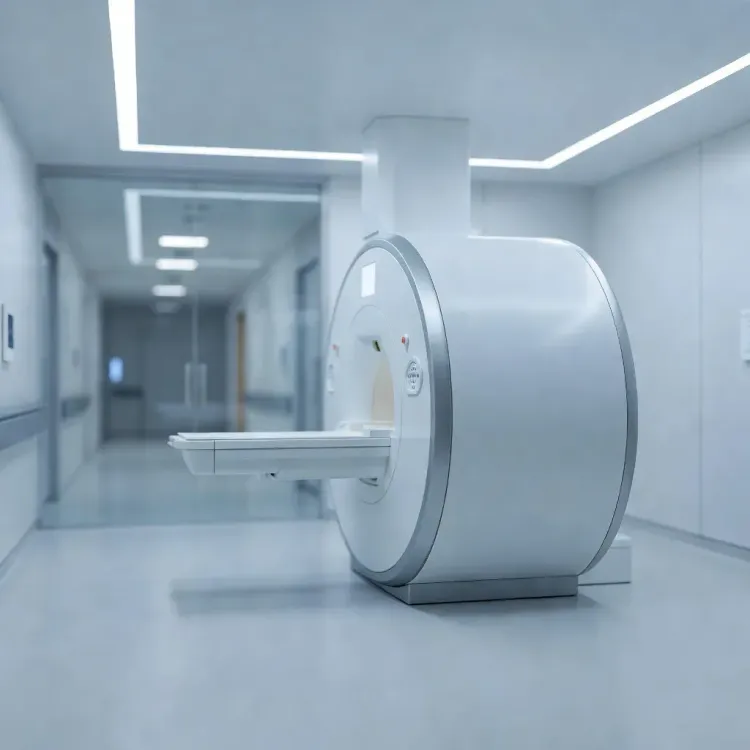
Three Tesla MRI machines and advanced ultrasound equipment are being installed in Himachal Pradesh's public health facilities.
Robotic surgery will be introduced in state medical colleges in a phased manner.
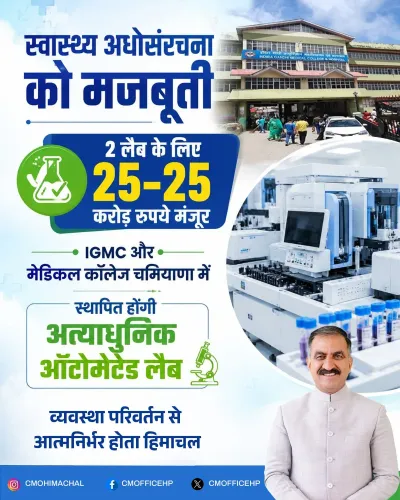
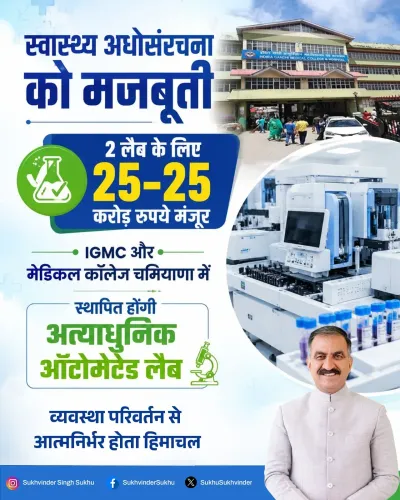
Automated laboratories are to be set up in all medical colleges in the state shortly.
The upgrades align with the PM-ABHIM framework, which has funded diagnostic and lab infrastructure across Indian states since 2021 .
The initiative aims to reduce outward patient referrals to metros and improve clinical training for medical students and residents.
The Chief Minister's Office of Himachal Pradesh announced a series of significant health infrastructure upgrades on Thursday, 25 June 2026, outlining plans to install advanced diagnostic equipment, introduce robotic surgery in medical colleges, and set up automated laboratories across all state-run medical institutions.
Context
The official CMO post listed three concrete initiatives: installation of Three Tesla MRI machines and high-end ultrasound equipment, phased rollout of robotic surgery facilities in medical colleges, and the imminent establishment of automated laboratories in all medical colleges across the state. The announcement, written in Hindi, described these as 'स्वास्थ्य क्षेत्र में महत्वपूर्ण पहलें' ('important initiatives in the health sector').
Three Tesla MRI scanners represent a significant step up from the more common 1.5 Tesla machines found in most public hospitals, offering sharper imaging resolution critical for neurological, oncological, and musculoskeletal diagnoses. Their deployment in a hilly, geographically dispersed state like Himachal Pradesh addresses a long-standing access gap for specialist diagnostics.
Policy Backdrop
These announcements align with the trajectory set by the Pradhan Mantri Ayushman Bharat Health Infrastructure Mission (PM-ABHIM), launched by the central government in 2021, which allocated dedicated funding for diagnostic equipment upgrades and laboratory modernisation in government health facilities. Himachal Pradesh has been expanding its network of government medical colleges since 2017 to counter chronic shortages of specialist care in remote hill districts.
Robotic surgery, once confined to elite private hospitals in metropolitan cities, has been progressively entering the public sector as Indian states compete to offer advanced surgical training at government medical colleges. Phasing in this technology at the college level simultaneously addresses patient care and the skilling of the next generation of surgeons.
Stakeholders and Impact
Patients across Himachal Pradesh stand to benefit most directly, particularly those in remote areas who currently travel to Delhi, Chandigarh, or Amritsar for high-end diagnostic scans or complex surgical procedures. Reducing this outward referral burden has both financial and health outcome implications for families in the state.
Medical faculty and resident doctors at state medical colleges are the other key stakeholders. Access to robotic surgery consoles and automated lab infrastructure elevates the quality of clinical training, potentially improving the state's ability to attract and retain medical talent. Automated laboratories are also expected to reduce turnaround times for routine diagnostics, easing pressure on both patients and hospital staff.
What's Next
The announcement does not specify installation timelines, vendor details, or the number of machines to be procured — details that will emerge through formal tender processes. Observers will watch for the rollout schedule of robotic surgery units, given the substantial capital cost and the parallel need for specialised training programmes for surgical teams.
If implemented at scale, these upgrades would mark a material shift in the quality of public healthcare available in one of India's smaller hill states, setting a benchmark for comparable geographies across the country.
Point of View
Robotic surgery, and automated labs signals a deliberate effort to reposition state-run medical colleges as centres of advanced care, not just basic tertiary facilities. Politically, such announcements serve a dual purpose: they address genuine infrastructure deficits in a geographically challenging state while also demonstrating technological ambition ahead of electoral cycles. The phased framing for robotic surgery is prudent given the capital and training demands involved, but the absence of timelines and procurement details means the credibility of these commitments will hinge entirely on follow-through. This pattern of aggregating health tech pledges into a single communication is increasingly common among state governments seeking to signal reform momentum without binding themselves to specific delivery dates.
NationPress
26 Jun 2026
Frequently Asked Questions
What health upgrades has the Himachal Pradesh government announced?
The Chief Minister's Office of Himachal Pradesh announced three upgrades: installation of Three Tesla MRI and advanced ultrasound machines, phased introduction of robotic surgery in medical colleges, and establishment of automated laboratories in all state medical colleges.
What is a Three Tesla MRI machine and why does it matter?
A Three Tesla MRI machine produces significantly sharper images than the standard 1.5 Tesla scanners used in most public hospitals, making it especially valuable for neurological, cancer, and joint-related diagnoses. Its deployment in Himachal Pradesh would reduce the need for patients to travel to larger cities for advanced scans.
Which medical colleges in Himachal Pradesh will get robotic surgery?
The announcement states robotic surgery will be introduced in medical colleges 'in a phased manner' but does not name specific institutions or provide a rollout schedule. Further details are expected through official tender and procurement processes.
How is PM-ABHIM connected to these health upgrades in Himachal Pradesh?
PM-ABHIM, launched by the central government in 2021, provides funding and policy support for diagnostic equipment and laboratory upgrades in government health facilities. Himachal Pradesh's announced initiatives are consistent with the priorities and funding framework established under this mission.
When will the automated labs in HP medical colleges be ready?
The CMO post states that automated laboratories will be established 'soon' in all medical colleges, but no specific date or timeline has been officially confirmed. Timelines will become clearer once tender processes are initiated.