HP CM Office Pushes Biochar, Geothermal and Punjab Power Deal
Synopsis
The Chief Minister's Office of Himachal Pradesh has announced biochar plants being set up statewide, a geothermal energy project commissioned in Kinnaur district, and a three-year Power Purchase Agreement with Punjab — marking a significant diversification of the state's clean-energy strategy.
Key Takeaways
Biochar plants are being established across Himachal Pradesh to promote clean energy and support agro-residue utilisation.
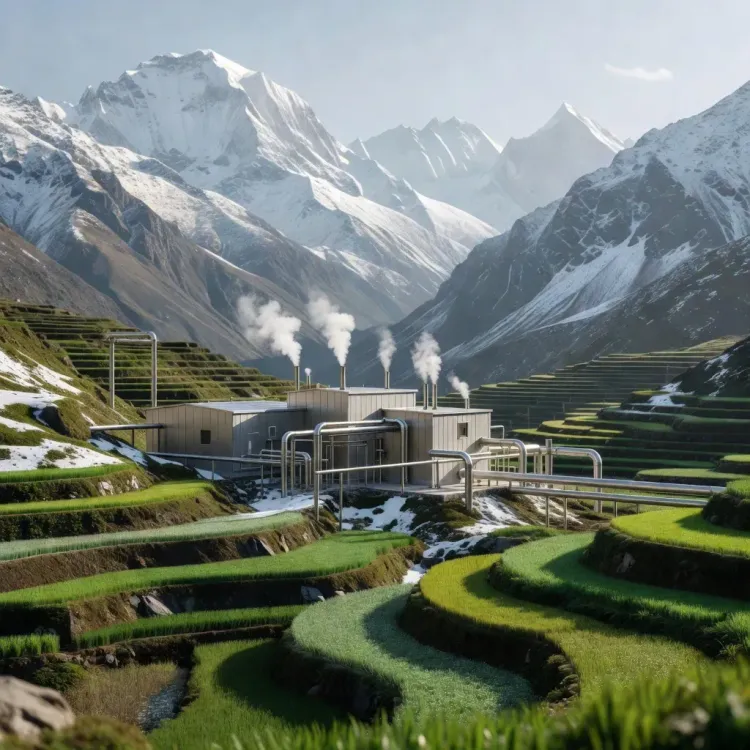
A geothermal energy project has already been commissioned in Kinnaur district , marking a rare non-hydro renewable milestone for a Himalayan state.
A three-year Power Purchase Agreement is being finalised with Punjab to ensure stable electricity supply to the neighbouring state.
The moves signal Himachal Pradesh's deliberate shift beyond large hydropower toward diversified clean-energy sources.
Farmers, Kinnaur communities, and Punjab electricity consumers are the primary beneficiaries of these initiatives.
The Chief Minister's Office of Himachal Pradesh announced on Sunday, 19 July 2026 that biochar plants are being established across the state to promote clean energy, a geothermal energy project has already been commissioned in Kinnaur district, and a three-year Power Purchase Agreement (PPA) is being concluded with neighbouring Punjab to secure electricity supply.
Context
The post, shared by the official @CMOFFICEHP handle, states in Hindi: 'स्वच्छ ऊर्जा को बढ़ावा देने के लिए प्रदेशभर में बायोचार संयंत्र स्थापित किए जा रहे हैं तथा किन्नौर जिले में जियोथर्मल ऊर्जा परियोजना स्थापित की जा चुकी है' — meaning 'To promote clean energy, biochar plants are being established across the state and a geothermal energy project has been set up in Kinnaur district.' The announcement signals a deliberate shift toward diversifying Himachal Pradesh's energy mix beyond its traditional reliance on large hydropower projects.
The post further notes that a three-year Power Purchase Agreement is being executed to ensure electricity supply to Punjab, underlining the interstate dimension of the state's energy strategy.
Policy Backdrop
Himachal Pradesh has operated under a renewable energy policy framework since the early 2000s, with hydropower forming its backbone. The National Bio-Energy Mission and state-level biomass programmes, scaled up after 2018, have encouraged the use of agricultural residue and biomass waste to produce biochar — a carbon-rich material that serves both as a clean-energy input and a soil amendment beneficial to farmers.
Geothermal energy exploration in Kinnaur aligns with a broader Himalayan trend: the region's tectonic activity creates natural geothermal gradients suitable for power generation. Himalayan states are increasingly looking at such non-hydro renewables to reduce seasonal variability in power output. Interstate PPAs are a standard grid-balancing mechanism across northern India, allowing surplus-generating states to monetise capacity while securing demand-side reliability for neighbours.
Stakeholders and Impact
Farmers across Himachal Pradesh stand to benefit from the biochar programme, which converts agro-residue — otherwise burned in fields — into a usable energy and soil product. Communities in Kinnaur, a high-altitude district in eastern Himachal Pradesh, are the most immediate local stakeholders of the geothermal project, which could provide decentralised power in a region where grid connectivity has historically been challenging.
For Punjab, the three-year PPA offers a measure of supply security at a time when the state faces recurring power demand peaks, particularly during agricultural seasons. The agreement also provides Himachal Pradesh a stable revenue stream from its energy assets, supporting the state's fiscal position.
What's Next
Key milestones to watch include the formal signing and tariff disclosure of the Punjab PPA, as well as operational updates on the Kinnaur geothermal plant — including its installed capacity and grid integration timeline. The rollout pace of biochar plants across districts will also indicate how seriously the state intends to scale the programme beyond pilot installations.
If the geothermal project in Kinnaur proves commercially viable, it could serve as a replicable model for other Himalayan states exploring non-conventional renewables, potentially reshaping the region's clean-energy landscape well beyond Himachal Pradesh's borders.
Point of View
A geothermal project, and an interstate PPA reflects a calculated attempt by the Himachal Pradesh government to reposition the state as a multi-source clean-energy supplier, not merely a hydropower exporter. The Punjab PPA is particularly significant: it transforms a bilateral power relationship into a formalised, revenue-generating contract at a time when both states face fiscal pressures. Geothermal energy in Kinnaur, if it scales, could become a national reference point for Himalayan states seeking to reduce dependence on monsoon-sensitive hydro generation. Taken together, these moves suggest the state administration is building a layered energy portfolio with an eye on both climate commitments and interstate political goodwill.
NationPress
20 Jul 2026
Frequently Asked Questions
What is the biochar plant project in Himachal Pradesh?
Biochar plants are facilities being set up across Himachal Pradesh to convert agricultural waste and biomass into clean energy and soil-enriching material, as announced by the Chief Minister's Office on 19 July 2026.
Where is the geothermal energy project in Himachal Pradesh located?
The geothermal energy project has been established in Kinnaur district, in eastern Himachal Pradesh, according to the Chief Minister's Office announcement.
What is the Himachal Pradesh Punjab Power Purchase Agreement?
It is a three-year interstate Power Purchase Agreement being concluded between Himachal Pradesh and Punjab to ensure a stable supply of electricity to Punjab from Himachal Pradesh.
What is biochar and how does it help farmers?
Biochar is a carbon-rich material produced by heating biomass or agricultural residue. It can be used as a clean-energy input and as a soil amendment that improves fertility, reducing the need for farmers to burn crop waste.
Why is geothermal energy important for Himalayan states?
The Himalayan region's tectonic activity creates natural geothermal gradients suitable for power generation, offering a non-hydro renewable source that is not affected by seasonal water flow variations as hydropower is.