HP CM Office Reviews Tribal Dept Schemes, Orders FRA Cases on Dashboard

Synopsis
The Himachal Pradesh Chief Minister's Office reviewed progress of Tribal Development Department schemes on 24 July 2026 and directed that status of all Forest Rights Act cases be uploaded to the Chief Minister's Dashboard for real-time monitoring.
Key Takeaways
The Chief Minister's Office of Himachal Pradesh conducted a review of schemes under the Tribal Development Department on 24 July 2026 .
Instructions were issued to upload the status of all FRA-related cases to the Chief Minister's Dashboard .
The Forest Rights Act, 2006 recognises individual and community rights of tribal and forest-dwelling communities over forest land and resources.
Himachal Pradesh's ST population is concentrated in Kinnaur , Lahaul-Spiti , Chamba , and Mandi districts.
The move reflects a broader trend of Indian states using digital dashboards to monitor tribal welfare scheme implementation in real time.
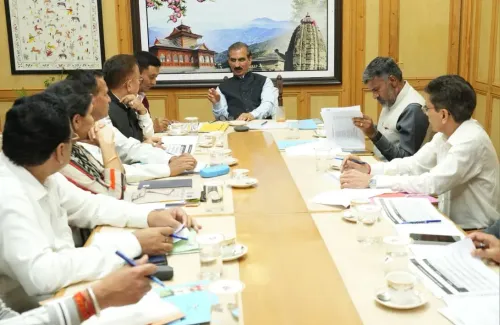
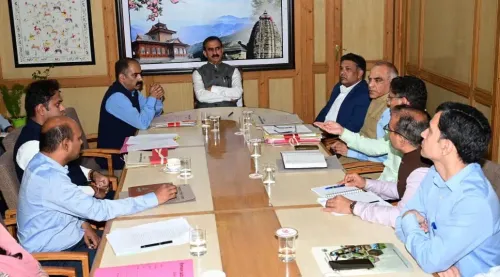
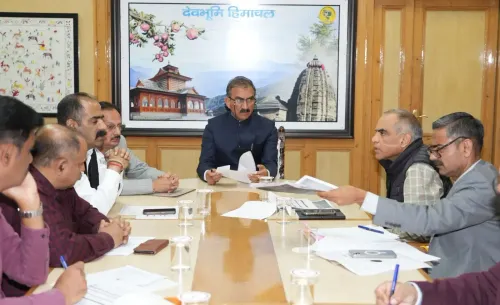
The Chief Minister's Office of Himachal Pradesh on Friday, 24 July 2026 announced a review of the progress of various schemes under the Tribal Development Department, and directed that the status of all matters related to the Forest Rights Act (FRA) be uploaded to the Chief Minister's Dashboard.
The post, shared from the official CMO Himachal Pradesh account, stated: 'जनजातीय विकास विभाग की विभिन्न योजनाओं की प्रगति की समीक्षा भी की। एफआरए से संबंधित सभी मामलों की स्थिति भी मुख्यमंत्री डैशबोर्ड पर अपलोड करने के निर्देश दिए।' ('The progress of various schemes of the Tribal Development Department was also reviewed. Instructions were given to upload the status of all FRA-related cases on the Chief Minister's Dashboard.')
Context
The Tribal Development Department of Himachal Pradesh is the nodal body for planning and executing welfare programmes targeting Scheduled Tribe (ST) communities across the state. The department oversees a range of centrally and state-funded initiatives channelled through the Tribal Sub-Plan, which has been operational since the Fifth Five-Year Plan period. The directive to consolidate FRA case status on the dashboard signals a push for greater administrative accountability over rights-recognition proceedings.
Policy Backdrop
The Scheduled Tribes and Other Traditional Forest Dwellers (Recognition of Forest Rights) Act, 2006 — commonly known as the Forest Rights Act — was enacted by Parliament to correct the historical denial of forest rights to tribal and other forest-dwelling communities. It recognises both individual and community rights over forest land and resources. Across Indian states, FRA claim processing has often been criticised for slow progress and pendency at various administrative levels.
Himachal Pradesh's Scheduled Tribe population is concentrated in districts such as Kinnaur, Lahaul-Spiti, and parts of Chamba and Mandi. These are geographically remote areas where land rights and forest access are central to community livelihoods, making the timely resolution of FRA claims particularly significant.
Stakeholders and Impact
The primary beneficiaries of this directive are tribal communities and traditional forest dwellers in Himachal Pradesh whose FRA claims — whether individual or community — remain pending or under review. By mandating upload of all case statuses to the Chief Minister's Dashboard, the government creates a centralised, real-time monitoring layer that can flag bottlenecks at the district or sub-divisional level.
Indian state governments have increasingly adopted digital dashboards to track implementation of tribal welfare schemes. This move aligns Himachal Pradesh with that broader pattern, enabling the Chief Minister's Office to directly monitor scheme delivery without relying solely on departmental self-reporting.
What's Next
The key metric to watch will be how many FRA cases are uploaded to the CM Dashboard and within what timeframe, as well as whether the review triggers follow-up action on long-pending claims. Subsequent quarterly reviews of tribal scheme outcomes by the state government will indicate whether this directive translates into measurable improvements in rights recognition and scheme delivery on the ground.
Point of View
It serves a dual purpose: demonstrating administrative seriousness on tribal rights ahead of any political cycle, while also creating an accountability trail that can be cited in court proceedings or central government reviews. The broader pattern across Indian states suggests that dashboard-based monitoring alone does not resolve FRA pendency unless accompanied by staffing and capacity support at the gram sabha and sub-divisional levels. Whether this directive produces outcomes will depend on follow-through in the districts, not in Shimla.
NationPress
24 Jul 2026
Frequently Asked Questions
What is the Forest Rights Act and why does it matter in Himachal Pradesh?
The Forest Rights Act, 2006 recognises the rights of Scheduled Tribes and other traditional forest dwellers over forest land and resources they have historically used. In Himachal Pradesh, it matters most in tribal-dominated districts like Kinnaur and Lahaul-Spiti, where forest access is central to livelihoods.
What is the Chief Minister's Dashboard in Himachal Pradesh?
The Chief Minister's Dashboard is a digital monitoring platform used by the Himachal Pradesh Chief Minister's Office to track real-time progress of government schemes and administrative matters across departments.
What did the HP CMO announce on 24 July 2026 regarding tribal schemes?
The HP CMO announced a review of progress of various Tribal Development Department schemes and directed that the status of all FRA-related cases be uploaded to the Chief Minister's Dashboard.
Which districts in Himachal Pradesh have the largest Scheduled Tribe populations?
Scheduled Tribe populations in Himachal Pradesh are concentrated primarily in Kinnaur, Lahaul-Spiti, and parts of Chamba and Mandi districts.
How does uploading FRA cases to the CM Dashboard help tribal communities?
It creates a centralised, real-time record of pending and resolved FRA claims, enabling the Chief Minister's Office to identify bottlenecks and push for faster resolution at the district and sub-divisional levels.