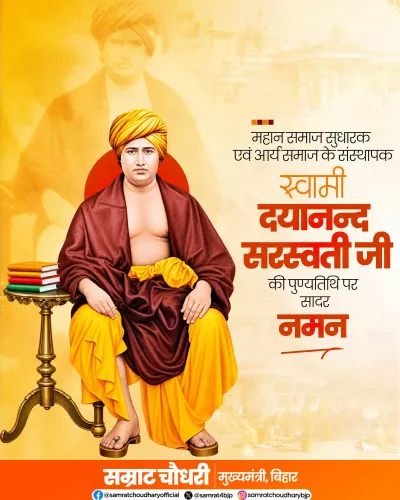
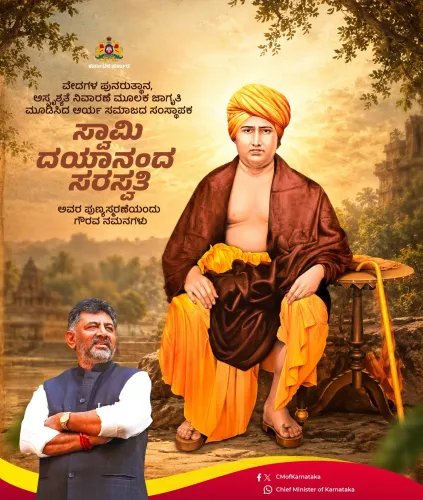
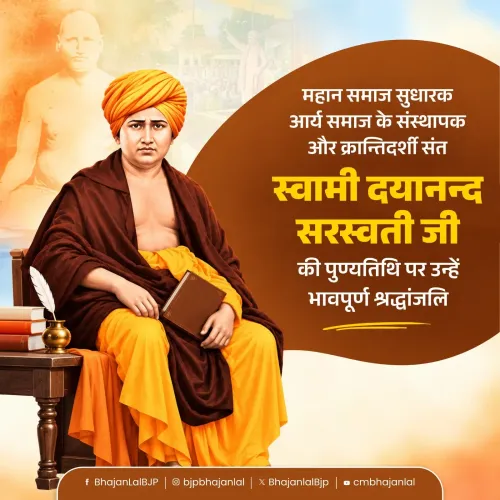
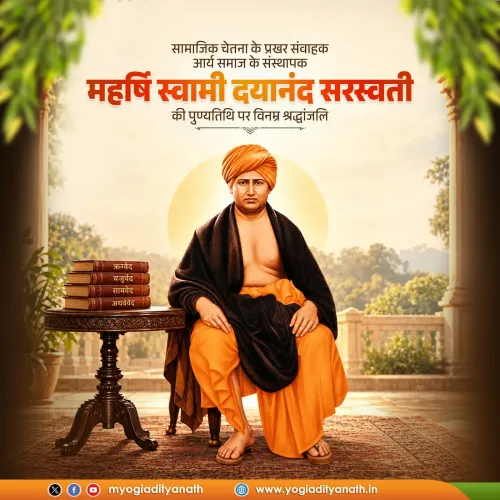
HP CM Office Pays Tribute to Swami Dayanand Saraswati
Synopsis
The Chief Minister's Office of Himachal Pradesh honoured Arya Samaj founder Swami Dayanand Saraswati on his death anniversary, citing his philosophy of reason over superstition, courage against social evils, and knowledge as the foundation for societal upliftment.
Key Takeaways
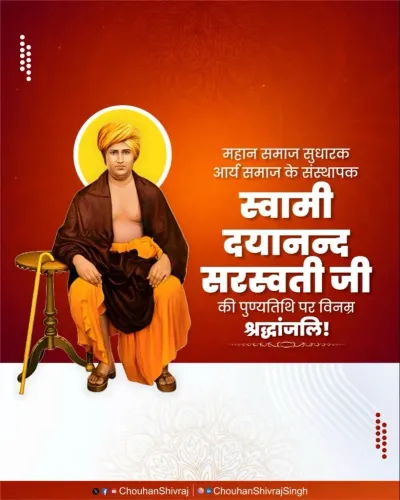
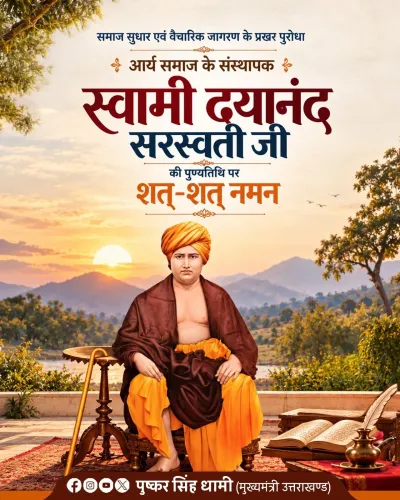
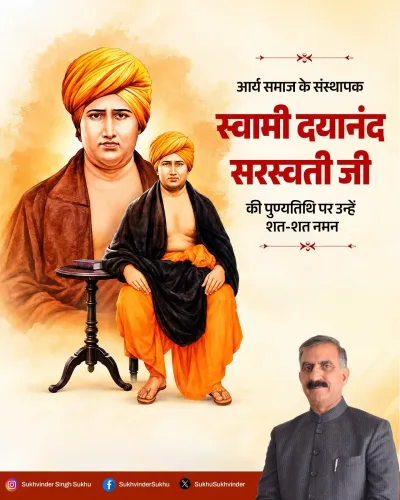
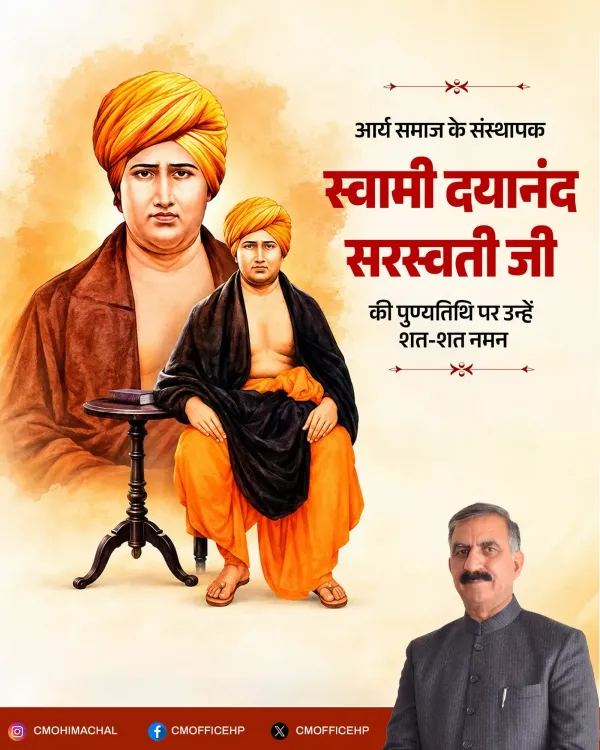
The Chief Minister's Office of Himachal Pradesh posted a tribute on 30 October 2026 marking the punyatithi of Swami Dayanand Saraswati .
Swami Dayanand Saraswati founded the Arya Samaj in 1875 , championing Vedic monotheism and opposing superstition and caste rigidity.
The tribute highlighted three pillars of his legacy: logic against superstition, courage against social evils, and knowledge for societal upliftment.
The Arya Samaj remains an active Hindu reform organisation with a legacy in education, women's rights, and rational inquiry.
Indian state governments routinely observe such anniversaries to publicly align with reform and rationality themes.
On the death anniversary of one of India's most consequential social reformers, the Chief Minister's Office of Himachal Pradesh offered a respectful tribute to Maharishi Swami Dayanand Saraswati — the man who weaponised reason against superstition and knowledge against social stagnation.
The post, shared on Friday, 30 October 2026, recalled Swami Dayanand as a thinker who gave society a new direction through his ideas — describing him as one who made 'logic the antidote to superstition, courage the answer to social evils, and knowledge the foundation for the upliftment of society' (तर्क, साहस और ज्ञान). The office offered its respectful homage on his punyatithi, or death anniversary.
The reformer who built Arya Samaj in 1875
Swami Dayanand Saraswati founded the Arya Samaj in 1875, creating one of India's most influential Hindu reform movements. Its core tenets — strict monotheism, Vedic primacy, opposition to idol worship, and rejection of rigid caste hierarchies — challenged entrenched orthodoxies at a time when colonial rule was reshaping Indian society. The organisation he built went on to champion mass education and women's rights decades before either became mainstream political causes.
His insistence that blind faith must yield to rational inquiry gave the Arya Samaj a reformist edge that resonated far beyond his lifetime. Leaders across the spectrum of India's independence movement traced intellectual debts to his philosophy of back to the Vedas — not as regression, but as a return to a purer, undistorted moral framework.
Why Indian governments mark this anniversary
State governments across India regularly issue public tributes on the death anniversaries of 19th-century reformers, aligning their administrations with themes of rationality, education, and the rejection of social evils. For Himachal Pradesh, invoking Dayanand's legacy carries a particular resonance: the hills of the state have long been home to Arya Samaj institutions that shaped local education and public life.
The tribute is brief, but its framing is deliberate — three values, sharply stated: reason, courage, knowledge. In a political moment when debates around superstition, caste, and social reform remain very much alive, that vocabulary carries weight.
Point of View
Anti-superstition tradition in Indian public life. For Himachal Pradesh, the framing of this tribute around 'logic, courage, and knowledge' signals an alignment with progressive social values at a time when debates over caste, education, and blind faith remain politically charged. The Arya Samaj's historical footprint in north India, including Himachal, gives this tribute local institutional resonance beyond symbolism. Whether the state pairs such remembrances with concrete educational or reform initiatives will determine whether these are gestures or genuine policy signals.
NationPress
30 Oct 2026
Frequently Asked Questions
Who was Swami Dayanand Saraswati?
Swami Dayanand Saraswati was a 19th-century Hindu reformer and philosopher who founded the Arya Samaj in 1875 . He advocated Vedic monotheism, opposed idol worship and rigid caste distinctions, and promoted rational inquiry and mass education.
When is Swami Dayanand Saraswati's death anniversary?
Swami Dayanand Saraswati's death anniversary, or punyatithi , falls on 30 October , the date on which the HP Chief Minister's Office and many institutions across India pay tribute to him each year.
What is Arya Samaj and who founded it?
The Arya Samaj is a Hindu reform organisation founded by Swami Dayanand Saraswati in 1875 . It emphasises monotheism, Vedic learning, opposition to superstition, and social equality, and has historically championed education and women's rights.
Why did the Himachal Pradesh CM Office pay tribute to Swami Dayanand Saraswati?
The Chief Minister's Office of Himachal Pradesh issued the tribute on his punyatithi to honour his legacy of rationalism, social reform, and knowledge-based societal upliftment — themes that state governments across India regularly invoke on such anniversaries.
What were the main teachings of Swami Dayanand Saraswati?
Swami Dayanand Saraswati taught that reason must replace superstition, that courage must challenge harmful social practices, and that knowledge is the foundation for social progress. He opposed idol worship, caste hierarchy, and blind faith, grounding his philosophy in Vedic texts.