HP CM Sukhu orders Rangrik solar project ready before snowfall
Synopsis
CM Sukhvinder Singh Sukhu has ordered the 2 MW Rangrik solar project in Spiti, paired with a 1 MWh battery storage system, to be made operational before snowfall begins — setting a hard seasonal deadline for last-mile electrification in one of Himachal's most remote tribal zones.
Key Takeaways
CM Thakur Sukhvinder Singh Sukhu has directed that the 2 MW Rangrik solar energy project be commissioned before snowfall begins in Spiti.
The project includes a 1 megawatt-hour (MWh) battery energy storage system to maintain supply during low-sunlight and overcast periods.
Rangrik is a high-altitude village in the Spiti region of Himachal Pradesh, where grid access is limited and winters are extreme.
Himachal Pradesh has promoted solar installations in tribal high-altitude areas since its 2016 state renewable energy policy .
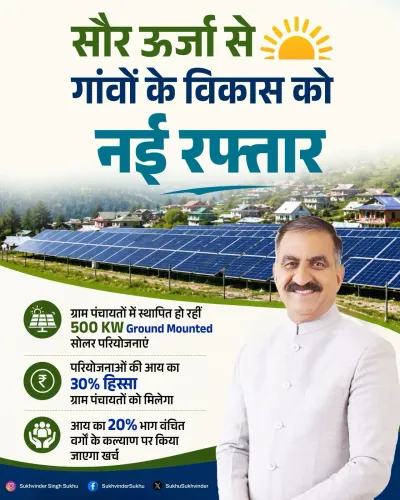
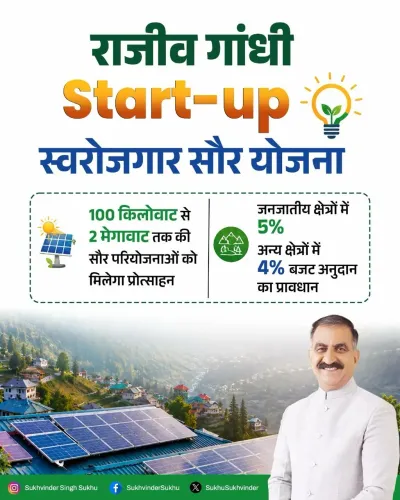
Battery-paired solar is the state's growing answer for last-mile electrification where grid extension costs are prohibitive.
Missing the pre-snowfall commissioning window would delay the project by a full year.
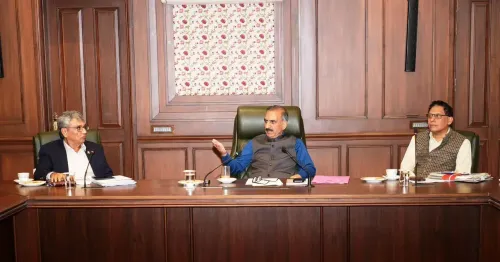
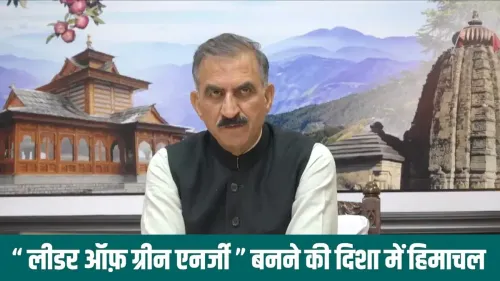
Before the first snows seal off Spiti Valley, Himachal Pradesh Chief Minister Thakur Sukhvinder Singh Sukhu has issued a pointed directive: get the 2 megawatt Rangrik solar energy project — paired with a 1 megawatt-hour (MWh) battery energy storage system — commissioned and operational. The order, posted by the Chief Minister's Office of Himachal Pradesh on Wednesday, 30 September 2026, signals that the window to act is narrow and closing fast.
A high-altitude village racing the calendar
Rangrik is a high-altitude settlement in the Spiti region — a cold-desert tribal belt in Himachal Pradesh where winters are long, roads become treacherous, and grid power is a privilege, not a given. Once heavy snowfall arrives, logistics freeze along with the landscape. The CM's directive is essentially a hard deadline dressed as an administrative order.
The post quoted CM Sukhu's instruction directly: 'रंगरिक की 2 मेगावाट सौर ऊर्जा परियोजना को 1 मेगावाट हॉवर बैटरी ऊर्जा भंडारण प्रणाली सहित बर्फबारी शुरू होने से पहले कार्यशील करें' — 'Make the 2 MW Rangrik solar energy project, along with the 1 MWh battery energy storage system, operational before snowfall begins.'
Why battery storage changes the equation for Spiti
Solar alone in a high-altitude cold desert is only half a solution. Spiti's brutal winters bring extended cloud cover, sub-zero temperatures, and reduced sunlight hours — precisely when demand for heating and lighting peaks. Pairing the 2 MW solar array with a 1 MWh battery storage system means energy generated during clear daytime windows can be banked and discharged through the night or during overcast stretches.
Himachal Pradesh has been expanding solar capacity in tribal and high-altitude zones since its 2016 state renewable energy policy, partly to compensate for the seasonal dip in hydro generation during winter months when rivers run low. Battery-paired solar represents the next step — moving from intermittent generation to something closer to reliable supply.
The political urgency behind the technical order
CM Sukhu, who has held office since December 2022, has consistently placed renewable energy expansion in remote districts at the centre of his administration's identity. An order of this specificity — naming a village, a capacity figure, a storage spec, and a seasonal deadline all in one line — is as much a public accountability marker as it is an internal directive. If the project misses its window, it misses a full year.
The broader pattern is clear: as grid extension into terrain like Spiti remains prohibitively expensive, distributed solar-plus-storage is becoming the state's default answer for last-mile electrification. Rangrik is one node in what Himachal is quietly building — a cold-weather solar backbone for its most isolated communities.
Whether commissioning crews can beat the snowline is now the only question that matters.
Point of View
Capacity figure, storage spec, and a seasonal deadline in one public order, the administration is creating a visible accountability marker in a domain — tribal-area electrification — that often gets lost in bureaucratic timelines. It fits a broader pattern of Himachal Pradesh positioning distributed solar-plus-storage as the cost-effective alternative to expensive grid extension in high-altitude cold deserts. The insistence on pre-snowfall commissioning also reflects an understanding that in terrain like Spiti, calendar windows govern infrastructure as surely as budget allocations. Whether the order translates into on-ground execution will be the real test of the state's renewable ambitions in its most logistically challenging districts.
NationPress
1 Oct 2026
Frequently Asked Questions
What is the Rangrik solar energy project in Himachal Pradesh?
The Rangrik solar energy project is a 2 megawatt solar power installation in the Spiti region of Himachal Pradesh, paired with a 1 MWh battery energy storage system to supply reliable electricity to the high-altitude village of Rangrik, where grid access is limited.
Why is the pre-snowfall deadline important for the Rangrik project?
Spiti Valley experiences heavy seasonal snowfall that cuts off road access and makes construction and commissioning work impossible for months. Missing the window before snowfall means the project cannot be completed for at least another year, leaving the village without the improved power supply through an entire winter.
Why is battery storage being added to the Rangrik solar project?
Solar panels alone cannot guarantee continuous supply in Spiti's winters, when cloud cover is frequent and sunlight hours are short. The 1 MWh battery storage system stores energy generated during clear periods and releases it at night or during overcast days, making the supply far more reliable.
What is Himachal Pradesh's renewable energy policy for tribal and high-altitude areas?
Himachal Pradesh has promoted solar installations in tribal and high-altitude zones since its 2016 state renewable energy policy , partly to offset the seasonal dip in hydro generation during winters and to provide last-mile power where extending the conventional grid is prohibitively expensive.
Who ordered the Rangrik solar project to be completed before snowfall?
Chief Minister Thakur Sukhvinder Singh Sukhu , who has led Himachal Pradesh since December 2022 , issued the directive on 30 September 2026 via the official Chief Minister's Office account, instructing officials to make the project operational before snowfall begins.