HP CM Office Assures Land Lease, Monthly Aid for Trust School Students
Synopsis
The Chief Minister's Office of Himachal Pradesh assured a trust-run school delegation of land-lease cooperation and announced monthly stipends of Rs 1,000 for students under 14 and Rs 2,500 for those above 14, signalling continued state support for non-government educational institutions in the hill state.
Key Takeaways
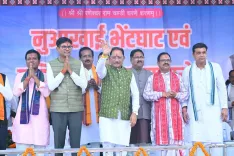
The Chief Minister's Office of Himachal Pradesh received a delegation from a trust-operated school on 1 June 2026 .
The CMO assured 'every possible cooperation' on the delegation's demand for a land lease for the school.
Students below 14 years of age will receive Rs 1,000 per month in financial assistance.
Students above 14 years of age will receive Rs 2,500 per month in financial assistance.
A formal government notification with eligibility criteria and disbursement details is yet to be issued.
The move fits a broader pattern of Himachal Pradesh using public-private collaboration to expand schooling access in remote areas.
The Chief Minister's Office of Himachal Pradesh announced on Monday, 1 June 2026 that a delegation representing a trust-run school was received and assured of full cooperation on a land-lease request, alongside a new monthly financial assistance scheme for students. The office confirmed stipends of Rs 1,000 per month for students below 14 years of age and Rs 2,500 per month for those above 14 years.
Context
The CMO's post, shared in Hindi, states: 'pratinidhi mandal ne Trust sanchalit vidyalay ke liye bhoomi patte ki maang rakhi, jis par har sambhav sahyog ka aashwasan diya' — 'The delegation placed a demand for a land lease for the trust-run school, on which assurance of every possible cooperation was given.' The announcement also confirmed the two-tier monthly stipend structure tied to student age.
Trust-operated schools occupy a significant space in Himachal Pradesh's education landscape, particularly in hilly and remote areas where government infrastructure is thin. Delegations from such institutions approaching the CMO for land concessions and financial support are a recurring feature of state education governance.
Policy Backdrop
Monthly stipends scaled by age group are a well-established instrument across Indian states to improve school enrollment and reduce dropout rates, especially in economically weaker communities. By differentiating between students under and over 14 years, the scheme appears designed to address two distinct pressure points: primary retention and the critical transition to secondary schooling, where dropout risk rises sharply.
Himachal Pradesh has historically maintained high literacy rates relative to its Himalayan neighbours, supported by a mix of state-run schools and aided private or trust institutions. Public-private collaboration — where the state provides land, funding, or stipends while trusts manage operations — reduces the fiscal burden of full government operation while expanding access.
Stakeholders and Impact
The primary beneficiaries are students enrolled in the trust-run school in question. Families with children below 14 would receive Rs 1,000 monthly, while those with older students stand to gain Rs 2,500 monthly — amounts that can meaningfully offset schooling costs such as transport, stationery, and uniforms in a hill state where distances are large and incomes modest.
The educational trust itself stands to benefit from a concessional land lease, which would enable infrastructure expansion or formalisation of an existing campus. Broader civil society and trust-run school networks across the state will watch this assurance closely as a potential precedent for similar requests.
What's Next
The CMO's statement carries the weight of an official assurance but a formal government order detailing eligibility criteria, the disbursement mechanism, and the specific trust and school covered is yet to be issued. Observers will look for an official notification that converts this assurance into an actionable scheme with a defined rollout timeline.
If implemented as announced, the stipend structure could serve as a model for other trust-run institutions in the state seeking similar public support, reinforcing Himachal Pradesh's approach of leveraging non-governmental educational operators to extend schooling access in its most remote regions.
Point of View
A persistent challenge in hill economies where adolescent labour demand competes with schooling. This announcement, however, remains an assurance rather than a notified scheme, and the gap between CMO-level commitments and ground-level implementation has historically been a sticking point in Himachal Pradesh's education programmes. The broader signal is one of a state government actively courting civil-society education operators ahead of what is likely a period of tightened fiscal space.
NationPress
15 Oct 2026
Frequently Asked Questions
What financial help will Himachal Pradesh give to trust school students?
The Chief Minister's Office of Himachal Pradesh announced Rs 1,000 per month for students below 14 years and Rs 2,500 per month for students above 14 years enrolled in the trust-run school.
What is the HP CM Office land lease assurance for trust schools?
The CMO assured a delegation representing a trust-operated school of 'every possible cooperation' on their request for a government land lease to support the school's operations or expansion.
Which school or trust received the HP CMO's assurance?
The exact identity of the trust and school has not been officially confirmed in the announcement; a formal government notification with those details is awaited.
How does Himachal Pradesh support trust-run schools?
Himachal Pradesh has a pattern of supporting trust-run schools through land concessions, stipends, and financial aid, using public-private collaboration to extend schooling access in remote and hilly areas.
When will the HP student stipend scheme be implemented?
No official implementation date has been announced yet; the CMO's statement is an assurance, and a formal government order with eligibility and disbursement details is pending.