HP Govt Commits Care for Children in State Custody Up to Age 27

Synopsis
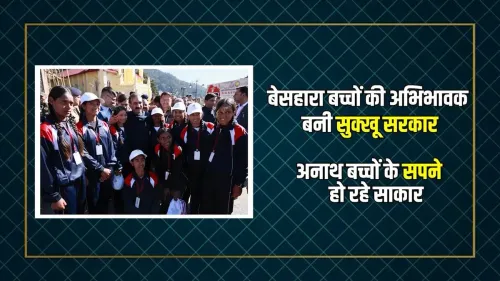
The Himachal Pradesh government has committed to providing upbringing, education, and care for children in state custody up to age 27, aiming to build self-reliance — pushing well beyond the national aftercare baseline of age 18.
Key Takeaways
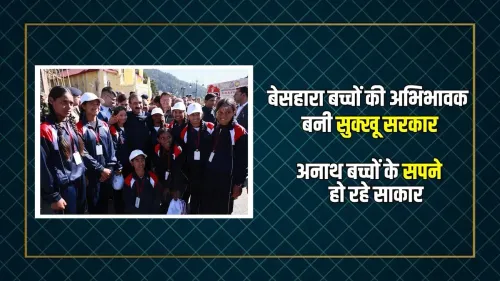
The Himachal Pradesh government has committed to caring for children in state custody up to age 27 , covering upbringing, education, and welfare.
The stated goal is to make every such child self-reliant ( aatmanirbhar ) and capable of realising their own ambitions.
Most Indian states' aftercare support ends at age 18 ; the Juvenile Justice Act framework allows extension beyond 18 but implementation varies widely.
Specific details — beneficiary numbers, budget allocations, and exact scheme mechanics — have not yet been publicly disclosed.
The commitment aligns with constitutional directives on child rights and the state's obligations to vulnerable groups.
Every child in state care in Himachal Pradesh now has a promise that stretches well into adulthood — the government has committed to taking responsibility for their upbringing, education, and welfare all the way up to age 27, ensuring no young person is left to navigate life alone the moment they age out of institutional support.
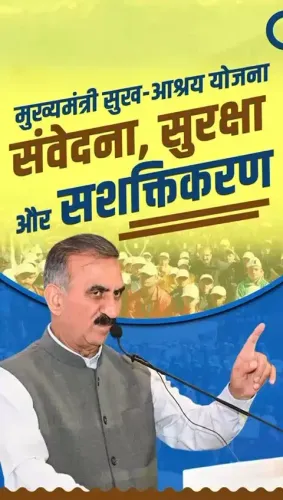
The Chief Minister's Office of Himachal Pradesh posted on Monday, November 2, 2026, reaffirming this commitment in Hindi: 'हमारी सरकार 27 वर्ष की आयु तक उनके पालन-पोषण, शिक्षा और समुचित देखभाल का दायित्व निभा रही है, ताकि हर बच्चा आत्मनिर्भर बनकर अपने सपनों को साकार करे' — 'Our government is fulfilling the responsibility of nurturing, educating, and providing proper care for them up to the age of 27, so that every child becomes self-reliant and realises their dreams.'
Why 27 Matters: The Gap Most States Leave Unfilled
Across India, children in need of care and protection — those housed in state-run homes or under government guardianship — have historically faced a hard cliff at age 18. The Juvenile Justice (Care and Protection of Children) Act created a framework for aftercare beyond 18, but implementation has been patchy. Most state programmes wind down at 18 or 21 at best, leaving young adults without education support, housing, or mentorship at precisely the moment they are most vulnerable. Himachal Pradesh's stated commitment to extend that support to 27 — covering upbringing, schooling, and 'proper care' — pushes significantly further than the national baseline. The explicit aim, as the CMO framed it, is self-reliance (aatmanirbhar): not just keeping a child housed, but equipping them to pursue their own aspirations.Aligning with Constitutional Duties on Child Rights
India's constitutional directives place a clear obligation on the state to protect children from exploitation and ensure their development. Several northern and northeastern states have piloted extended aftercare models — linking older wards to vocational training, higher education scholarships, and supervised independent living — but a formal commitment up to age 27 would place Himachal Pradesh among the more ambitious in the country on this metric. The broader child-welfare ecosystem in the state is administered through district child protection units, child welfare committees, and state-run children's homes operating under the Himachal Pradesh government's social justice and empowerment department. The specifics — how many children are enrolled, what the annual budget allocation looks like, and whether this is a new scheme or an expansion of an existing one — are yet to be detailed publicly. Those numbers will determine whether this commitment translates into a structural shift or remains a statement of intent. What the government has made unambiguous is the direction: no child in state care should step into adulthood without the tools to stand on their own.Point of View
The conversation on child welfare has focused on early years; aftercare for older wards is under-resourced and under-scrutinised. By anchoring the promise to aatmanirbharta, the state government also taps into a nationally resonant development vocabulary. The real test will come in the budget lines and beneficiary data: a policy pronouncement without a dedicated funding mechanism is aspirational rhetoric, not structural change. If implementation follows, it could set a benchmark that pressures other states to close their own aftercare gaps.
NationPress
2 Nov 2026
Frequently Asked Questions
What is Himachal Pradesh's commitment for children in state care?
The Himachal Pradesh government has committed to taking responsibility for the upbringing, education, and proper care of children in state custody up to the age of 27, with the goal of making them self-reliant.
What does the Juvenile Justice Act say about aftercare for children?
The Juvenile Justice (Care and Protection of Children) Act provides a framework for aftercare support beyond age 18, but implementation varies by state; most programmes offer limited support up to 18 or 21.
How is Himachal Pradesh's policy different from other Indian states?
Most Indian states' formal support for children in state care ends at age 18. Himachal Pradesh's stated commitment to extend care to age 27 places it among the more ambitious states on child welfare aftercare.
What does 'aatmanirbhar' mean in the context of child welfare?
'Aatmanirbhar' means self-reliant. In this context, the HP government is aiming not just to house or feed children in state care, but to equip them educationally and developmentally to pursue independent lives.
Which department in Himachal Pradesh handles child welfare?
Child welfare in Himachal Pradesh is administered through district child protection units, child welfare committees, and state-run children's homes under the social justice and empowerment department.