Hyderabad Metro ferries donor heart, lungs 14 km in 25 minutes
Synopsis
Hyderabad Metro Rail became a life-saving artery on 1 August, ferrying a donor heart and lungs 14 kilometres across 13 stations in just 25 minutes — a metro-based organ transit that bypasses road congestion entirely. Combined with a rare robotic mitral valve surgery at KIMS Gachibowli, the developments signal Hyderabad's emergence as a serious node in India's advanced cardiac care network.
Key Takeaways
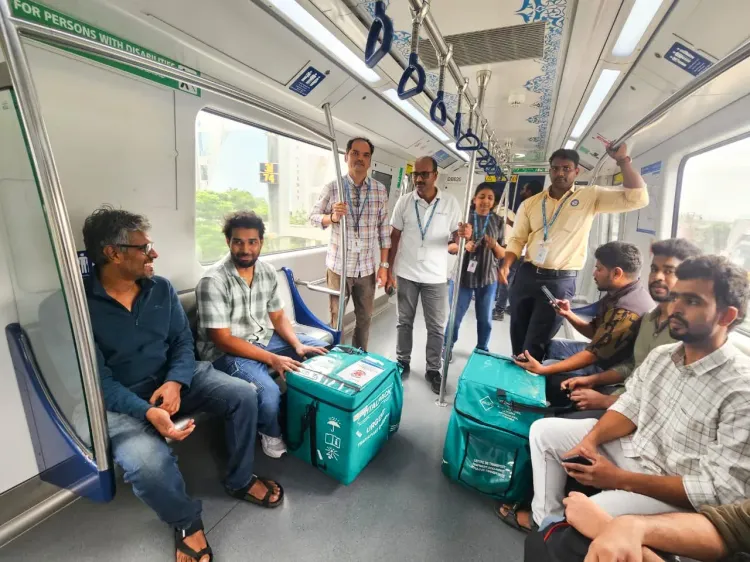
Hyderabad Metro Rail transported donor heart and lungs from Raidurg to Rasoolpura Station — a distance of 14 km across 13 stations — in 25 minutes on 1 August .
The transit linked CARE Hospitals, Gachibowli to KIMS Hospitals, Secunderabad for a time-critical organ transplantation.
L&T Metro Rail (Hyderabad) Limited coordinated the mission with healthcare professionals and hospital authorities.
KIMS Hospital, Gachibowli performed a robotic-assisted mitral valve replacement on a 37-year-old patient from Rajahmundry on 23 July , lasting over five hours .
According to Dr Nisarga , robotic mitral valve replacement remains a relatively rare procedure in Hyderabad.
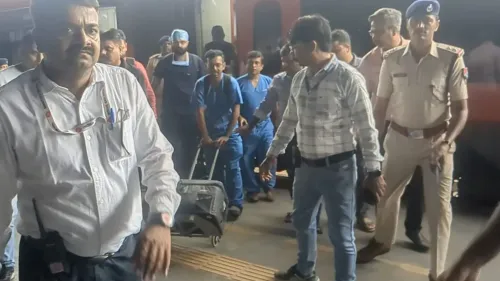
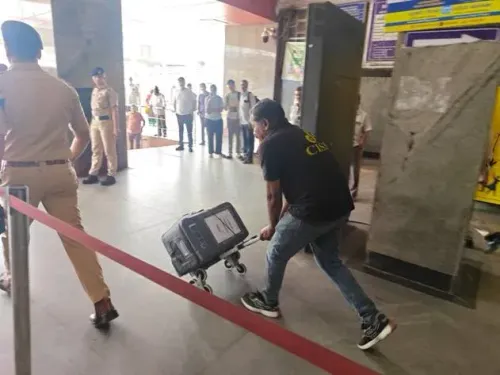
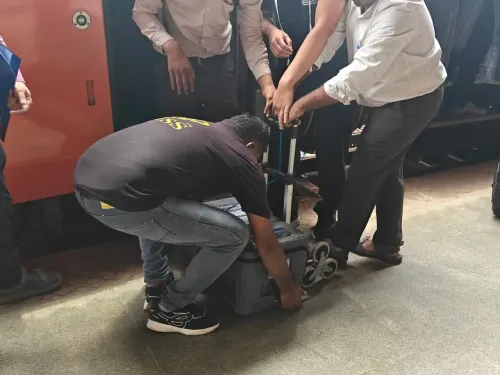
Hyderabad Metro Rail served as a life-saving corridor on Saturday, 1 August, facilitating the emergency transportation of a donor heart and lungs across 14 kilometres in just 25 minutes — a transit that could not afford a single minute of delay.
The Medical Transit
The organs were moved from Raidurg Metro Station to Rasoolpura Station, covering 13 stations along the route. The journey linked CARE Hospitals, Gachibowli, where the donor organs were retrieved, to KIMS Hospitals, Minister Road, Secunderabad, where the transplantation was to be performed.
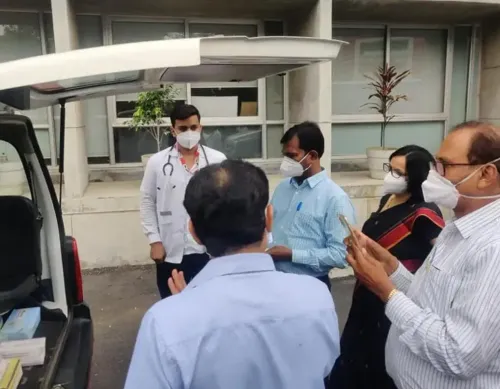
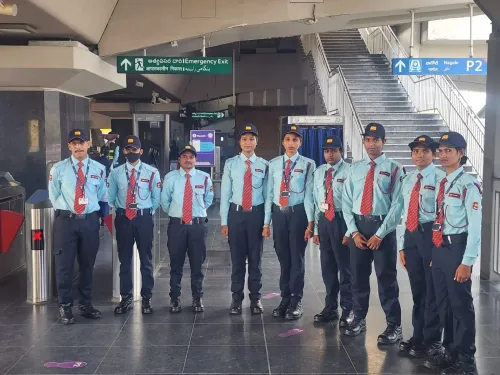
According to Hyderabad Metro Rail, the transit was executed through seamless operational coordination, ensuring timely movement of the organs during a critical phase of the transplantation process. The mission involved close coordination between metro rail staff, healthcare professionals, and hospital authorities.
Metro's Role in Emergency Healthcare
L&T Metro Rail (Hyderabad) Limited (L&TMRHL) stated it remains committed to supporting emergency healthcare initiatives, extending the role of urban mobility beyond routine transportation to enable life-saving medical interventions. This is not the first time Indian metro networks have been pressed into service for organ transit — green corridors on roads have long been used for such missions, but metro-based organ transport adds a new, traffic-independent dimension to the city's emergency response infrastructure.
Robotic Mitral Valve Surgery at KIMS Gachibowli
In a separate but related development from Hyderabad's cardiac care landscape, KIMS Hospital, Gachibowli, successfully performed a robotic-assisted mitral valve replacement on a 37-year-old patient from Rajahmundry on 23 July. The procedure, which lasted more than five hours, marks a significant milestone in minimally invasive cardiac surgery in the city.
The patient — an accountant employed with a prawn export company — had been suffering from severe mitral stenosis caused by chronic rheumatic heart disease. According to Dr Nisarga, Chief Cardiothoracic, Robotic and Minimally Invasive Surgeon, the mitral valve, located between the left atrium and left ventricle, had become thickened and narrowed, restricting blood flow and placing dangerous strain on the heart. Left untreated, the condition can escalate into life-threatening complications.
Why Robotic Cardiac Surgery Matters
Dr Nisarga noted that robotic intracardiac procedures remain uncommon in Hyderabad, and robotic-assisted mitral valve replacement is still a relatively rare surgery in the city. The successful outcome signals a growing capability in minimally invasive cardiac care in the region, potentially expanding access to advanced surgical options for patients who would otherwise need to travel to larger metropolitan centres.
What This Means for Hyderabad's Healthcare Infrastructure
Together, these two developments — metro-enabled organ transit and a successful robotic cardiac procedure — underscore Hyderabad's expanding role as a hub for advanced medical care. Urban mobility infrastructure and surgical innovation are converging to improve outcomes for critically ill patients. As transplant volumes grow nationally, purpose-integrated city logistics like metro green corridors could become a replicable model for other Indian cities.
Point of View
But using a fixed-schedule metro network for time-critical organ movement is logistically more complex and, when it works, more reliable. The Hyderabad case raises a practical question for city planners: should metro operators across India have a standardised emergency medical protocol, rather than treating each such transit as an ad hoc coordination exercise? On the surgical side, the robotic mitral valve story is significant not because the procedure is new globally, but because its rarity in Hyderabad points to a gap between available technology and trained surgical capacity — a gap that, if closed, could reduce the need for patients from Tier-2 cities to seek care in Chennai or Mumbai.
NationPress
16 Sept 2026
Frequently Asked Questions
How did Hyderabad Metro facilitate the organ transplant on 1 August?
Hyderabad Metro Rail transported donor heart and lungs from Raidurg Metro Station to Rasoolpura Station — a 14-kilometre stretch covering 13 stations — in 25 minutes on 1 August. The transit connected CARE Hospitals, Gachibowli, to KIMS Hospitals, Secunderabad, as part of a coordinated emergency medical mission.
Which hospitals were involved in the Hyderabad organ transit?
CARE Hospitals in Gachibowli was the source of the donor organs, while KIMS Hospitals on Minister Road, Secunderabad, was the destination for the transplantation. L&T Metro Rail (Hyderabad) Limited coordinated the transit between the two facilities.
What is robotic-assisted mitral valve replacement and why is it significant in Hyderabad?
Robotic-assisted mitral valve replacement is a minimally invasive cardiac surgery in which robotic arms perform precise intracardiac repairs with smaller incisions than open-heart surgery. According to Dr Nisarga, it remains a relatively rare procedure in Hyderabad, making the successful operation at KIMS Gachibowli on 23 July a notable milestone for the city's cardiac care capabilities.
Who was the patient who underwent robotic mitral valve surgery at KIMS Gachibowli?
The patient was a 37-year-old accountant from Rajahmundry employed with a prawn export company, who had been suffering from severe mitral stenosis caused by chronic rheumatic heart disease. The procedure was performed on 23 July and lasted more than five hours.
Can other Indian cities replicate Hyderabad Metro's organ transit model?
The Hyderabad Metro's organ transit demonstrates that urban rail networks can serve as traffic-independent emergency corridors for time-critical medical cargo. While the model is replicable in principle, it requires standardised coordination protocols between metro operators, hospitals, and state health authorities — something that has not yet been formalised across Indian metro systems.