IAF airlifts 40 tonnes of flood relief to Nepal from Hindon Airbase
Synopsis
Within hours of Nepal's flash floods striking, Hindon Airbase had C-130s and C-17s on standby — and by 8:30 pm, the first aircraft was already airborne. The second sortie, carrying nearly 40 tonnes of relief, followed the next day. Senior IAF officers say this is routine: the base has run identical missions in Myanmar, Sri Lanka, and even Venezuela.
Key Takeaways
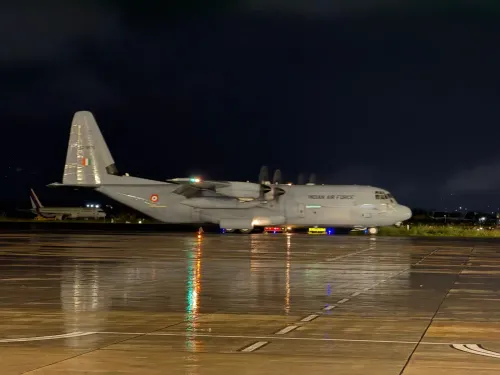
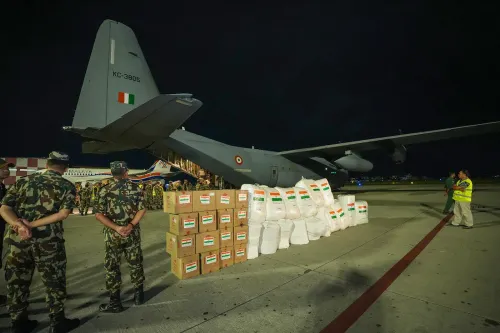
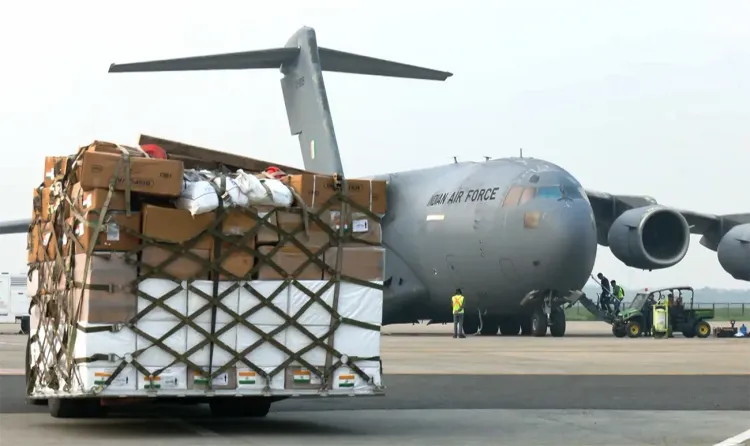
The IAF dispatched nearly 40 tonnes of humanitarian supplies to Nepal from Hindon Airbase, Ghaziabad on 27 August .
A day earlier, 10 tonnes of HADR materials and medicines had already been sent — making this the second airlift in 24 hours .
C-130 and C-17 aircraft were placed on standby immediately upon receiving information; the first flight departed at 8:30 pm on 26 August .
The aircraft carried 35–40 tonnes against a 70-tonne capacity to enable a 3–4 hour turnaround at Kathmandu airport .
Extra fuel was loaded to allow the aircraft to hold in the air for up to 1.5 hours due to low cloud cover over Nepal.
Air Commodore Rajiv Dobhal cited prior HADR missions in Myanmar, Sri Lanka , and Venezuela as evidence of Hindon's established readiness.
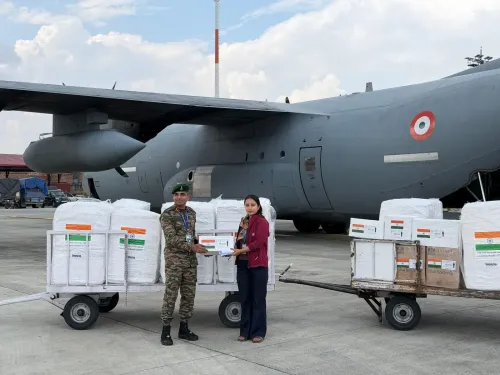
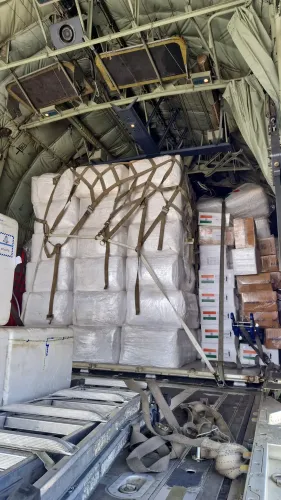
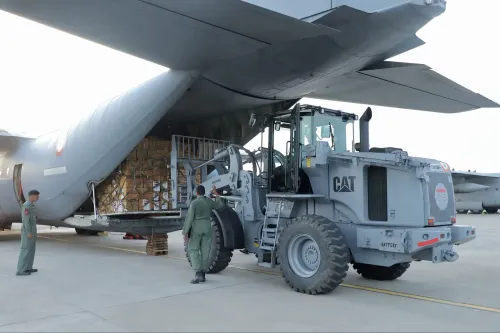
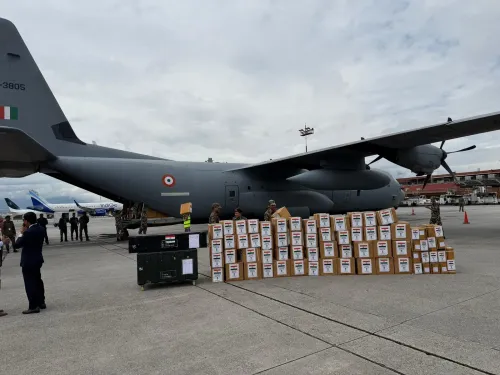
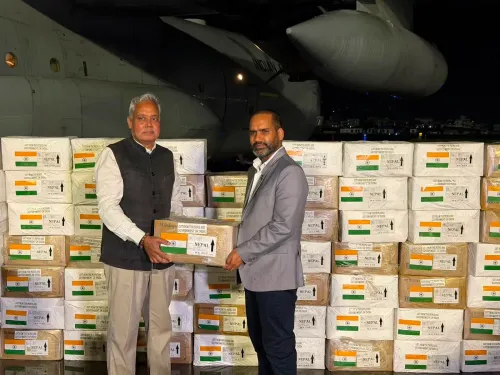
The Indian Air Force (IAF) on 27 August dispatched nearly 40 tonnes of humanitarian supplies — including medicines, food packets, NDRF personnel, and dignity kits — to flood-ravaged Nepal from Hindon Airbase in Ghaziabad, with senior officers describing the base as perpetually primed for such disaster-relief missions.
The Dispatch and What It Carried
The consignment, the second in as many days, included medical relief supplies, dignity kits, and other essential materials. A day earlier, India had already sent 10 tonnes of Humanitarian Assistance and Disaster Relief (HADR) materials and essential medicines to Nepal following devastating flash floods in the Himalayan nation. Wing Commander Lagnajeet Nayak, commander of the aircraft, said the load was deliberately capped at 35 to 40 tonnes — well below the aircraft's 70-tonne capacity — to allow a quick turnaround at Kathmandu airport within three to four hours.
What IAF Officers Said
Air Commodore Rajiv Dobhal, Air Officer Commanding of Hindon Airforce Station, underlined the base's institutional readiness: 'We are ever ready for such tasks. We have already been mandated for that, and we all have the experience also. We have done it a number of times before this, not only in Nepal, Myanmar, Sri Lanka, and even in Venezuela. So, we are ever ready for such tasks. As soon as we got the information, we started our work.'
Chief Operating Officer Group Captain Jai Ganesh described Hindon as 'the tip of the spear when it comes to HADR operations.' He said the base received information about the Nepal floods the previous afternoon, immediately placed C-130 and C-17 aircraft on standby, and had the first aircraft airborne by 8:30 pm the same evening.
Operational Contingencies
Wing Commander Nayak noted that low cloud cover over Nepal and civil air traffic required the aircraft to carry extra fuel — enough to hold in the air for one to one-and-a-half hours if an immediate landing was not possible. 'In case the delay is uncertain or gets prolonged, we have adequate diversions in India. We have demarcated two bases where we can divert, refuel and proceed to Nepal whenever they give clearance,' he said. The flight time from Hindon to Kathmandu is approximately 1 hour 15 minutes.
India's Broader HADR Record
This operation is the latest in a long line of rapid-response deployments by the IAF, which has conducted HADR missions across South Asia and beyond — including in Myanmar, Sri Lanka, and Venezuela. The Hindon Airbase, located on the outskirts of Delhi, has historically served as the primary staging point for such international relief airlift operations, given its proximity to the capital and its large-aircraft handling capability. Notably, the coordination between the IAF, NDRF, and Ministry of External Affairs in mobilising the second dispatch within 24 hours of the first reflects a maturing inter-agency HADR framework.
What Happens Next
With Nepal's flash floods continuing to affect multiple districts, further relief sorties are likely depending on ground assessments and requests from Kathmandu. India's swift response reinforces its 'Neighbourhood First' foreign policy posture, particularly as it seeks to consolidate ties with Nepal amid regional competition.
Point of View
Aircraft on standby within hours of the flood alert — reflects genuine operational maturity at Hindon, not just diplomatic optics. What is worth watching is whether this goodwill translates into durable diplomatic capital with Kathmandu, where China has been an increasingly active presence in infrastructure and aid. India's 'Neighbourhood First' policy is at its most credible when it is first on the ground; this operation clears that bar. The harder test is sustaining that presence through the recovery phase, not just the emergency window.
NationPress
11 Oct 2026
Frequently Asked Questions
How much relief material did India send to Nepal following the flash floods?
India sent a total of nearly 50 tonnes of relief material in two sorties: 10 tonnes of HADR supplies and medicines on 26 August , followed by approximately 35–40 tonnes of medical relief, NDRF supplies, dignity kits, and food on 27 August . Both flights departed from Hindon Airbase in Ghaziabad.
Which aircraft did the IAF use for the Nepal relief mission?
The IAF deployed C-130 and C-17 transport aircraft from Hindon Airbase. The C-130 served as the first responder, departing at 8:30 pm on 26 August , while the larger C-17 carried the bulk of the second consignment.
Why did the IAF carry less than the aircraft's full capacity?
Wing Commander Lagnajeet Nayak explained that loading only 35–40 tonnes against the aircraft's 70-tonne capacity allowed the crew to complete a turnaround at Kathmandu airport within three to four hours , freeing up the airfield quickly and enabling a faster return for follow-on missions.
What contingency plans were in place if the aircraft could not land in Nepal?
The aircraft carried extra fuel to hold in the air for up to one to one-and-a-half hours if landing was not immediately possible due to low cloud cover. Two alternate IAF bases inside India were also designated as diversion points for refuelling before proceeding to Nepal.
Has India conducted similar HADR missions before?
Yes. Air Commodore Rajiv Dobhal confirmed that Hindon Airbase has executed HADR missions in Nepal, Myanmar, Sri Lanka , and even Venezuela in the past. The IAF has a standing mandate for such operations and maintains readiness protocols that allow rapid mobilisation.