IMF confirms India supply chain gains, electronics exports up 24%
Synopsis
The IMF has put hard numbers behind India's supply chain story — a 24% jump in electronics exports in FY2025-26, with smartphones now a top export. But the Fund's Washington briefing carried an unmistakable caveat: the gains are sector-specific and reform-dependent, and the road to Viksit Bharat by 2047 demands sustained high growth that India has not yet locked in.
Key Takeaways
The IMF confirmed on 9 July that global supply chain diversification is delivering tangible benefits to India , most visibly in electronics.
India's electronics exports rose 24 per cent in fiscal year 2025-26 , with smartphones among the country's largest export products.
Much of the export production surge is being driven by domestic contract manufacturers , not foreign direct investment.
The IMF projects India's GDP growth at 6.4 per cent in FY2026-27 , rising to 6.7 per cent in 2027 .
Julie Kozack said achieving Viksit Bharat by 2047 would require 'very high, sustained high growth levels over a long period of time.' The IMF urged India to continue reforms on workforce skills, labour market flexibility, compliance costs and trade integration.
The International Monetary Fund (IMF) on 9 July confirmed that global supply chain diversification is delivering measurable benefits to India, with gains most visible in electronics manufacturing — even as the Fund urged New Delhi to sustain structural reforms to keep the momentum going.
What the IMF Said
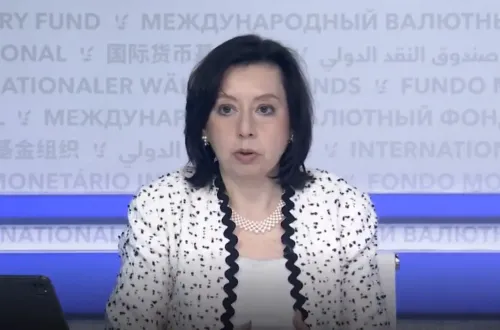
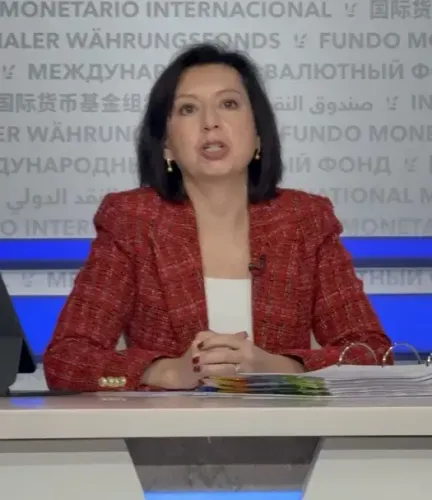
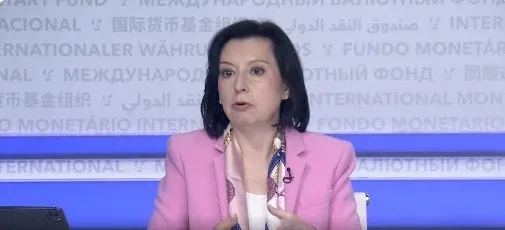
Julie Kozack, Director of the IMF's Communications Department, speaking at the Fund's regular press briefing in Washington, said the evidence is clear. 'We do see evidence of supply chain diversification benefiting India,' she said, adding that 'the gains so far have been concentrated in some specific sectors, most visibly in electronics.'
Kozack cited a striking headline figure: India's electronics exports 'rose by 24 per cent in fiscal year 2025-26', with smartphones now ranking among the country's largest export products. She also noted that much of the production surge has been driven by domestic players rather than foreign capital. 'Much of this increase in production for exports appears to be happening through domestic contract manufacturers rather than foreign direct investment,' she said.
India's Growth Outlook
Kozack reaffirmed the IMF's broader view that India remains among the world's top-performing major economies. 'India is one of the fastest growing economies in the world. It remains a key engine of growth for the world,' she said.
According to the IMF's latest World Economic Outlook update released on Wednesday, India's economy is projected to grow 6.4 per cent in fiscal year 2026-27, rising further to 6.7 per cent in 2027. The Fund also assessed that India's risk outlook is now more balanced than it was earlier in the year.
The Viksit Bharat Question
Asked whether India's current growth pace would be sufficient to achieve its goal of becoming a developed nation by 2047 — the Viksit Bharat vision — Kozack said the bar is high. 'Achieving developed nation status would require India to continue to have very high, sustained high growth levels over a long period of time,' she said, noting that outcomes would also depend on factors such as population growth and currency movements.
Reforms Needed to Hold the Gains
The IMF official acknowledged that India has already made 'significant progress in structural reforms in recent years', pointing to the implementation of a new labour code, new trade agreements and deregulation at the state level. However, she said continued effort is essential.
To sustain its trajectory, India would need to push ahead on strengthening workforce skills, increasing labour market flexibility, reducing business compliance costs and deepening trade integration. 'We encourage India to build on this progress,' Kozack said.
This comes amid a broader global realignment of supply chains, with companies reducing dependence on single-country manufacturing bases. Government initiatives including the Production Linked Incentive (PLI) schemes and sustained investment in manufacturing infrastructure have helped India capture a share of that shift across electronics, semiconductors and renewable energy equipment. How much more it can capture will depend on how quickly reform commitments translate into ground-level execution.
Point of View
Not the deep FDI integration that would signal a structural lock-in. A 24% export jump is impressive; it is not yet a diversified manufacturing story. More telling is the Viksit Bharat exchange: the IMF stopped well short of validating the 2047 timeline, and the conditions it attached — sustained high growth, population dynamics, currency stability — are precisely the variables India does not fully control. The PLI architecture has delivered a first wave; whether it survives the next US tariff cycle or a domestic reform slowdown is the question mainstream coverage is not yet asking.
NationPress
8 Oct 2026
Frequently Asked Questions
What did the IMF say about India's supply chain gains?
The IMF confirmed on 9 July that global supply chain diversification is already benefiting India, with the clearest evidence in electronics manufacturing. IMF Communications Director Julie Kozack cited a 24 per cent rise in India's electronics exports in FY2025-26 and noted that smartphones have become one of the country's largest export products.
Who is driving India's electronics export surge — foreign or domestic companies?
According to the IMF, the surge is being driven primarily by domestic contract manufacturers rather than foreign direct investment. Kozack said 'much of this increase in production for exports appears to be happening through domestic contract manufacturers rather than foreign direct investment.'
What is the IMF's GDP growth forecast for India?
The IMF projects India's economy will grow 6.4 per cent in fiscal year 2026-27, accelerating to 6.7 per cent in 2027, according to its latest World Economic Outlook update released on Wednesday. The Fund also said India's risk outlook is now more balanced than earlier in the year.
Can India become a developed nation by 2047 at its current growth rate?
The IMF did not endorse the 2047 Viksit Bharat timeline. Julie Kozack said achieving developed nation status would require India to 'continue to have very high, sustained high growth levels over a long period of time,' with outcomes also depending on population growth and currency movements.
What reforms has the IMF recommended for India to sustain its growth?
The IMF urged India to continue reforms focused on strengthening workforce skills, increasing labour market flexibility, reducing business compliance costs and deepening trade integration. It acknowledged India has already made significant progress, citing a new labour code, new trade agreements and state-level deregulation.