Sitharaman at G20: India growing at 7.8% despite global headwinds
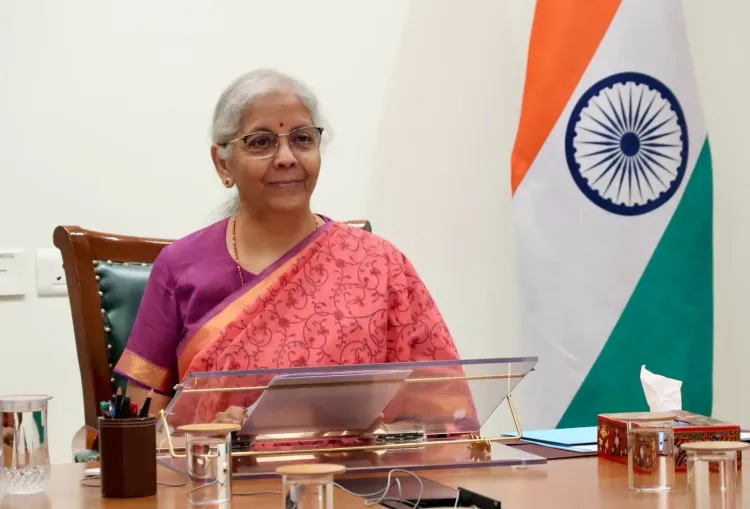
Synopsis
Even as India imports most of its crude and fertilisers, Finance Minister Nirmala Sitharaman used the G20 stage in Asheville to argue that 7.8% GDP growth in Q1 FY27 — with manufacturing at 9.2% and forex reserves near $700 billion — proves the economy can absorb global shocks without losing momentum. The real question is whether that resilience holds if commodity prices spike again.
Key Takeaways
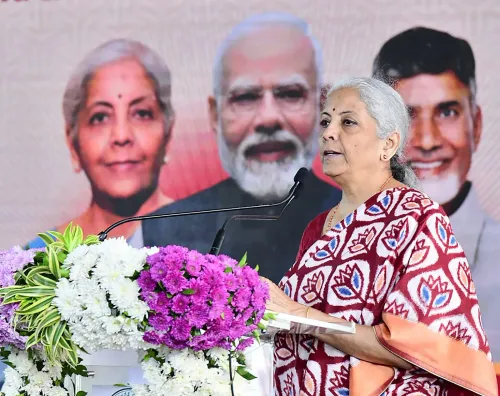
Finance Minister Nirmala Sitharaman spoke on the sidelines of the G20 Finance Ministers' meeting in Asheville on 1 September .
India's GDP grew at 7.8% in the first quarter of FY 2026-27 , despite global economic pressures.
Manufacturing expanded at 9.2% ; financial and professional services grew at 12.1% .
India's foreign exchange reserves stood at approximately $700 billion .
More than 1,000 laws removed and around 40,000 regulations simplified to ease business.
Sitharaman is set to travel to New York after the G20 summit for investor meetings.
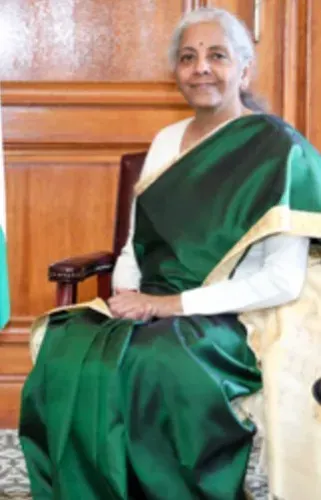
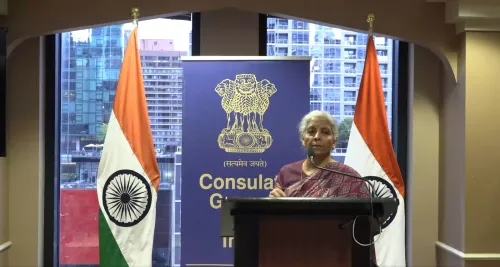
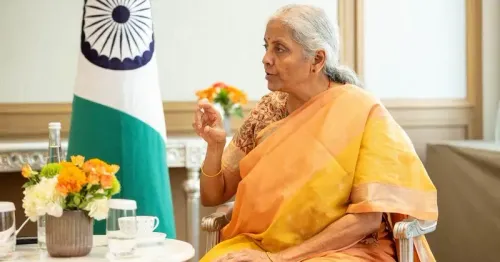
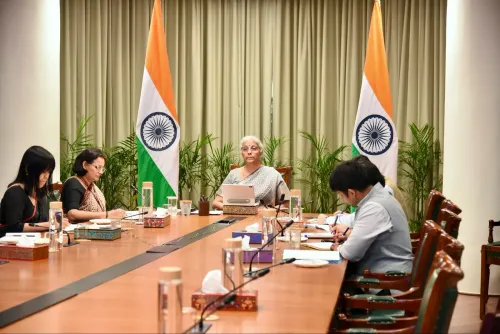
Finance Minister Nirmala Sitharaman on 1 September said India has demonstrated its ability to absorb global economic shocks without sacrificing growth, even as she acknowledged the country's significant dependence on imported crude oil and fertilisers. Her remarks came on the sidelines of the G20 Finance Ministers' meeting in Asheville, where she described India as a 'vibrant and responsive economy.'
Acknowledging the Challenges
'I'll start with the fact that we have challenges. There is just no doubt,' Sitharaman said. India is among the world's largest importers of crude oil, petroleum products, and fertilisers including urea, ammonia, and DAP. 'We have certain production capacity within the country, but despite all that, we are importers,' she said.
Growth Numbers That Stand Out
India recorded a 7.8% GDP growth rate in the first quarter of the 2026-27 financial year, a figure Sitharaman described as especially significant given persistent external pressures. 'Despite these global challenges, if the Indian economy is still growing at 7.8 per cent in the first quarter of this financial year, 2026-2027, it is heartening that the people's hard work is bearing fruit,' she said.
The expansion was broad-based rather than sector-specific. Manufacturing grew at 9.2%, while the financial and professional services sector expanded at 12.1%. India's foreign exchange reserves stood at approximately $700 billion. 'These are not ordinary numbers,' Sitharaman noted.
Digital Infrastructure and Ease of Business
The Finance Minister credited India's digital payment ecosystem — including UPI, NPCI, and QR code infrastructure — with enabling small and medium enterprises to access global markets. She also pointed to regulatory reforms: more than 1,000 laws had been removed and around 40,000 regulations simplified, with state governments actively supporting the ease of doing business.
The government, she added, was continuing to pursue bilateral trade agreements and investor protection agreements while engaging industry and trade bodies. Foreign deposits and overseas investments by Indians, she said, reflected confidence in India's banking system and macroeconomic fundamentals.
India's Position at G20 and What Comes Next
Sitharaman said India supported the US G20 presidency's focus on growth, global imbalances, and financial literacy, calling for 'fair, open discussions' on those issues. On the sidelines, she held bilateral meetings with counterparts from the United States, Poland, Qatar, South Korea, and Russia.
Following the Asheville gathering, Sitharaman is scheduled to travel to New York for meetings with investors interested in India — a signal that the government's capital-attraction drive continues even as global uncertainty persists. The Reserve Bank of India (RBI), she noted, periodically issues economic assessments with indicators trending positively, providing an additional institutional anchor to the government's growth narrative.
Point of View
But Sitharaman's own framing quietly concedes a structural vulnerability: India remains a large net importer of energy and fertilisers, the two inputs most sensitive to geopolitical shocks. The forex reserve cushion of $700 billion buys time, but it does not change the import dependency equation. The more revealing test will come if oil prices surge again — the very scenario that forced emergency fuel tax cuts in 2022. The G20 bilateral calendar, including meetings with Russia, also signals that India is managing energy sourcing diplomatically, not just economically.
NationPress
1 Sept 2026
Frequently Asked Questions
What did Finance Minister Nirmala Sitharaman say about India's economy at the G20 meeting?
Sitharaman said India has shown it can adjust to global economic changes without derailing its growth, pointing to a 7.8% GDP expansion in Q1 FY2026-27 and foreign exchange reserves of around $700 billion. She acknowledged India's dependence on imported crude oil and fertilisers but said the economy's broad-based growth demonstrated resilience.
How fast did India's economy grow in Q1 FY2026-27?
India's GDP grew at 7.8% in the first quarter of the 2026-27 financial year. Manufacturing grew at 9.2% and the financial and professional services sector expanded at 12.1%, indicating broad-based rather than sector-specific growth.
What is the significance of India's foreign exchange reserves?
India's forex reserves stood at approximately $700 billion, which Sitharaman described as 'not ordinary numbers.' Large reserves provide a buffer against currency volatility and external shocks, particularly important given India's dependence on imported energy and fertilisers.
What regulatory reforms did Sitharaman highlight?
The Finance Minister said more than 1,000 laws had been removed and around 40,000 regulations simplified to improve ease of doing business. State governments have also supported these measures, and the Centre is pursuing bilateral trade and investor protection agreements.
Why was Sitharaman in Asheville, and what are her next engagements?
Sitharaman attended the G20 Finance Ministers' meeting in Asheville, where she also held bilateral talks with counterparts from the United States, Poland, Qatar, South Korea, and Russia. She is scheduled to travel to New York after the summit for meetings with investors interested in India.