India rejects OIC's 'malicious' anti-India resolutions, calls out Pakistan's 'bigoted agenda'
Synopsis
India's MEA didn't just reject the OIC's latest anti-India resolutions — it questioned the forum's very credibility. Calling the Baghdad resolutions 'malicious, biased, and false' and a 'desperate attempt' by Pakistan to deflect from domestic chaos, New Delhi has moved beyond routine rebuttals into a direct challenge to the OIC's institutional legitimacy.
Key Takeaways
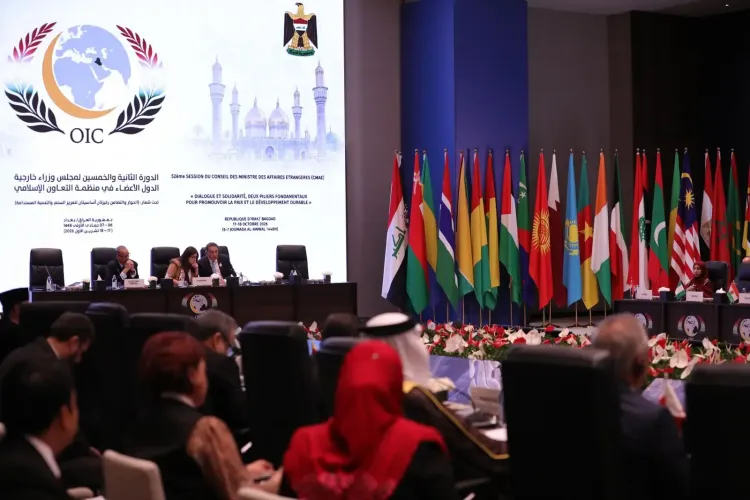
The MEA on 19 October 2026 categorically rejected anti-India resolutions passed at the OIC Council of Foreign Ministers' Meeting in Baghdad on 17–18 October 2026 .
India described the references as 'malicious, biased, and false', accusing Pakistan of orchestrating them as part of its 'bigoted agenda'.
The MEA reiterated that Jammu and Kashmir and Ladakh are 'integral and inalienable parts of India' and that the OIC has 'no locus standi' on Indian internal matters.
India accused Pakistan of 'unleashing violence, repression and brutality on civilian protesters' in Pakistan-occupied Jammu and Kashmir (PoJK) , including killings of women and children.
The MEA said OIC references to Islamophobia are a 'desperate attempt' by Pakistan to divert attention from its 'appalling record of minority persecution, sectarian violence, governance failure and political instability.' India raised questions about the OIC's credibility and integrity , calling on member states to reform the organisation.
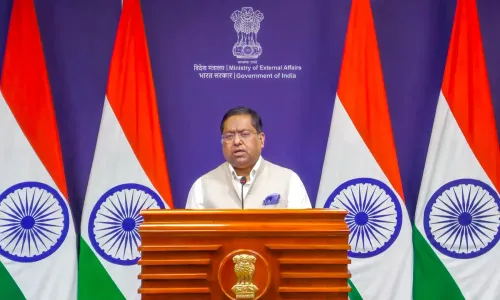
The Ministry of External Affairs (MEA) on Monday, 19 October 2026, issued a sharp rebuttal to anti-India references passed at the Organisation of Islamic Cooperation (OIC) Council of Foreign Ministers' Meeting held in Baghdad on 17–18 October 2026, describing them as 'malicious, biased, and false' and accusing Pakistan of orchestrating the resolutions to serve its 'bigoted agenda'. The statement marks one of India's most pointed public challenges to the OIC's role as a forum.
India's Categorical Rejection
The MEA left no diplomatic ambiguity in its response. 'We categorically reject the anti-India references in the resolutions of the OIC Council of Foreign Ministers' Meeting held in Baghdad on October 17–18, 2026. The references to India are malicious, biased, and false, and have been orchestrated by Pakistan,' the ministry said in an official statement. The MEA further expressed disappointment that the OIC had 'once again allowed itself to be misused by Pakistan for its bigoted agenda.'
India also reasserted its long-standing position that the OIC holds no standing to comment on Indian internal affairs. 'The OIC has no locus standi whatsoever to comment on matters that are strictly internal to India,' the statement read, reiterating that the Union Territories of Jammu and Kashmir and Ladakh are 'integral and inalienable parts of India.'
Post-Article 370: India's Case for Jammu and Kashmir
The MEA pointed to what it described as tangible progress in Jammu and Kashmir since the abrogation of Article 370, citing infrastructure development, a surge in tourism, and improved connectivity as evidence that the region's people have directly benefited. 'Politically motivated propaganda can never alter this reality,' the statement asserted. India's position has been consistent since August 2019: the reorganisation of Jammu and Kashmir is an internal constitutional matter, and external commentary — particularly through the OIC — has no legitimacy.
India Turns the Spotlight on PoJK
In a pointed counter-narrative, the MEA drew attention to what it characterised as a sharply contrasting situation in Pakistan-occupied Jammu and Kashmir (PoJK). 'Pakistan has unleashed violence, repression and brutality on civilian protesters, killing scores of them, including women and children,' the ministry stated. It added that 'no amount of media blackout' has been able to conceal these alleged 'grave violations of human rights.' India also reiterated that the outstanding issue on Jammu and Kashmir remains Pakistan vacating areas under its 'illegal and forcible occupation' and ending cross-border terrorism.
Pakistan Accused of Diverting Attention from Domestic Turmoil
The MEA framed Pakistan's moves at the OIC as a calculated distraction. 'Other fabricated and hostile references against India in the OIC resolutions, including insinuations related to Islamophobia, are nothing but a desperate attempt by Pakistan to divert international attention from its own appalling record of minority persecution and sectarian violence, apart from governance failure and political instability,' the statement said. The framing is significant: India is increasingly using multilateral forums as a venue to invert the narrative on Pakistan's domestic human rights record.
Questions Over OIC's Credibility
The MEA concluded with a direct challenge to the OIC's institutional standing, stating that the body's 'repeated endorsement of patently malicious propaganda and narratives peddled by Pakistan raises serious questions about its credibility and integrity.' India expressed hope that OIC member states would 'do better in reforming the organisation.' This is not the first time India has dismissed OIC resolutions on Jammu and Kashmir, but the language of Monday's statement — questioning the forum's very credibility — signals a sharper diplomatic posture. All eyes will now be on how OIC member states, several of whom maintain strong bilateral ties with New Delhi, respond to India's call for internal reform.
Point of View
But Monday's statement goes a step further by questioning the forum's institutional credibility itself — not just the content of its resolutions. The rhetorical pivot to PoJK human rights violations is deliberate and increasingly effective: it forces Pakistan's backers within the OIC to either defend Islamabad's domestic record or stay silent. What mainstream coverage tends to miss is the diplomatic subtext — several Gulf states that are OIC members have deepened economic and strategic ties with India in recent years, creating an internal fault line within the organisation that New Delhi is evidently trying to widen. Pakistan's ability to weaponise the OIC against India may be structurally weakening, even if the resolutions keep coming.
NationPress
19 Oct 2026
Frequently Asked Questions
Why did India reject the OIC resolutions passed at the Baghdad meeting?
India rejected the resolutions because they contained anti-India references on Jammu and Kashmir and Islamophobia that the MEA described as 'malicious, biased, and false.' The ministry accused Pakistan of orchestrating these references to serve its own political agenda and distract from its domestic troubles.
What did India say about Jammu and Kashmir at the OIC meeting?
India reiterated that Jammu and Kashmir and Ladakh are 'integral and inalienable parts of India' and that the OIC has no standing to comment on Indian internal affairs. The MEA also cited economic growth, infrastructure development, tourism, and connectivity improvements in Jammu and Kashmir since the abrogation of Article 370.
What is India's position on Pakistan-occupied Jammu and Kashmir (PoJK)?
India accused Pakistan of unleashing 'violence, repression and brutality on civilian protesters' in PoJK, including killing women and children, and said no media blackout could hide these alleged human rights violations. India stated the only unresolved issue is Pakistan vacating areas under its 'illegal and forcible occupation' and ending cross-border terrorism.
Why does India say Pakistan raised Islamophobia at the OIC?
The MEA described Pakistan's Islamophobia references as a 'desperate attempt' to divert international attention from Pakistan's own 'appalling record of minority persecution, sectarian violence, governance failure and political instability.' India framed the move as a deflection tactic rather than a genuine concern.
What did India say about the OIC's credibility?
The MEA stated that the OIC's 'repeated endorsement of patently malicious propaganda and narratives peddled by Pakistan raises serious questions about its credibility and integrity.' India expressed hope that OIC member states would take steps to reform the organisation.