India-EU FTA signals 'trade is part of the future': Swedish enterprise chief
Synopsis
The Confederation of Swedish Enterprise's top executive called the India-EU FTA a 'fantastic foundation' — but warned that customs simplification and procedural reform are still needed for the pact to fully deliver. PM Modi's Gothenburg stop, which included a keynote at the European Round Table for Industry and a proposal for an annual India-Europe CEOs Round-table, signals that both sides are moving from negotiation to operationalisation.
Key Takeaways
Jan-Olof Jacke , Director General of the Confederation of Swedish Enterprise , called the India-EU FTA a signal that 'trade is a part of the future, not of the past.' Jacke cautioned that customs simplification and procedural reform are still required for the FTA to reach its full potential.
Chairman Jacob Fallenberg handed PM Modi a report outlining the benefits and potential of the India-EU FTA during the visit.
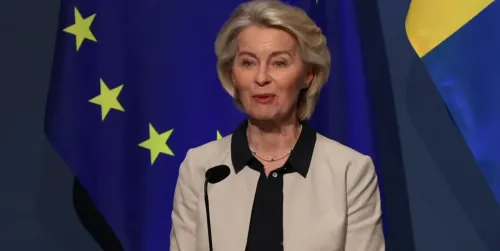
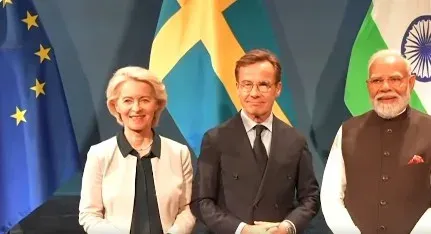
PM Modi addressed the European Round Table for Industry (ERT) in Gothenburg , hosted by the Volvo Group , alongside European Commission President Ursula von der Leyen and Swedish PM Ulf Kristersson .
Modi proposed an annual India-Europe CEOs Round-table and the creation of an India Desk at ERT .
The Sweden stop was the third leg of Modi's five-nation European tour; Norway was next on the itinerary.
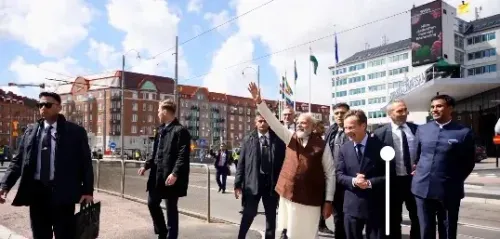
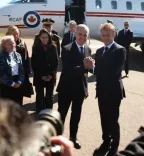
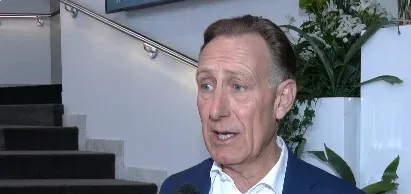
The landmark India-EU Free Trade Agreement sends a clear message to the world that trade belongs to the future, not the past, Jan-Olof Jacke, Director General of the Confederation of Swedish Enterprise, said in Gothenburg on 18 May, as Prime Minister Narendra Modi concluded the Sweden leg of his five-nation European tour.
What the Swedish Enterprise Chief Said
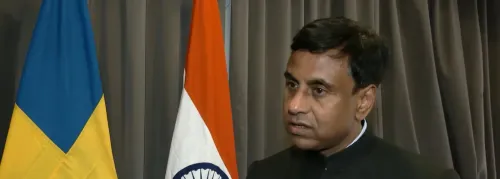
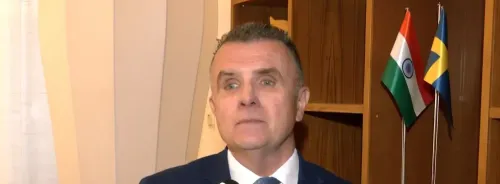
Speaking in an exclusive interview, Jacke described the India-EU FTA as a 'fantastic foundation' while cautioning that its full potential would require sustained implementation effort. 'For the India-EU FTA to really materialise, there are a number of things that need to happen — that procedures need to be simple, that customs work well,' he said. 'The trade agreement is a fantastic foundation, but it will take more to make it come to full fruition.'
Jacke welcomed Modi's visit as emblematic of deepening European-Indian ties. 'I think it's fantastic to see EU and India building stronger connections,' he said, adding that Sweden — 'a very innovative country, well advanced, but a small country' — stood to gain significantly from India's 'very talented young population and a fast-growing significant market.'
The Confederation's Chairman Jacob Fallenberg handed Prime Minister Modi a report outlining the potential benefits of the FTA during the visit.
Modi's Engagement With European Industry
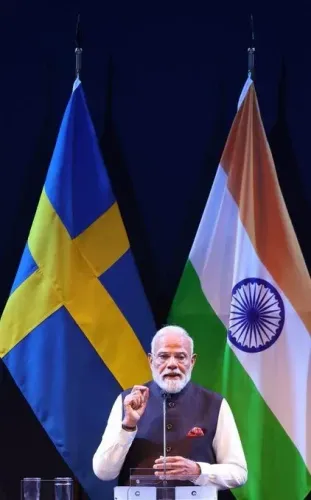
Prime Minister Modi addressed the European Round Table for Industry (ERT) in Gothenburg, in an interaction hosted by the Volvo Group. Swedish Prime Minister Ulf Kristersson, European Commission President Ursula von der Leyen, senior European industry leaders, and representatives from leading European and Indian companies participated.
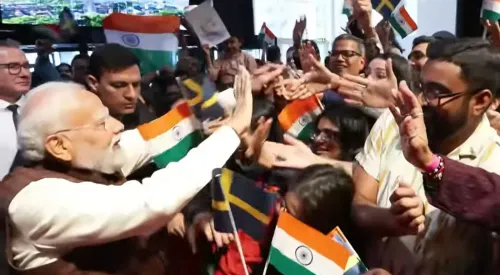
Earlier, Modi interacted with select Swedish company CEOs alongside Crown Princess Victoria of Sweden and Prime Minister Kristersson. The Ministry of External Affairs (MEA) said Modi highlighted that India and Sweden are connected by shared values of democracy, transparency, innovation, and sustainability — a 'strong foundation for an ambitious and forward-looking economic partnership.'
Key Themes From Modi's Address
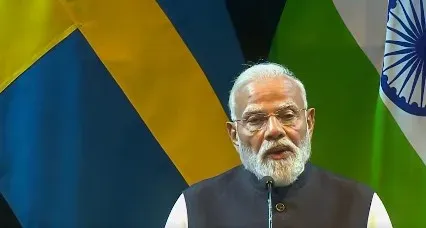
In his keynote, Modi described the India-EU FTA as a 'transformative economic partnership' that would create new opportunities across trade, technology, manufacturing, services, and resilient supply chains. He also pointed to the India-Middle East-Europe Economic Corridor (IMEC) as adding fresh value to the India-Europe business partnership.
Modi invited European companies to deepen engagement with India under initiatives including Make in India, the National Green Hydrogen Mission, and the National Critical Mineral Mission. He specifically flagged opportunities in clean energy, defence, semiconductors, advanced manufacturing, telecom, AI, deep tech, and life sciences.
The Prime Minister also proposed holding an India-Europe CEOs Round-table annually and creating an India Desk at ERT — institutional steps aimed at giving the bilateral relationship a permanent operational structure.
What the Visit Signals
Bilateral discussions between Modi and Kristersson focused on resilient supply chains, green transition, sustainable mobility, life sciences, and digital technologies. Modi underlined the importance of combining Sweden's strengths in innovation and sustainability with India's scale, talent, and growth momentum to 'co-create solutions for the 21st century,' according to the MEA statement.
Notably, this is the third leg of Modi's five-nation tour, with Norway scheduled as the next stop. The visit comes in the immediate aftermath of the conclusion of India-EU FTA negotiations — giving the Gothenburg engagements added diplomatic weight.
With the FTA framework now in place, attention shifts to the implementation architecture: customs simplification, procedural harmonisation, and sectoral timelines will determine whether the agreement delivers on its headline promise.
Point of View
But Jacke's caveat — that customs systems and procedures must be reformed for the deal to deliver — is the more consequential signal. FTAs routinely underperform when implementation infrastructure lags the political announcement, and India's track record on customs clearance timelines has been a persistent concern for European exporters. Modi's proposal for an annual CEOs Round-table and an India Desk at ERT is a smart institutional hedge: it creates recurring accountability mechanisms that could outlast the diplomatic momentum of a single visit. The real test will come in the months ahead, when sectoral schedules, rules of origin, and non-tariff barrier negotiations move from framework to fine print.
NationPress
21 Sept 2026
Frequently Asked Questions
What did the Confederation of Swedish Enterprise say about the India-EU FTA?
Director General Jan-Olof Jacke said the India-EU FTA sends a signal to the world that trade is part of the future, not the past. He called it a 'fantastic foundation' but stressed that customs simplification and procedural reform are still needed for the agreement to fully deliver.
What is the India-EU Free Trade Agreement?
The India-EU Free Trade Agreement is a landmark trade pact whose negotiations were recently concluded between India and the European Union. It is designed to create new opportunities in trade, technology, manufacturing, services, and resilient supply chains between India and EU member states.
What did PM Modi propose at the European Round Table for Industry in Gothenburg?
PM Modi proposed holding an India-Europe CEOs Round-table annually and creating an India Desk at the European Round Table for Industry (ERT). He also invited European companies to partner with India in sectors including clean energy, semiconductors, AI, defence, and life sciences.
Which Swedish leaders did PM Modi meet during his visit?
PM Modi interacted with Swedish Prime Minister Ulf Kristersson and Crown Princess Victoria of Sweden, along with select Swedish company CEOs. European Commission President Ursula von der Leyen also participated in the ERT interaction hosted by the Volvo Group in Gothenburg.
What is the significance of Modi's Sweden visit in the context of his Europe tour?
Sweden was the third leg of PM Modi's five-nation European tour. The visit coincided with the conclusion of India-EU FTA negotiations, giving the engagements in Gothenburg added diplomatic and economic significance as both sides shift focus toward implementation.