India manages dissent through democratic institutions, not force — a Bangladesh comparison
Synopsis
A students' union leader's comparison of India's protests to Bangladesh's deadly 2024 uprising has been called an oversimplification. Where Bangladesh saw an estimated 1,400 deaths and systemic collapse, India's dissent — from CAA to farm laws — has been absorbed by functioning courts, legislatures, and constitutional processes, with the farm bills even repealed after Supreme Court scrutiny.
Key Takeaways
Neha Bora , a Left-affiliated students' union leader, drew parallels between ongoing Indian protests and the 2024 Bangladesh uprising — a comparison critics call an oversimplification.
The 2024 Bangladesh protests turned violent, with an estimated 1,400 deaths according to a UN assessment and 819 per domestic monitoring groups.
India's recent large-scale protests, including post- CAA agitations and the 2020–2021 farmers' movement , did not destabilise the constitutional order.
India's Supreme Court stayed the farm bills in January 2021 ; the Union government repealed them later that year — demonstrating institutional responsiveness.
Indian authorities have faced criticism over crowd-control and detentions, but legal challenges, media scrutiny, and political opposition have remained active throughout.
A recent statement by Neha Bora, a leader of a Left-affiliated students' union, drawing parallels between India's ongoing protests and the 2024 youth uprising in Bangladesh, has been widely characterised as an oversimplification that glosses over critical political, institutional, and legal distinctions between the two countries. Analysts and observers argue the comparison collapses fundamentally different contexts into a single emotive frame.
The Bangladesh Uprising: Scale and Consequences
The 2024 protests in Bangladesh began as a student agitation against the quota system in government jobs but rapidly escalated into a broad anti-government movement. The unrest was marked by widespread violence, arson, and looting, and was met with a severe state response. Domestic monitoring organisations reportedly recorded 819 deaths, while a subsequent United Nations assessment placed the toll at approximately 1,400. There were also reported incidents of communal frenzy and religious persecution resulting in several deaths.
India's Constitutional Framework for Dissent
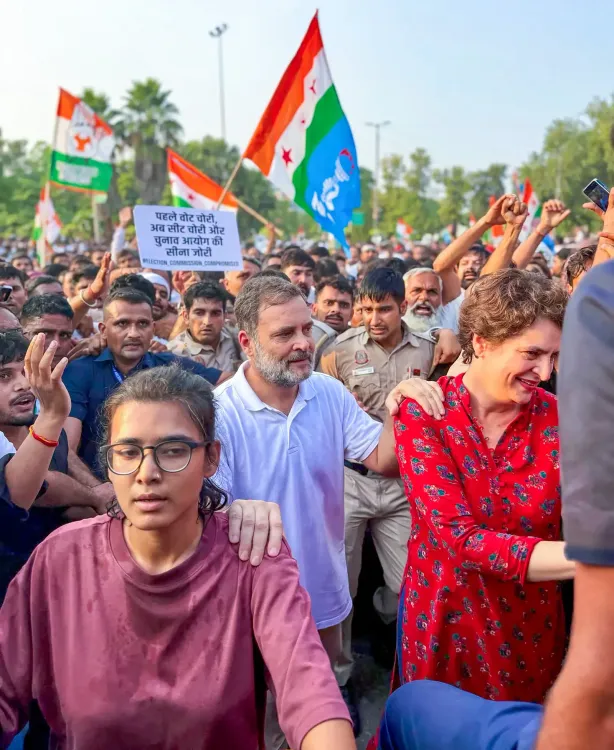
In India, the right to peaceful assembly is constitutionally protected, subject to reasonable restrictions tied to public order. Authorities have largely responded to recent demonstrations with prohibitory and precautionary measures rather than lethal force. This was evident as recently as Monday, when tens of thousands gathered on Delhi streets alongside Opposition leaders, who subsequently marched to the Supreme Court to initiate a judicial process — an act itself illustrative of functioning institutional channels.
Notably, major protest movements in India — including agitations following the enactment of the Citizenship Amendment Act (CAA) in December 2019 and the 2020–2021 farmers' movement against proposed agriculture laws — exerted significant pressure on governments but did not result in a collapse of the constitutional order. Institutional mechanisms including legislatures, the judiciary, and independent commissions continued to operate alongside public dissent.
Judiciary and Legal Scrutiny Remain Active
Indian courts have consistently heard cases involving the rights of protesters, police conduct, and government-imposed restrictions. Officials have faced criticism from activists, courts, and human rights organisations over detentions, crowd-control measures, internet restrictions, and use of force. However, such measures have generally occurred within an environment where legal challenge, media scrutiny, and political opposition remain active. Authorities are frequently required to justify restrictions under constitutional and statutory provisions.
A telling precedent is the farm bills episode: the legislation was placed under Supreme Court scrutiny, stayed by the court in January 2021, and formally repealed by the Union government later that same year — a sequence that underscores how Indian institutional mechanisms can absorb and respond to mass public pressure without systemic rupture.
Policy-Focused Protests vs. Systemic Overthrow
A further distinction lies in the nature of the demands. Most Indian protest movements have centred on specific policies, laws, local grievances, or calls for accountability — rather than demanding a wholesale restructuring of the political order. Even when governments have conceded to protest demands, the constitutional system has remained the primary mechanism through which change has been effected.
As ongoing judicial processes and public debates across legislatures and media continue, observers argue that India's experience — whatever its imperfections — represents a structurally different model of managing dissent from the crisis that engulfed Bangladesh in 2024.
Point of View
However politically convenient, does a disservice to analytical rigour. Bangladesh's 2024 crisis was a systemic rupture; India's recurring protest cycles — however contentious — have consistently been absorbed by institutions rather than dismantling them. That said, the argument cuts both ways: pointing to institutional survival as evidence of health glosses over documented excesses in protest management, from internet shutdowns to mass detentions. The more honest measure is not whether the system held, but whether it held fairly — and that remains a live, unresolved question.
NationPress
15 Oct 2026
Frequently Asked Questions
How does India's response to protests differ from Bangladesh's 2024 uprising?
India's protests have been managed within a constitutional framework where courts, legislatures, and media continue to function, whereas Bangladesh's 2024 uprising turned into a violent anti-government movement resulting in an estimated 1,400 deaths according to a UN assessment. Indian authorities have faced criticism for crowd-control measures but are generally required to justify actions under constitutional provisions.
What were the key protests in India that are being compared to Bangladesh?
The comparisons reference agitations following the Citizenship Amendment Act (CAA) enacted in December 2019 and the 2020–2021 farmers' movement against proposed agriculture laws. Both placed significant pressure on the government but did not result in a collapse of institutional order.
What happened to India's farm bills after the protests?
The farm bills were placed under Supreme Court scrutiny and stayed by the court in January 2021, before being formally repealed by the Union government later that year. This sequence is frequently cited as evidence of India's institutional mechanisms responding to mass public pressure.
Who is Neha Bora and what did she say?
Neha Bora is a leader of a Left-affiliated students' union who drew parallels between India's ongoing agitations and the 2024 youth uprising in Bangladesh. Observers and analysts have characterised the comparison as an oversimplification that ignores significant political, institutional, and legal differences between the two situations.
Has India faced international criticism over its handling of protests?
Yes, officials have been criticised by activists, courts, and human rights organisations for detentions, internet restrictions, and use of crowd-control measures during specific protests. However, authorities are generally required to justify such restrictions under constitutional and statutory provisions, and legal challenges have remained active.