India-Japan startup roundtable: Goyal pitches 4-pillar deep-tech pact in Tokyo
Synopsis
India's Commerce Minister landed in Tokyo with a four-pillar proposal — a deep-tech capital corridor, a bilateral innovation bridge, manufacturing integration, and joint pitching platforms — backed by a $1 billion fund offer. With 65 Indian startups already linked to 100 Japanese corporations and 30 tie-ups done, this roundtable marks a shift from handshake diplomacy to structured deal-making between the world's third-largest startup ecosystem and Japan's precision-tech giants.
Key Takeaways
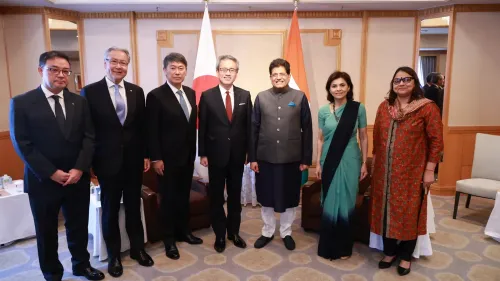
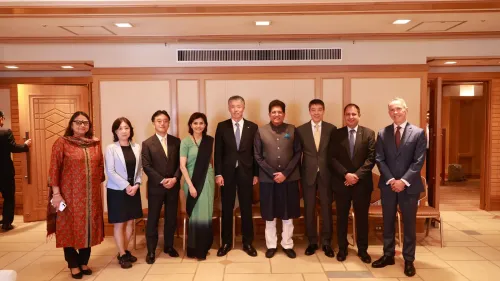
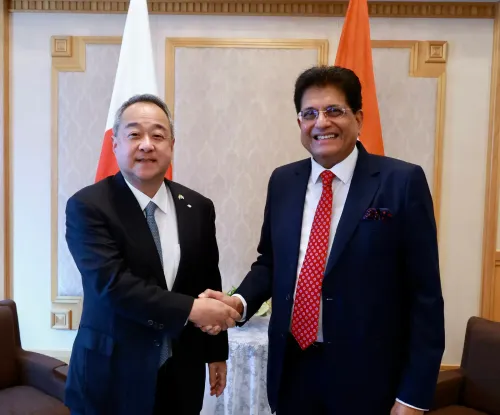
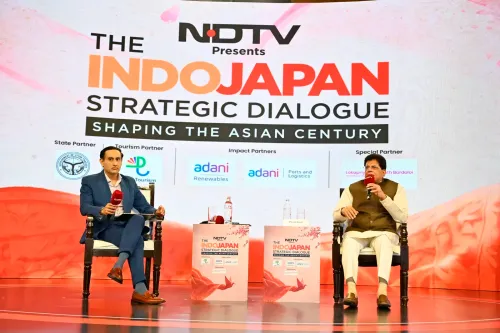
Piyush Goyal represented India at the India–Japan Startup Roundtable in Tokyo on 26 August .
India is now the world's third-largest startup ecosystem , with nearly 250,000 startups over the past decade.
Goyal proposed a four-pillar framework : a Deep-Tech Capital Corridor, Two-Way Innovation Bridge, Manufacturing Integration, and Joint Pitching Platforms.
India's proposed second Fund of Funds of approximately $1 billion targets deep-tech enterprises, with Japanese participation invited.
The India–Japan Pitching Series has connected 65 Indian startups with ~100 Japanese corporations , yielding over 30 business tie-ups .
Around 40 Japanese companies and a 222-member Indian business delegation participated in the roundtable.
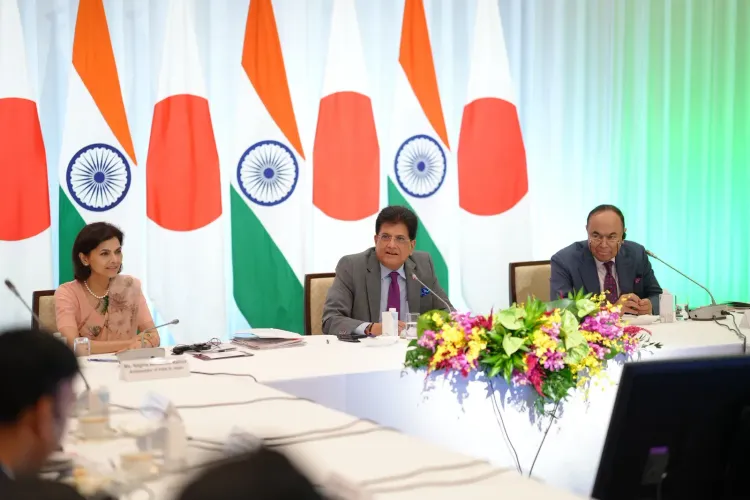
Commerce and Industry Minister Piyush Goyal on Wednesday, 26 August showcased India's rise as the world's third-largest startup ecosystem — built on nearly 250,000 startups over the past decade — at the India–Japan Startup Roundtable in Tokyo, according to an official statement. The event brought together senior government officials, investors, industry leaders, and founders from both nations to chart the next phase of bilateral innovation cooperation.
Four Pillars of the Proposed Framework
Minister Goyal put forward a structured, forward-looking cooperation framework resting on four pillars. The first is a Japan–India Deep-Tech Capital Corridor, designed to mobilise patient capital for early-stage research and commercialisation. The second is a Two-Way Innovation Bridge linking universities, incubators, R&D institutions, and testing facilities across both countries.
The third pillar focuses on Manufacturing and Technology Integration — combining India's engineering scale and entrepreneurial dynamism with Japan's precision manufacturing and technological depth. The fourth calls for Joint Startup Pitching Platforms to enable regular interaction between Indian founders, Japanese corporations, venture funds, and strategic investors.
India's $1 Billion Deep-Tech Fund Offer
Goyal also flagged the Indian government's proposed second Fund of Funds, valued at approximately $1 billion, with a dedicated focus on deep-tech enterprises. He formally invited Japanese investors to participate in the fund, positioning India as a high-return destination for long-horizon technology capital.
Bilateral Engagement: Numbers That Stand Out
Ambassador Nagma Mohamed Mallick, welcoming participants, noted that the India–Japan Pitching Series has already connected 65 Indian startups with approximately 100 Japanese corporations, facilitating more than 30 business tie-ups. A 222-member Indian business delegation attended the roundtable, signalling the scale of bilateral ambition.
This comes amid a visible shift in India's startup landscape — from internet and software-led businesses toward manufacturing- and technology-intensive enterprises, as noted by venture capital participants at the event.
Japanese Stakeholders and Sectors in Focus
JICA Senior Vice President Shohei Hara underscored the value of a two-way partnership, noting Japan's capacity to contribute technological capabilities while learning from India's ability to convert developmental challenges into scalable business models. JICA also expressed intent to introduce a larger cohort of Japanese startups to the Indian market.
Representatives from around 40 leading Japanese companies participated, including SPARX Group, MUFG Innovation Partners, Mizuho Financial Group, Fujitsu Limited, SBI Investment, Beyond Next Ventures Inc., Kyoto Fusioneering Ltd., and Aerosense Inc., among others. Venture capital investors identified AI, semiconductors, healthcare, space, defence, advanced manufacturing, and deep technology as priority sectors for future India–Japan investment.
Indian startups showcased capabilities spanning aerospace and defence, drones, artificial intelligence, healthcare, prosthetics, robotics, warehouse automation, mobility, and digital health. Several explored Japanese partnerships for technology validation, precision manufacturing, and integration into global supply chains. Industry voices also stressed the need to link MSMEs with startups and global value chains, and to provide plug-and-play infrastructure for companies seeking to manufacture and scale in India.
With a formal framework now proposed and bilateral deal-making already underway, the India–Japan startup corridor appears set to move from aspiration to structured execution in the months ahead.
Point of View
The shift in India's startup mix from consumer internet to deep-tech and manufacturing is genuine and data-backed — and it is precisely the kind of complementarity that Japan's precision-engineering ecosystem needs as it seeks lower-cost innovation partners. The 30 tie-ups from the Pitching Series are a modest but real foundation. The risk is that this remains a high-visibility diplomatic event rather than the beginning of a trackable, outcome-measured corridor.
NationPress
26 Aug 2026
Frequently Asked Questions
What was agreed at the India–Japan Startup Roundtable in Tokyo?
At the roundtable held on 26 August in Tokyo, Commerce Minister Piyush Goyal proposed a four-pillar cooperation framework covering a deep-tech capital corridor, a bilateral innovation bridge, manufacturing integration, and joint startup pitching platforms. Both sides reaffirmed commitment to deepening startup, deep-tech, and MSME collaboration.
What is India's proposed $1 billion Fund of Funds for deep-tech?
The Indian government has proposed a second Fund of Funds of approximately $1 billion, specifically focused on supporting deep-tech enterprises. Minister Goyal used the Tokyo roundtable to invite Japanese investors to participate in the fund.
How large is India's startup ecosystem?
India is now recognised as the world's third-largest startup ecosystem, with nearly 250,000 startups established over the past decade, according to Minister Goyal's remarks at the roundtable.
What has the India–Japan Pitching Series achieved so far?
The India–Japan Pitching Series has connected 65 Indian startups with approximately 100 Japanese corporations and facilitated more than 30 business tie-ups, according to Ambassador Nagma Mohamed Mallick.
Which sectors are targeted for India–Japan startup investment?
Venture capital investors at the roundtable identified AI, semiconductors, healthcare, space, defence, advanced manufacturing, and deep technology as the primary sectors for future India–Japan investment collaboration.