India joins SIOFA to expand High Seas fisheries access and Blue Economy reach
Synopsis
India has moved from observer to full member of the Southern Indian Ocean Fisheries Agreement, unlocking legal rights to fish for toothfish, squid and other high-value species in waters currently dominated by China, Taiwan and Japan. It is the most concrete step yet in India's ambition to become a serious High Seas fishing power — but fleet readiness will determine whether the membership delivers.
Key Takeaways
The Indian government approved accession to the Southern Indian Ocean Fisheries Agreement (SIOFA) on 14 October 2026 .
Indian-flagged vessels can now fish for squid, toothfish, alfonsino and other non-migratory stocks in the southern Indian Ocean High Seas.
The High Seas cover roughly 65% of the global ocean; China (21%) , Taiwan, Japan, South Korea and Spain currently dominate catches.
India had been a Cooperating Non-Contracting Party of SIOFA since 2022 ; full accession upgrades those rights significantly.
India will join the High Seas Boarding and Inspection (HSBI) Scheme , bolstering maritime surveillance and coastal security.
Indian vessels currently operate within 60–80 nautical miles of the EEZ — accession is intended to push that frontier outward.
The Indian government on Wednesday, 14 October 2026, approved India's accession to the Southern Indian Ocean Fisheries Agreement (SIOFA), a move aimed at strengthening the country's foothold in High Seas fisheries and asserting a greater role in global fisheries governance. The decision, confirmed by the Ministry of Fisheries, Animal Husbandry and Dairying, marks a significant step in India's Blue Economy ambitions.
What SIOFA Accession Means for India
With formal accession in place, Indian-flagged fishing vessels and enterprises will now be authorised to fish for high-value species — including squids, toothfish, alfonsino, and other non-migratory fish stocks — within SIOFA's jurisdiction in the southern Indian Ocean. Until now, India had participated only as a Cooperating Non-Contracting Party (CNCP) since 2022, limiting its formal rights and leverage within the framework.
According to the official statement, full membership will allow India to 'affirm a recognised presence on the high seas and advance India's Blue Economy in alignment with national economic, scientific, and strategic priorities.'
Why the High Seas Matter — and Who Dominates Them
The High Seas — international waters beyond national jurisdiction — account for approximately 65% of the global ocean, yet their fishing activity is dominated by a handful of nations. China leads with 21% of the catch, followed by Taiwan (13%), Japan (11%), South Korea (11%), and Spain (8%). India's share remains negligible by comparison.
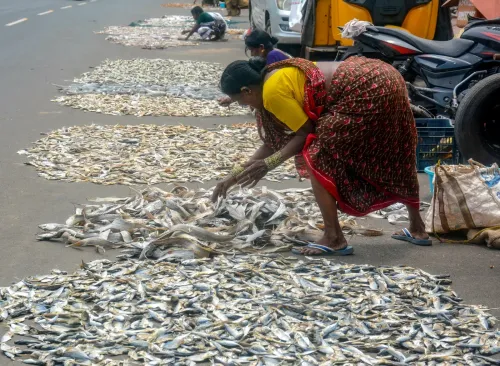
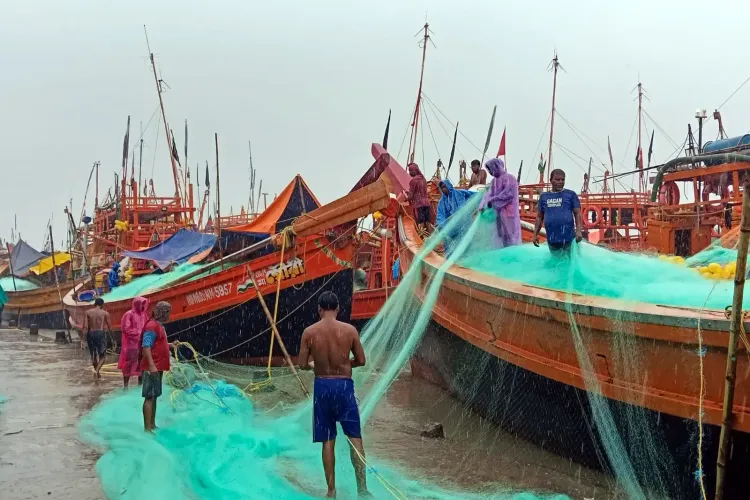
Indian fishing vessels currently operate largely within 60–80 nautical miles of the country's Exclusive Economic Zone (EEZ), leaving vast stretches of commercially viable High Seas largely untouched by Indian enterprise. Expanding into these waters, according to the ministry, is essential both for revenue generation and for diversifying national fishing capacity.
Strategic and Security Dimensions
Beyond the economic rationale, accession carries a distinct strategic dimension. India will now participate in the High Seas Boarding and Inspection (HSBI) Scheme being implemented under SIOFA — a mechanism that enhances maritime surveillance and contributes to coastal security. Officials say this active involvement will strengthen India's regional security posture in the southern Indian Ocean, an area of growing geopolitical significance.
India will also collaborate with other Cooperating Parties on scientific assessments of fish stocks and on combating illegal, unreported and unregulated (IUU) fishing — a problem that costs the global fishing industry an estimated hundreds of billions of dollars annually and undermines sustainable management of marine resources.
The Road Ahead for India's Blue Economy
This accession aligns with the Centre's broader push to develop India's deep-sea and distant-water fishing capabilities. Experts have long argued that India's fishing fleet needs structural investment and international legitimacy to compete with East Asian fleets in High Seas waters. SIOFA membership provides that legitimacy while also opening doors to access agreements within other countries' EEZs, potentially contributing meaningfully to the national exchequer.
With formal entry into SIOFA now confirmed, attention will turn to how quickly Indian vessels can be mobilised and certified for High Seas operations under the new framework — and whether the government will back accession with the fleet and infrastructure investment it requires.
Point of View
And India's formal presence in its governance architecture — even on fisheries — has implications well beyond fish stocks.
NationPress
14 Oct 2026
Frequently Asked Questions
What is the Southern Indian Ocean Fisheries Agreement (SIOFA)?
SIOFA is an international fisheries management body that governs the sustainable harvesting of non-migratory fish stocks — such as toothfish, squid and alfonsino — in the High Seas of the southern Indian Ocean. Member countries and cooperating parties coordinate scientific research, set catch rules, and implement inspection schemes to prevent illegal fishing.
What does India's SIOFA accession mean in practice?
Full accession grants Indian-flagged fishing vessels and enterprises the legal right to fish for high-value species within SIOFA's jurisdiction, replacing India's earlier, more limited status as a Cooperating Non-Contracting Party since 2022. It also gives India a seat at the table on governance decisions, scientific assessments, and the High Seas Boarding and Inspection Scheme.
Why is High Seas fishing important for India's economy?
The High Seas represent about 65% of the global ocean and contain commercially valuable fish stocks that India has largely not accessed, with its fleet confined to within 60–80 nautical miles of its own EEZ. Expanding into High Seas fisheries is seen as a key pillar of India's Blue Economy strategy, potentially generating significant export revenue and reducing pressure on near-shore stocks.
How does India's High Seas fishing presence compare to other countries?
India's share of High Seas catch is negligible compared to dominant players: China accounts for 21% of the global High Seas catch, followed by Taiwan at 13%, Japan and South Korea at 11% each, and Spain at 8%. SIOFA accession is India's first formal step towards closing that gap in the southern Indian Ocean.
What is the High Seas Boarding and Inspection Scheme under SIOFA?
The HSBI Scheme is a multilateral maritime surveillance mechanism adopted under SIOFA that allows member states to board and inspect fishing vessels at sea to verify compliance with catch rules and prevent illegal, unreported and unregulated fishing. India's participation is expected to enhance both fisheries governance and broader coastal and regional security in the southern Indian Ocean.