India tops global Green Hydrogen supply with $9.5 bn in deals: Pralhad Joshi
Synopsis
India has locked in more Green Hydrogen supply commitments than any other country — 5,55,610 MTPA across 23 major contracts worth ₹90,000 crore. With RIL's $3 billion deal with South Korea, ACME's Japan agreements, and AM Green winning a pan-European H2Global auction, India is no longer just a clean energy aspirant — it is writing the terms of the global hydrogen trade.
Key Takeaways
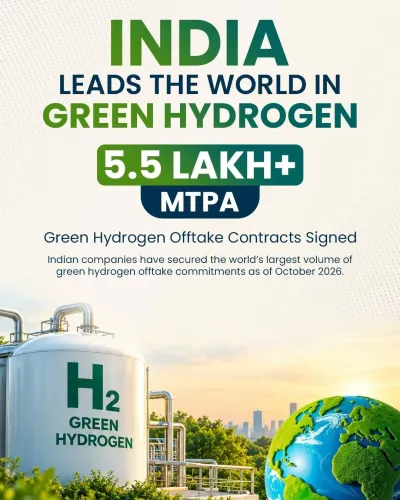
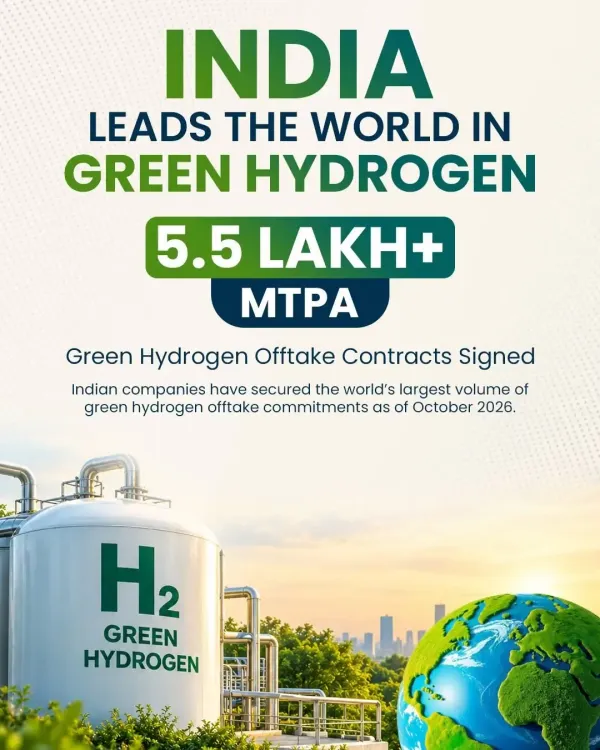
India's Green Hydrogen offtake contracts have surpassed 5,55,610 MTPA as of October 2026 , making it the global leader in supply commitments.
Aggregate investment exceeds ₹90,000 crore (approximately $9.5 billion ) across 23 major contracts .
Reliance Industries Limited signed a $3 billion Green Ammonia deal with Samsung C&T Corporation, South Korea , with deliveries from 2028 .
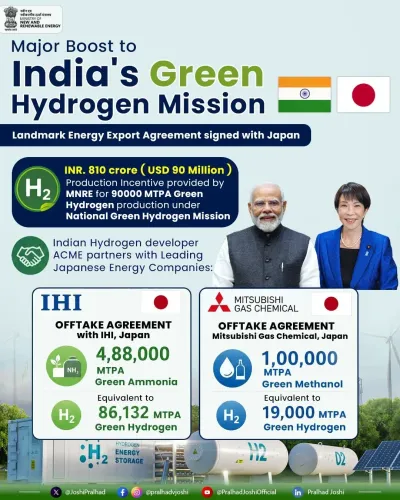
ACME Group secured agreements for 4,88,000 MTPA of Green Ammonia to IHI, Japan and 1,00,000 MTPA of Green Methanol to MGC, Japan .
AM Green won the Asian lot of Germany's H2Global auction, securing a 585 million euro , 10-year RFNBO ammonia supply deal.
Under the SIGHT Programme , 6,70,000 MTPA of Green Ammonia has been committed to 11 domestic fertiliser units ; 30,000 MTPA of Green Hydrogen to IOCL, BPCL, HPCL and NRL refineries.
India has emerged as the world leader in Green Hydrogen supply commitments, with offtake contracts signed by Indian companies surpassing 5,55,610 metric tonnes per annum (MTPA) as of October 2026, the government announced on Thursday, 29 October 2026. The aggregate investment behind these deals exceeds ₹90,000 crore (approximately $9.5 billion), according to an official statement.
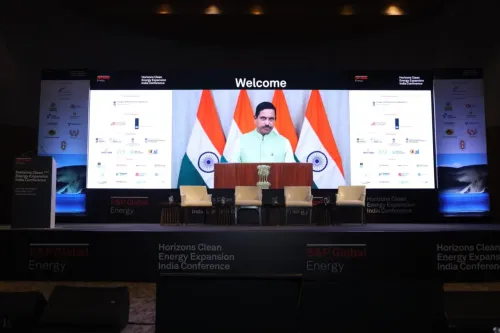
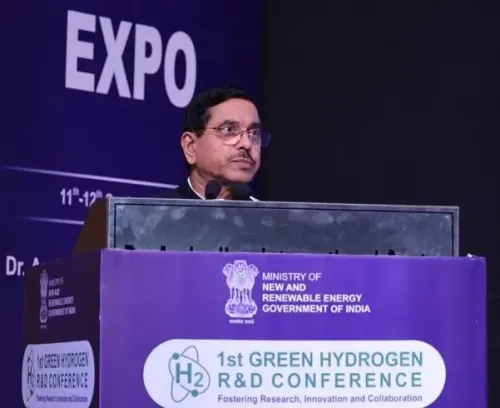
Minister of New and Renewable Energy Pralhad Joshi described the achievement as a transformative moment for India's clean energy ambitions. 'Indian developers have secured 23 major contracts, accumulating over 5.5 lakh MTPA in supply commitments. With over 70 per cent dedicated to global exports, this milestone is driving ₹90,000 crore in clean energy investments. This massive milestone accelerates India's journey toward global net-zero leadership and green job creation,' Joshi said.
Landmark Deals Driving the Surge
The bulk of the momentum has been built in 2026 alone, when Indian companies signed 18 new offtake agreements covering over 4 lakh MTPA of Green Hydrogen equivalent supply — a remarkable acceleration from prior years.
Among the headline deals, ACME Group has signed an offtake agreement with IHI, Japan for the supply of 4,88,000 MTPA of Green Ammonia, and a separate agreement with Mitsubishi Gas Chemical (MGC), Japan for 1,00,000 MTPA of Green Methanol.
Reliance Industries Limited (RIL) has entered a long-term Supply and Purchase Agreement with Samsung C&T Corporation, South Korea, valued at over $3 billion — one of the largest Green Ammonia offtake contracts globally. Deliveries under this agreement are expected to begin by 2028.
L&T and ITOCHU have formed a Special Purpose Vehicle (SPV) for the supply of 3,00,000 tonnes per annum (TPA) of Green Ammonia, with deliveries targeted to commence from December 2029.
India Targets European and Japanese Markets
According to the official statement, Indian suppliers are offering what the government describes as 'the world's most competitive prices' for Green Ammonia and Green Methanol, with strong positioning in European and Japanese markets. Green Ammonia is also emerging as a clean bunkering fuel for the global shipping sector and is being deployed for ammonia co-firing in thermal power plants to reduce carbon emissions.
AM Green has secured three significant deals, including being selected as the sole winner of the Asian lot in the 'H2Global' auction run by Hintco — a long-term supply arrangement for Renewable Fuels of Non-Biological Origin (RFNBO) ammonia to Germany, with a minimum purchase value of 585 million euros over 10 years, with first deliveries expected in 2029. AM Green has also signed a firm offtake agreement with Uniper, Germany for 2,50,000 MTPA of Green Ammonia and a binding head of agreement with JERA, Japan's major power producer, for 70,000 MTPA of Green Ammonia.
Jouno Joules has signed an offtake agreement with Select Energy GmbH for 600 tonnes per day (TPD) — approximately 2,19,000 MTPA — of Green Ammonia. Additionally, Agastya is in the process of finalising an offtake for the supply of 2,50,000 MTPA of Green Methanol to SAR, Sri Lanka.
Domestic Demand Being Locked In Under SIGHT
Alongside the export push, substantial domestic demand has been consolidated under the Strategic Interventions for Green Hydrogen Transition (SIGHT) Programme, part of India's National Green Hydrogen Mission. Under this framework, agreements have been signed for the production and supply of 6,70,000 MTPA of Green Ammonia to 11 fertiliser units across India.
Separately, SIGHT Programme projects have been awarded for the supply of 30,000 MTPA of Green Hydrogen to refineries of IOCL, BPCL, HPCL, and NRL. Worldwide, Green Hydrogen derivatives are increasingly being adopted in the fertiliser production and refining sectors to enable industrial decarbonisation.
What This Means for India's Net-Zero Goals
This comes amid intensifying global competition in clean hydrogen, with the European Union, Australia, and Saudi Arabia all racing to lock in long-term supply chains. India's success in securing binding offtake contracts — as opposed to memoranda of understanding — marks a qualitative shift, providing a firmer foundation for the capital-intensive production infrastructure required. Notably, the concentration of deals in Japan, Germany, and South Korea reflects the alignment of India's cost advantages with the decarbonisation mandates of its key trading partners. How quickly these commitments translate into actual production capacity and job creation will be the next critical test.
Point of View
But the critical distinction mainstream coverage is eliding is this: offtake contracts are commercial commitments, not production realities. The country still has limited operating Green Hydrogen capacity, and the gap between signed agreements and delivered molecules is where previous clean energy ambitions have stalled. The SIGHT Programme's domestic commitments — particularly to fertiliser units — are the more reliable near-term signal, as they carry regulatory backing. The export deals, impressive as they are, will only materialise if capital flows into electrolysers at scale and renewable power costs stay competitive. India's window is real, but so is the execution risk.
NationPress
29 Oct 2026
Frequently Asked Questions
What is India's Green Hydrogen offtake milestone announced in October 2026?
India has surpassed 5,55,610 MTPA in Green Hydrogen offtake contracts signed by Indian companies as of October 2026, making it the global leader in supply commitments. The aggregate investment behind these deals exceeds ₹90,000 crore, or approximately $9.5 billion, across 23 major contracts.
Which are the biggest Green Hydrogen deals signed by Indian companies?
The largest include Reliance Industries' $3 billion Green Ammonia supply deal with Samsung C&T Corporation of South Korea, ACME Group's 4,88,000 MTPA Green Ammonia agreement with IHI Japan, and AM Green's H2Global auction win — a 585 million euro, 10-year RFNBO ammonia contract with Hintco for supply to Germany.
What is the SIGHT Programme and how does it support domestic Green Hydrogen use?
The Strategic Interventions for Green Hydrogen Transition (SIGHT) Programme is part of India's National Green Hydrogen Mission. Under it, agreements have been signed for 6,70,000 MTPA of Green Ammonia to 11 domestic fertiliser units, and 30,000 MTPA of Green Hydrogen to refineries of IOCL, BPCL, HPCL, and NRL.
When will Green Hydrogen deliveries under these contracts begin?
Timelines vary by deal. Reliance's deliveries to Samsung C&T are expected to begin by 2028. L&T and ITOCHU's SPV targets December 2029, and AM Green's first deliveries to Germany under H2Global are also expected in 2029.
Why is Green Ammonia significant in these export contracts?
Green Ammonia is emerging as a clean bunkering fuel for the global shipping sector and can be co-fired in thermal power plants to reduce carbon emissions. Indian suppliers are reportedly offering competitive prices for Green Ammonia, making them attractive partners for Japan, Germany, and South Korea as those countries pursue industrial decarbonisation targets.