Viksit Bharat by 2047 needs 7-8% growth, says EAC-PM Chairman
Synopsis
India's top economic advisory body has put a number on the Viksit Bharat ambition: 7-8% annual growth, sustained for over two decades. With 2025-26 GDP already at 7.7% and double-digit expansion in manufacturing and services, the foundation looks solid — but EAC-PM Chairman Mahendra Dev's pointed call for private investment and export growth signals that public spending alone cannot carry India to developed-nation status by 2047.
Key Takeaways
Mahendra Dev , Chairman of the EAC-PM , said India needs 7-8% annual GDP growth to realise the Viksit Bharat goal by 2047 .
India's GDP grew at 7.7 per cent in 2025-26 , with Q4 growth at 7.8 per cent , according to the Ministry of Statistics .
The secondary sector grew 8.8% and the tertiary sector 9.9% ; manufacturing and services achieved double-digit growth .
Dev stressed that private sector investment and export growth are equally critical alongside government infrastructure spending.
Remarks were made at a FICCI crop nutrition conclave in New Delhi on Tuesday, 23 June .
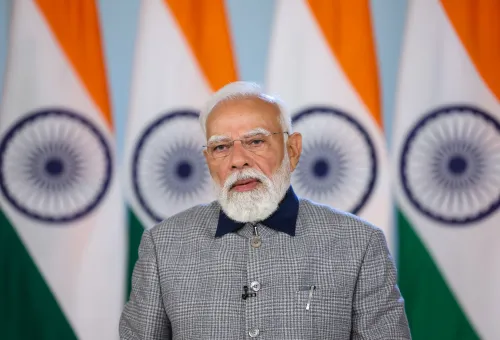
Mahendra Dev, Chairman of the Economic Advisory Council to the Prime Minister (EAC-PM), on Tuesday said India must sustain 7 to 8 per cent annual GDP growth to achieve the Viksit Bharat vision by 2047 — a target that will require a significant step-up in private sector investment and robust export performance.
What the EAC-PM Chairman Said
Speaking on the sidelines of a FICCI India event in New Delhi, Dev said, 'private sector investment is equally important and also export growth important. Prime Minister Narendra Modi has mentioned about Atmanirbhar Bharat, that is equally important.' He added that structural reforms implemented over the past several years have laid the groundwork for sustaining this growth trajectory.
Where India Stands: GDP Snapshot
India's GDP growth was estimated at a robust 7.8 per cent in the January–March quarter (Q4) of 2025-26, according to data released by the Ministry of Statistics. This pushed the full-year growth rate for 2025-26 to 7.7 per cent, supported by strong performances in agriculture, construction, and services.
The secondary sector recorded 8.8 per cent growth, while the tertiary sector expanded by 9.9 per cent. The primary sector grew at 3.2 per cent, driven largely by agriculture and fisheries. Notably, manufacturing, trade, hotels, transport, communications, financial services, real estate, and professional services all achieved double-digit growth during 2025-26, according to official data.
Infrastructure Investment as a Growth Driver
The broad-based expansion reflects the government's sustained push into large-scale infrastructure — highways, railways, ports, and airports — which economists say has generated multiplier effects across sectors. This comes amid a global slowdown in which India continues to be positioned as the world's fastest-growing major economy, though sustaining that distinction over the long term will depend on private capital flowing in alongside public spending.
The Viksit Bharat Challenge
Achieving developed-nation status by 2047 — the centenary of India's independence — is an ambitious target that requires not just headline growth but structural transformation. Dev's emphasis on private investment and exports signals that the government's advisory body views the current public-investment-led model as necessary but insufficient on its own. Critics and economists have long argued that private capex has remained subdued even as government infrastructure spending has surged.
Dev at FICCI Crop Nutrition Conclave
Dev was speaking at a FICCI innovative crop nutrition conclave, where he welcomed the industry body's initiative to bring farmers, industry, and government onto a common platform. 'The future of plant nutrition will be a collaborative effort between farmers, industry, and the government,' he said, noting the significance of FICCI's task force on innovative crop nutrition.
With India's growth trajectory holding above 7 per cent for now, the pressure is on policymakers to translate macro momentum into the private investment and export competitiveness needed to keep that pace through the next two decades.
Point of View
But the harder question is composition, not just pace. India's recent expansion has been disproportionately public-investment-led; private capex has remained stubbornly muted even as headline numbers look impressive. The double-digit growth in manufacturing and services is encouraging, but sustaining it for two decades requires export market diversification at a time when global trade is fragmenting. The Viksit Bharat target risks becoming a rhetorical anchor unless policymakers address the structural gap between government-driven growth and the private-sector dynamism that actually creates durable employment and income gains.
NationPress
23 Jun 2026
Frequently Asked Questions
What is the Viksit Bharat 2047 goal?
Viksit Bharat — or 'Developed India' — is the government's vision to transform India into a fully developed nation by 2047, the centenary of its independence. EAC-PM Chairman Mahendra Dev has said achieving this requires sustained GDP growth of 7 to 8 per cent annually, backed by private investment and strong exports.
How much did India's GDP grow in 2025-26?
India's GDP grew at 7.7 per cent for the full financial year 2025-26, with the January–March quarter (Q4) recording 7.8 per cent growth, according to data from the Ministry of Statistics. Agriculture, construction, and services were key drivers.
Why is private sector investment important for Viksit Bharat?
EAC-PM Chairman Mahendra Dev has said private sector investment is 'equally important' alongside government spending to sustain the 7-8% growth needed for Viksit Bharat. Economists note that India's recent growth has been heavily driven by public infrastructure outlay, making private capex revival critical for long-term momentum.
Which sectors drove India's growth in 2025-26?
The tertiary sector grew 9.9 per cent and the secondary sector 8.8 per cent. Manufacturing, trade, hotels, transport, communications, financial services, real estate, and professional services all recorded double-digit growth during 2025-26, according to official data.
What did EAC-PM Chairman Mahendra Dev say at the FICCI event?
Speaking at a FICCI innovative crop nutrition conclave in New Delhi on 23 June, Dev said India needs 7-8% growth to become Viksit Bharat by 2047, emphasising the role of private investment, export growth, and the Atmanirbhar Bharat framework. He also welcomed FICCI's initiative to bring farmers, industry, and government together on crop nutrition.