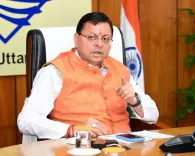
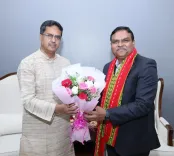
Giriraj Singh flags ₹270 cr Kavach nod for East Coast Railway
Synopsis
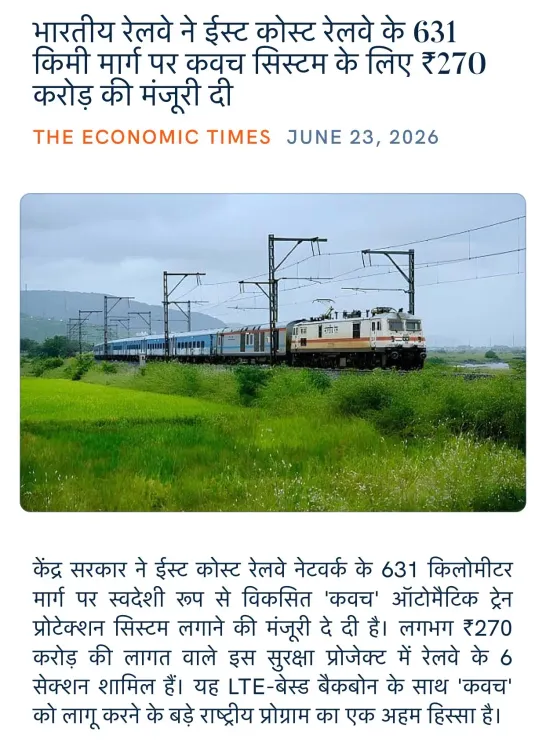
Indian Railways has approved ₹270 crore to deploy the indigenously developed Kavach automatic train protection system across 631 km of East Coast Railway, Union Textiles Minister Giriraj Singh shared on 23 June 2026, reinforcing the government's rail safety and Atmanirbhar Bharat push.
Key Takeaways
₹270 crore sanctioned by Indian Railways for Kavach deployment on the East Coast Railway zone.
The approved corridor spans 631 kilometres , one of the larger single-zone Kavach orders reported.
East Coast Railway is headquartered in Bhubaneswar and covers routes in Odisha, parts of Andhra Pradesh, and Chhattisgarh.
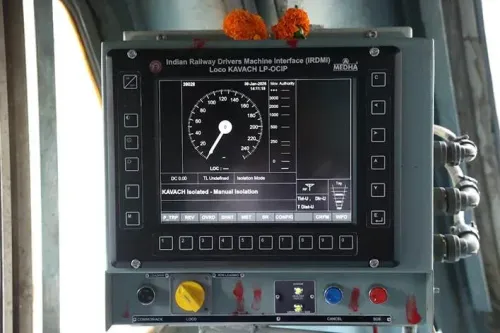
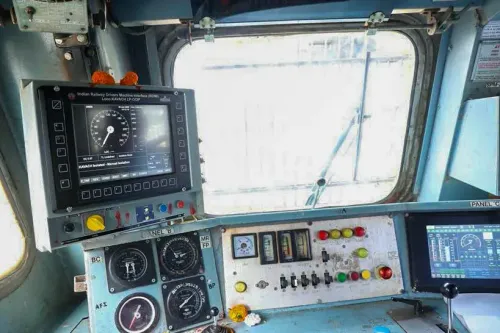
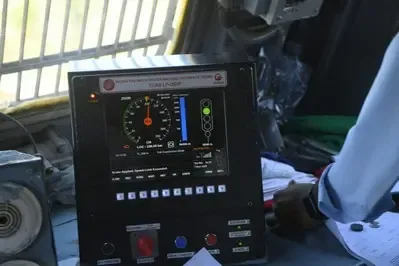
Kavach is an indigenous ATP system developed by RDSO to prevent collisions and signal-passing-at-danger incidents.
The rollout aligns with the Atmanirbhar Bharat policy of deploying domestically developed technology over imported alternatives.
Kavach expansion has been a priority since Union Budget 2022-23 , with zonal approvals progressively increasing.
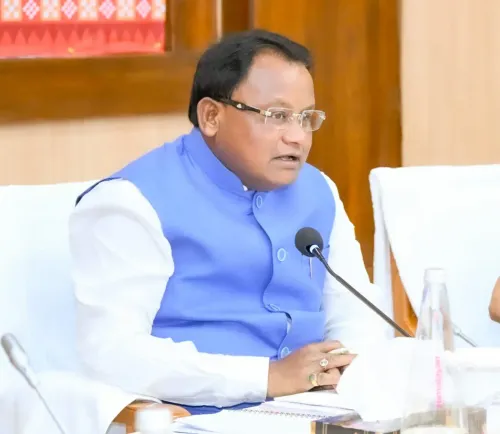
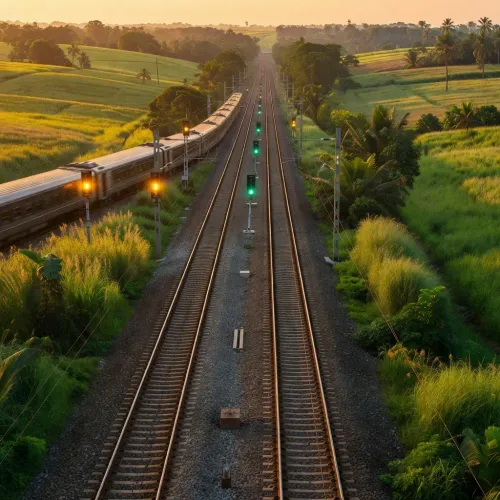
Union Textiles Minister Giriraj Singh on Tuesday, 23 June 2026 shared that Indian Railways has approved ₹270 crore for the deployment of the Kavach automatic train protection system across a 631-kilometre stretch of the East Coast Railway zone, signalling a significant push to expand the indigenously developed safety network.
Context
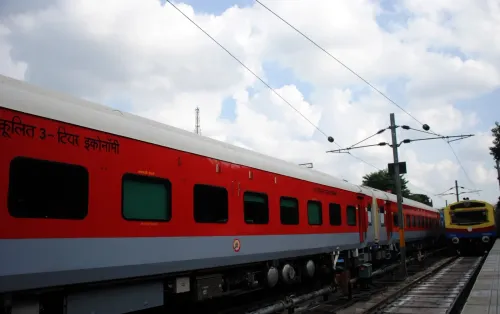
The minister shared the development via the NaMo App, amplifying a report on the railways infrastructure beat. The approved funds are earmarked specifically for the East Coast Railway zone, headquartered in Bhubaneswar, which covers routes across Odisha, parts of Andhra Pradesh, and Chhattisgarh. At 631 km, this represents one of the larger single-zone Kavach sanction orders reported in recent months.
Kavach — whose name translates to 'armour' in Hindi — is an indigenous Automatic Train Protection (ATP) system developed by the Research Designs and Standards Organisation (RDSO). It uses radio-based communication to prevent signal-passing at danger (SPAD) incidents and head-on collisions by automatically applying brakes when a threat is detected.
Policy Backdrop
Kavach's development and phased rollout has been a centrepiece of Indian Railways' safety modernisation agenda. Pilot deployments began between 2020 and 2022 on select routes of the then South Central Railway, before the Union Budget 2022-23 formally allocated funds for network-wide expansion on high-density corridors.
The system is positioned as India's answer to the European Train Control System (ETCS), fitting squarely within the Atmanirbhar Bharat framework that prioritises domestically developed technology over imported alternatives. Successive railway budgets have accelerated approvals, with zonal railways progressively receiving sanction orders to equip their busiest and most accident-prone sections.
Stakeholders and Impact
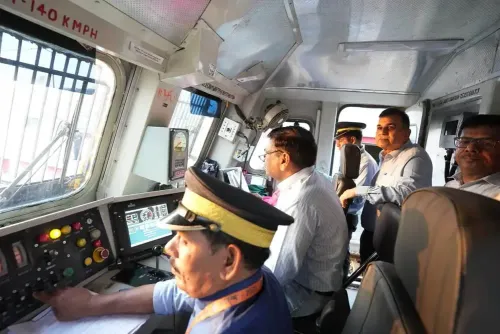
East Coast Railway handles substantial freight traffic — particularly iron ore and coal — in addition to passenger services linking industrial hubs in Odisha and Andhra Pradesh. The 631-km Kavach corridor will cover loco-pilots, station masters, and millions of daily commuters and freight consignors who depend on these routes.
For the broader rail safety ecosystem, the approval adds momentum to the Ministry of Railways' stated goal of blanketing the entire high-density network with Kavach. Equipment manufacturers and system integrators certified for Kavach installations stand to benefit from the expanded order pipeline as more zones receive similar sanctions.
What's Next
The ₹270 crore sanction will now move into tendering, equipment procurement, and on-track installation phases, a process that typically spans multiple quarters depending on terrain and existing signalling infrastructure. Railway Board meetings in the months ahead are expected to take up integration timelines for Kavach with legacy signalling systems across the zone.
With several other railway zones still awaiting comparable approvals, the East Coast Railway order is likely to serve as a reference point for the pace and scale of future zonal rollouts. The broader question of full-network Kavach coverage — a target the Ministry of Railways has repeatedly underlined — will hinge on how quickly such zone-by-zone sanctions translate into operational deployment.
Point of View
Using platforms like the NaMo App as an integrated communication channel. The East Coast Railway sanction fits a clear pattern: zone-by-zone Kavach approvals that allow the government to claim steady, visible progress on rail safety without committing to a single, auditable network-wide deadline. The ₹270 crore figure and the 631-km scope are concrete enough to serve as accountability markers, which will matter as opposition parties scrutinise the gap between Kavach announcements and actual on-track deployment. For the Ministry of Railways, each such sanction also builds the domestic order book for Kavach-certified vendors, quietly consolidating an industrial ecosystem that makes future rollbacks politically and economically costly.
NationPress
23 Jun 2026
Frequently Asked Questions
What is the Kavach system in Indian Railways?
Kavach is an indigenously developed Automatic Train Protection (ATP) system built by RDSO that uses radio-based communication to automatically apply brakes and prevent collisions or signal-passing-at-danger incidents on Indian rail routes.
How much has been approved for Kavach on East Coast Railway?
Indian Railways has approved ₹270 crore for Kavach deployment across a 631-kilometre stretch of the East Coast Railway zone, as shared by Union Textiles Minister Giriraj Singh on 23 June 2026.
Which areas does East Coast Railway cover?
East Coast Railway is headquartered in Bhubaneswar and covers rail routes primarily in Odisha, along with parts of Andhra Pradesh and Chhattisgarh.
Why is Kavach important for India's railways?
Kavach is India's domestically developed alternative to imported European train control systems; it is central to the Atmanirbhar Bharat push and has been a rail safety priority since Union Budget 2022-23, aimed at reducing accidents on high-density routes.
What happens after the ₹270 crore Kavach sanction is approved?
Following the sanction, the process moves to tendering, equipment procurement, and on-track installation, which typically takes several quarters; integration with existing signalling infrastructure will be overseen by the Railway Board.