Kishan Reddy shares India-Slovakia education and tech MoUs
Synopsis
India and Slovakia signed four agreements on June 16, 2026, covering higher education, an AI Chair at Kosice, quantum communication and critical infrastructure, and a naturopathy tie-up between Pune and Piestany — shared by Union Minister G. Kishan Reddy.
Key Takeaways
Four MoUs were signed between India and Slovakia on June 16, 2026 , covering education, AI, quantum technology, and traditional medicine.
An India Chair on Artificial Intelligence will be established at the Technical University of Kosice , institutionalising Indian academic presence in Central Europe.
An MoU on Quantum Communication and Critical Infrastructure Protection extends bilateral cooperation into strategic technology domains.
The National Institute of Naturopathy, Pune (under the Ministry of AYUSH) signed an MoU with Slovak Health Spa Piestany , advancing India's AYUSH internationalisation agenda.
The agreements align with India's National Strategy for AI and National Quantum Mission frameworks and the broader EU-India science and technology dialogue.
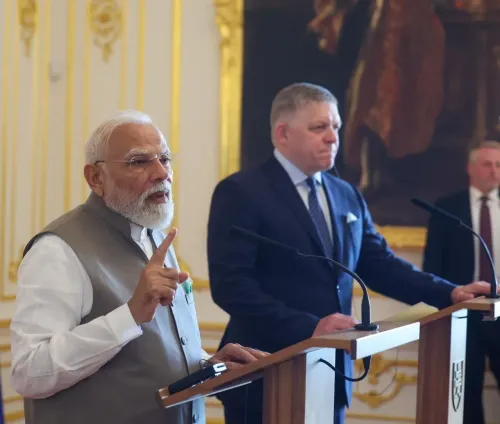
Union Coal and Mines Minister G. Kishan Reddy on Tuesday, June 16, 2026 shared details of a set of cooperation agreements signed between India and Slovakia, highlighting advances in higher education, artificial intelligence, quantum communication, and traditional medicine.
Context
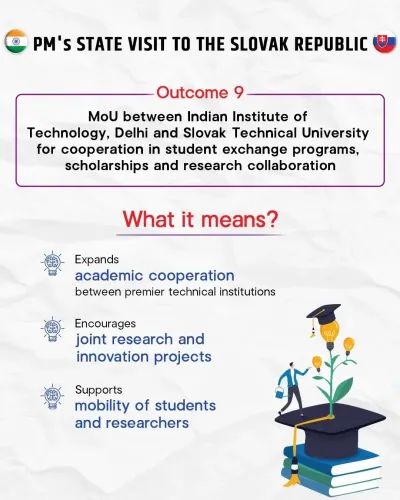
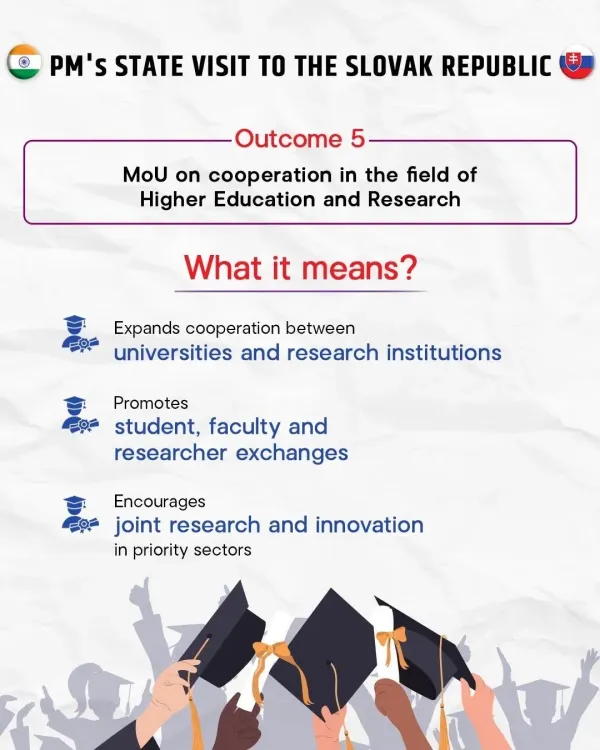
The post lists four distinct agreements: an MoU on Higher Education and Research, the establishment of an India Chair on Artificial Intelligence at the Technical University of Kosice, an MoU on Quantum Communication and Critical Infrastructure Protection, and an MoU between the National Institute of Naturopathy, Pune and Slovak Health Spa Piestany. The announcements point to a broad-based bilateral engagement spanning cutting-edge technology and wellness sectors.
Slovakia is a Central European member of both the EU and NATO, and has maintained diplomatic relations with India since 1993. The two countries have previously signed defence and economic cooperation agreements, with science and technology MoUs expanding through the 2010s.
Policy Backdrop
The agreements fit within India's broader strategic push under its National Strategy for Artificial Intelligence and the National Quantum Mission framework, both of which seek international partnerships to accelerate domestic capability-building. Pairing digital technology cooperation with traditional-medicine linkages has become a recognisable pattern in India's bilateral engagements with EU member states.
Slovakia joined the EU in 2004 and has since participated in the EU-India science and technology dialogue. The Technical University of Kosice is a Slovak public institution focused on engineering and information technology, making it a natural institutional partner for an AI Chair. The National Institute of Naturopathy in Pune operates under the Ministry of AYUSH and has been expanding its international research footprint.
Stakeholders and Impact
Indian and Slovak students, researchers, and faculty stand to benefit most directly from the Higher Education and Research MoU, which could open pathways for joint degree programmes, faculty exchanges, and collaborative research funding. The India Chair on AI at Kosice would institutionalise Indian academic presence in Central Europe, potentially seeding long-term technology and talent linkages.
The quantum communication agreement carries strategic significance beyond academia, as it extends to critical infrastructure protection — a domain of growing importance for both governments. Meanwhile, the naturopathy tie-up between Pune and Piestany reflects India's consistent effort to internationalise AYUSH disciplines through government-to-government channels.
What's Next
Ratification timelines, funding allocations for the AI Chair, and implementation roadmaps for the quantum MoU are expected to be subjects of parliamentary questions and Ministry of External Affairs briefings in coming months. The pace at which the National Institute of Naturopathy and Slovak Health Spa Piestany operationalise their joint programmes will also be closely watched by the AYUSH community. Collectively, these agreements signal that the India-Slovakia bilateral relationship is moving toward deeper institutional anchoring in emerging technology and knowledge sectors.
Point of View
Not merely trade. The AI Chair at Kosice is particularly notable: it mirrors India's strategy of planting named academic chairs in partner countries — a soft-power tool that builds long-term research networks and talent pipelines. The pairing of a quantum communication MoU with a naturopathy wellness tie-up is characteristic of India's bilateral template with EU states, bundling strategic tech with AYUSH diplomacy to broaden the coalition of domestic stakeholders who benefit from the relationship. Ratification speed and actual funding for the AI Chair will be the real test of whether these agreements translate into durable cooperation or remain aspirational frameworks.
NationPress
15 Sept 2026
Frequently Asked Questions
What MoUs did India sign with Slovakia in June 2026?
India and Slovakia signed four agreements: an MoU on Higher Education and Research, an MoU to establish an India Chair on AI at the Technical University of Kosice, an MoU on Quantum Communication and Critical Infrastructure Protection, and an MoU between the National Institute of Naturopathy, Pune and Slovak Health Spa Piestany.
What is the India Chair on Artificial Intelligence at the Technical University of Kosice?
It is a dedicated academic position to be established at the Technical University of Kosice in Slovakia as part of the India-Slovakia bilateral agreements announced on June 16, 2026, aimed at deepening AI research cooperation between the two countries.
What does the India-Slovakia quantum communication MoU cover?
The MoU covers cooperation in Quantum Communication and Critical Infrastructure Protection, extending the bilateral relationship into strategic technology domains relevant to national security and digital resilience.
What is the National Institute of Naturopathy, Pune?
The National Institute of Naturopathy is a Pune-based institution under India's Ministry of AYUSH that promotes naturopathy education and research. It signed an MoU with Slovak Health Spa Piestany as part of the June 2026 India-Slovakia agreements.
How long have India and Slovakia had diplomatic relations?
India and Slovakia have maintained diplomatic relations since 1993. Bilateral cooperation has expanded through defence, economic, and science and technology agreements, with Slovakia's 2004 EU accession deepening the India-EU science and technology dialogue.