India-Slovakia sign MoUs on digital tech, counter-terrorism JWG set up
Synopsis
Modi's Bratislava visit delivered more than diplomatic optics — India and Slovakia elevated ties to a Comprehensive Partnership, set up a counter-terrorism JWG, and signed MoUs spanning quantum communication, AI, Ayush, and student exchanges. With an India-EU FTA on the horizon, the visit signals a deliberate Indian push into Central Europe.
Key Takeaways
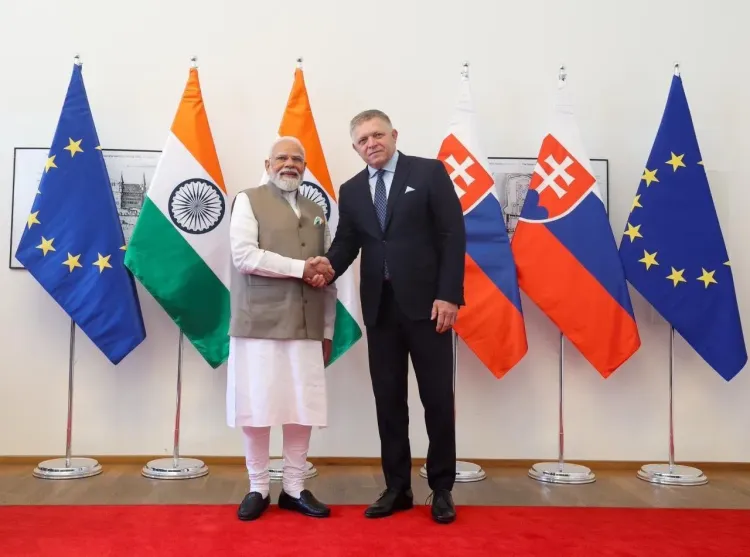
PM Modi and Slovak PM Robert Fico met in Bratislava on 15 June , elevating bilateral ties to a Comprehensive Partnership .
MoUs signed cover Digital Technologies , Labour Migration , Quantum Communication , Higher Education , Audio-Visual Creation , and Critical Infrastructure Protection .
A Joint Working Group (JWG) on counter-terrorism was agreed upon, with both sides calling for action against entities listed under the UN Security Council 1267 Sanctions Committee .
The first-ever ICCR Chair in Artificial Intelligence will be established at the Technical University of Kosice .
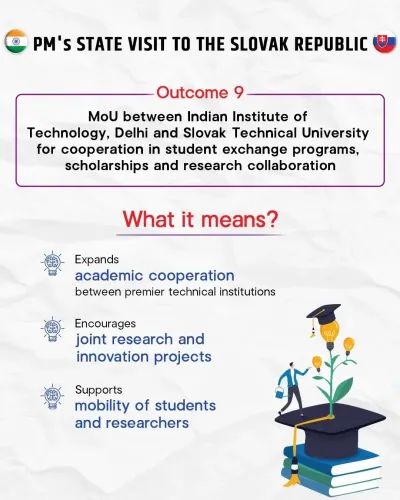
IIT Delhi and Slovak Technical University finalised a deal on student exchanges, scholarships, and research collaboration.
Both countries agreed to set up a regular consular consultations mechanism to manage growing people-to-people ties.
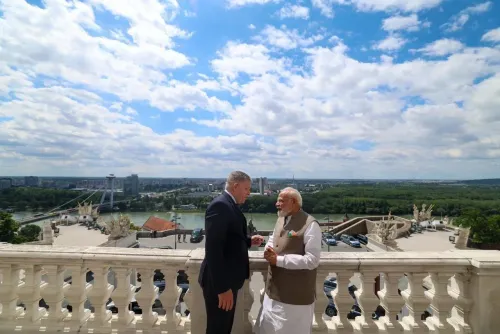
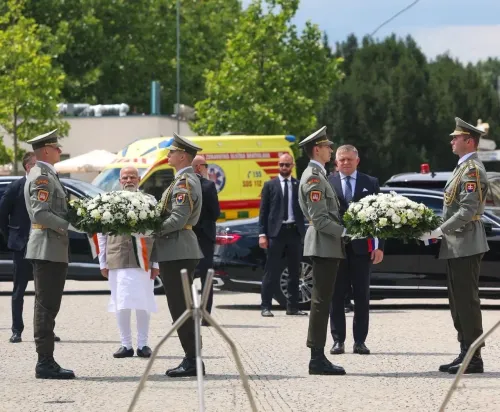
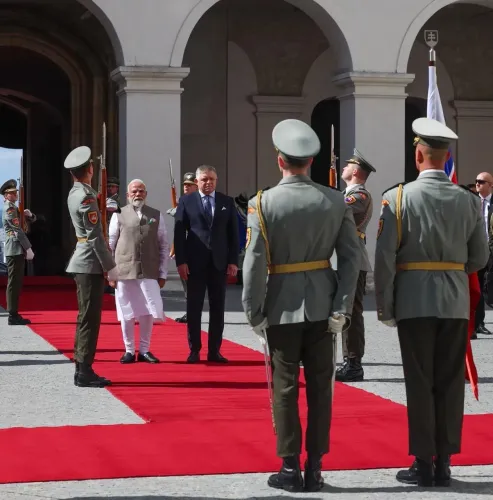
Prime Minister Narendra Modi and Slovak Prime Minister Robert Fico on Monday, 15 June signed a series of Memorandums of Understanding (MoUs) and agreed to establish a Joint Working Group (JWG) on counter-terrorism during Modi's visit to Bratislava. The two countries also elevated their bilateral ties to a Comprehensive Partnership — a significant upgrade that sets the framework for deeper engagement across trade, technology, and security.
Key Agreements Signed
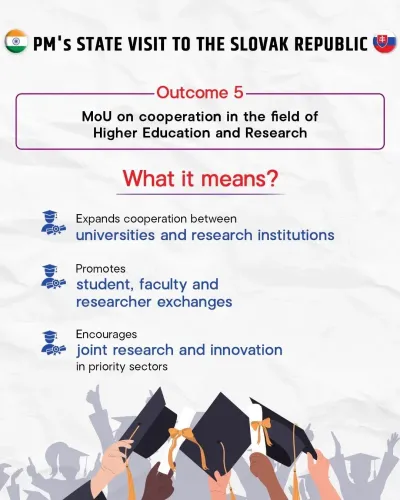
The MoUs exchanged cover cooperation in Digital Technologies, Labour Migration, Higher Education and Research, Audio-Visual Creation, Quantum Communication, and Critical Infrastructure Protection. A separate MoU was signed between the National Institute of Naturopathy, Pune (under the Ministry of Ayush) and the Slovak Health Spa Piestany, signalling growing interest in wellness and traditional medicine cooperation.
An agreement between the Indian Institute of Technology (IIT) Delhi and Slovak Technical University was also finalised, covering student exchange programmes, scholarships, and research collaboration. Additionally, the two sides agreed to establish the first-ever ICCR Chair in Artificial Intelligence at the Technical University of Kosice.
Counter-Terrorism and Security Cooperation
The establishment of the JWG on counter-terrorism was among the most substantive outcomes of the bilateral talks. The Joint Statement issued after the meeting stated that the leaders 'reaffirmed their commitment to strengthening bilateral and multilateral cooperation in counterterrorism, including within the framework of the United Nations, and called for strong and decisive action against terrorists and terrorist entities, including those designated by the United Nations Security Council 1267 Sanctions Committee, as well as their affiliates, proxies, sponsors, financiers and supporters.'
Both leaders called for 'concerted international efforts to combat terrorism in a comprehensive and sustained manner' — language that aligns with India's longstanding push for a binding global counter-terrorism framework.
Science, Tourism, and People-to-People Ties
An Agreement on Scientific Cooperation was concluded between the Indian National Science Academy (INSA) and the Slovak Academy of Sciences (SAS). Tourism cooperation was formalised through an agreement between the respective Associations of Tour Operators of both countries.
The two leaders also agreed to set up a mechanism for regular consular consultations, acknowledging that growing people-to-people ties and increased movement of citizens required a structured consular framework.
What Modi Said
In a post on X following the meeting, Prime Minister Modi wrote: 'Held an excellent meeting with Prime Minister Fico. This is indeed a very special moment for the India-Slovakia friendship. Considering the strong potential of our ties, we have elevated our relations to a Comprehensive Partnership.' He also noted that the India-EU Free Trade Agreement (FTA), currently under negotiation, 'will also add momentum to our partnership.'
Broader Significance
This is Modi's first visit to Slovakia and comes as India intensifies diplomatic outreach across Central and Eastern Europe. Slovakia is a member of both the European Union and NATO, and the elevation to Comprehensive Partnership signals India's intent to deepen ties with EU member states ahead of a potential India-EU FTA conclusion. This visit follows a broader pattern of India securing structured bilateral frameworks — including JWGs and academic linkages — with European nations to diversify strategic partnerships beyond traditional allies.
Point of View
But the operational weight lies in the counter-terrorism JWG — India has long sought structured bilateral mechanisms that reinforce its multilateral push for a UN Comprehensive Convention on International Terrorism. Slovakia's endorsement of action against UN 1267-listed entities is notable given Europe's historically cautious framing on cross-border terrorism. The cluster of academic and technology MoUs also reflects India's strategy of embedding itself in European innovation ecosystems before the India-EU FTA potentially reshapes trade flows. Whether these agreements translate into active programmes or remain framework documents will be the real test.
NationPress
15 Sept 2026
Frequently Asked Questions
What agreements did India and Slovakia sign during PM Modi's Bratislava visit?
India and Slovakia signed MoUs on Digital Technologies, Labour Migration, Higher Education and Research, Audio-Visual Creation, Quantum Communication, and Critical Infrastructure Protection, among others. The two countries also agreed to establish a Joint Working Group on counter-terrorism and elevated their ties to a Comprehensive Partnership.
What is the India-Slovakia Joint Working Group on counter-terrorism?
It is a newly agreed bilateral mechanism to coordinate counter-terrorism cooperation between India and Slovakia. Both sides called for action against terrorist entities, including those listed by the UN Security Council 1267 Sanctions Committee, and for sustained international efforts to combat terrorism.
What is the significance of the India-Slovakia Comprehensive Partnership?
The Comprehensive Partnership is a formal upgrade of the bilateral relationship, providing a structured framework for deeper cooperation across trade, technology, security, and people-to-people ties. It also positions the relationship to benefit from a potential India-EU Free Trade Agreement.
What academic and technology deals were signed between India and Slovakia?
IIT Delhi and Slovak Technical University signed an agreement on student exchanges, scholarships, and research collaboration. The two sides also agreed to set up the first-ever ICCR Chair in Artificial Intelligence at the Technical University of Kosice, and the Indian National Science Academy (INSA) signed a scientific cooperation agreement with the Slovak Academy of Sciences (SAS).
How does this visit fit into India's broader European diplomatic strategy?
Modi's Bratislava visit is part of India's sustained outreach to Central and Eastern European nations. With an India-EU FTA under negotiation, securing Comprehensive Partnerships with EU member states like Slovakia helps India build political goodwill and institutional linkages ahead of a potential trade deal.