India-Slovakia elevate ties to Comprehensive Partnership, sign tech and defence pacts
Synopsis
India and Slovakia didn't just exchange pleasantries in Bratislava — they signed a Memorandum on post-quantum cryptography, a defence Letter of Intent, and agreed on a Joint Counter-Terrorism Working Group. The elevation to a Comprehensive Partnership signals India's deliberate push into Central Europe as the India-EU FTA inches closer to finalisation.
Key Takeaways
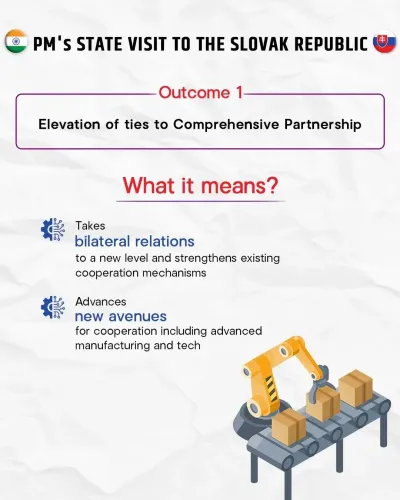
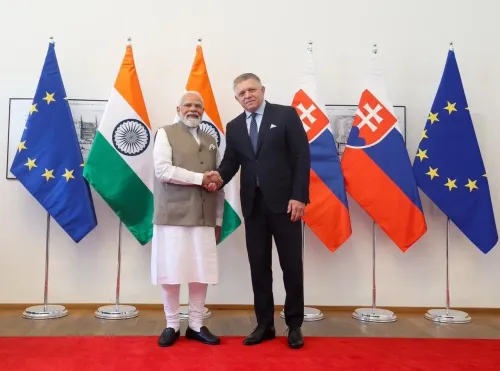
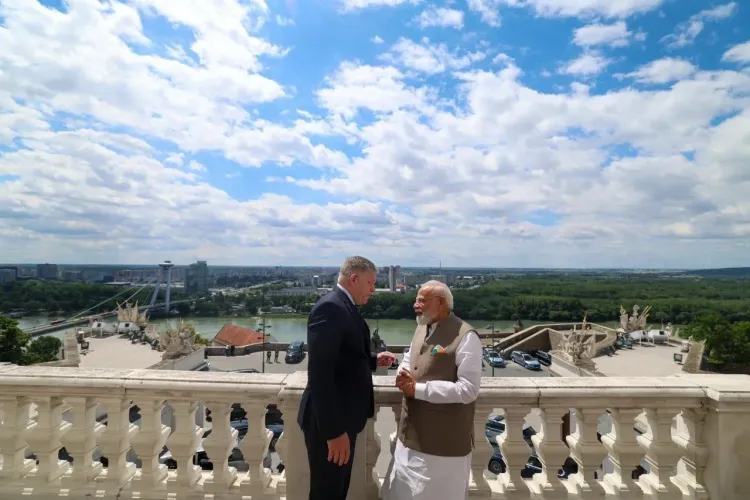
PM Modi and Slovak PM Robert Fico elevated bilateral ties to a Comprehensive Partnership in Bratislava on 15 June 2025 .
A Memorandum of Cooperation was signed on critical infrastructure protection and post-quantum cryptography .
A Letter of Intent on Defence Cooperation was signed, covering defence technologies, R&D, and industrial collaboration.
Both sides agreed to establish a Joint Working Group on Counter-Terrorism and condemned cross-border terrorism.
Cooperation in AI , space , automobiles, railways, advanced manufacturing, and green technology was prioritised.
The India-EU Free Trade Agreement was cited as a key driver of future bilateral momentum.
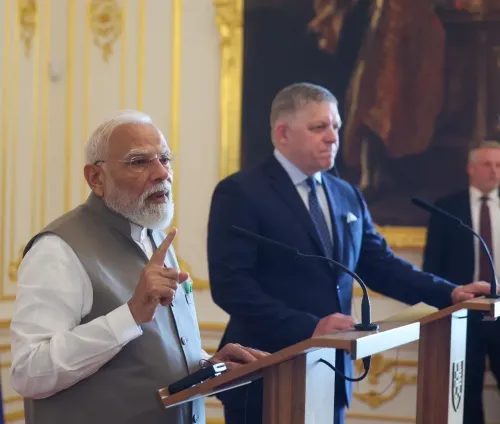
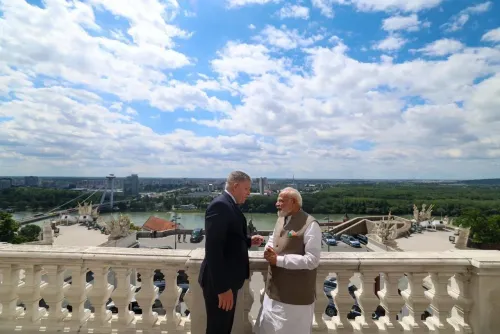
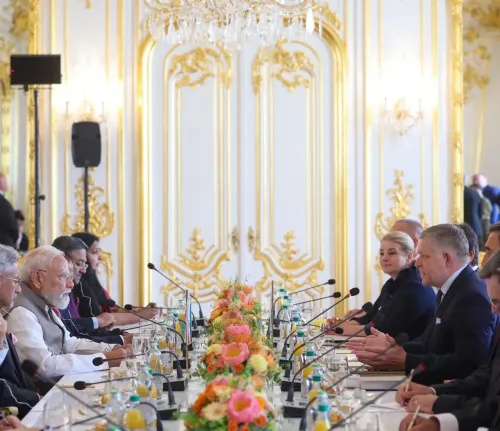
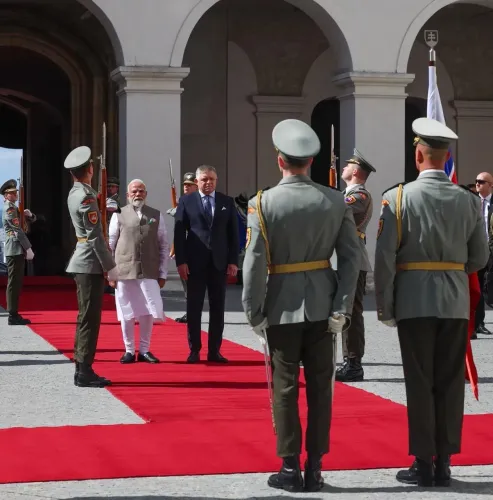
Prime Minister Narendra Modi and Slovak Prime Minister Robert Fico on Monday, 15 June elevated bilateral relations to a Comprehensive Partnership in Bratislava, signing agreements on digital technology, post-quantum cryptography, and defence cooperation. Technology, both leaders affirmed, stands as a key pillar of the newly deepened India-Slovakia relationship.
Digital and Cyber Cooperation
The two sides agreed to strengthen cooperation for the protection of critical information infrastructure and to prevent and counter cybercrime, while promoting an open, secure, stable, and resilient digital space. A Memorandum of Cooperation was signed covering critical infrastructure protection and post-quantum cryptography, addressing the emerging threat that quantum computing poses to conventional encryption systems.
Both governments also committed to supporting each other in preparing for post-quantum security transitions — a forward-looking step that places India-Slovakia cooperation at the frontier of global cybersecurity preparedness. Modi specifically flagged collaboration in artificial intelligence and space as priority areas under the new digital MoU.
What PM Modi Said
'We view technology as a key pillar of the India-Slovakia partnership. The MoU on digital technology will open many new areas of cooperation. We will also work closely in AI and space,' Modi posted on X following the bilateral meeting.
He described the summit as 'a very special moment for the India-Slovakia friendship,' adding that talks covered cooperation in automobiles, railways, advanced manufacturing, and green technology. Modi also noted that the India-EU Free Trade Agreement (FTA), currently under negotiation, would add further momentum to bilateral ties.
Defence and Security Commitments
Both leaders underscored defence and security cooperation as another key pillar of the partnership. A Letter of Intent on Defence Cooperation was signed, opening pathways for collaboration in defence technologies, capacity building, research and development, and defence industrial cooperation. Regular consultations between respective defence authorities were also agreed upon.
On counterterrorism, Modi and Fico condemned terrorism in all its forms, including cross-border terrorism, and agreed to establish a Joint Working Group on Counter-Terrorism. The Joint Statement called for strong action against entities designated by the United Nations Security Council 1267 Sanctions Committee and their affiliates, proxies, sponsors, and financiers.
Broader Multilateral Alignment
Both leaders reaffirmed commitment to the early finalisation of the Comprehensive Convention on International Terrorism (CCIT) within the United Nations framework, holding perpetrators, organisers, and sponsors of terrorist acts accountable. They also agreed to enhance collaboration in disaster risk reduction, resilient infrastructure, and institutional cooperation.
This visit marks a significant step in India's diplomatic outreach to Central Europe, with the Comprehensive Partnership framework now providing a structured basis for engagement across technology, trade, defence, and multilateral affairs. The next phase will test whether the signed agreements translate into tangible industrial and security outcomes.
Point of View
But the post-quantum cryptography MoU is the detail worth watching. Most bilateral tech agreements stop at cybersecurity platitudes — committing jointly to post-quantum security transitions is a concrete, future-facing step that few India bilateral frameworks have included. The counterterrorism Joint Working Group, meanwhile, carries implicit weight: Slovakia is an EU and NATO member, and its alignment with India's language on cross-border terrorism and UNSC 1267 designations adds a European voice to positions India has long pushed multilaterally. The real test will be whether the India-EU FTA, once finalised, converts these frameworks into actual trade and technology flows — or whether Bratislava remains a symbolically warm but commercially thin relationship.
NationPress
15 Sept 2026
Frequently Asked Questions
What is the India-Slovakia Comprehensive Partnership announced in Bratislava?
It is an upgraded bilateral framework agreed upon by PM Modi and Slovak PM Robert Fico on 15 June 2025 in Bratislava, covering technology, defence, counterterrorism, and trade. It replaces the previous level of engagement and is backed by a Memorandum of Cooperation on digital technology and post-quantum cryptography, and a Letter of Intent on Defence Cooperation.
What is the post-quantum cryptography MoU between India and Slovakia?
The Memorandum of Cooperation covers critical information infrastructure protection and preparedness for post-quantum security transitions — measures to protect encryption systems against threats posed by quantum computing. It is one of the more technically specific agreements to emerge from an India bilateral summit in recent years.
What did PM Modi and Robert Fico agree on counterterrorism?
Both leaders condemned terrorism in all its forms, including cross-border terrorism, and agreed to establish a Joint Working Group on Counter-Terrorism. They also called for early adoption of the Comprehensive Convention on International Terrorism (CCIT) within the UN framework and for strong action against entities listed by the UN Security Council 1267 Sanctions Committee.
How does the India-EU Free Trade Agreement factor into India-Slovakia ties?
PM Modi noted that the India-EU FTA, currently under negotiation, would add momentum to the bilateral partnership. As an EU member, Slovakia stands to benefit from any trade liberalisation between India and the bloc, particularly in sectors like automobiles and advanced manufacturing discussed during the summit.
What sectors did India and Slovakia agree to cooperate on?
The two sides agreed to cooperate across automobiles, railways, advanced manufacturing, green technology, artificial intelligence, space, and digital infrastructure. Defence cooperation — including R&D and industrial collaboration — was also formalised through a Letter of Intent.