Modi's Slovakia Visit Elevates Ties to Comprehensive Partnership
Synopsis
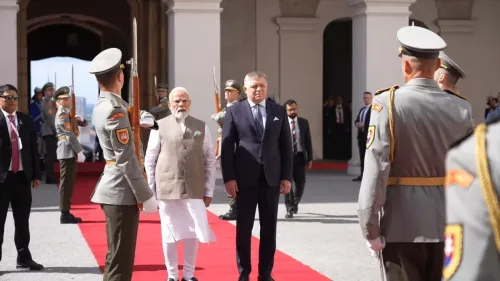
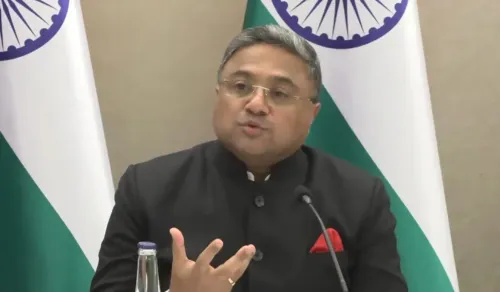
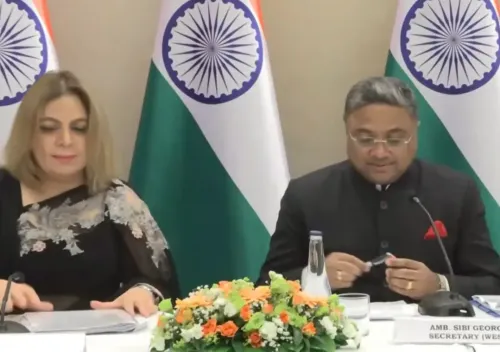
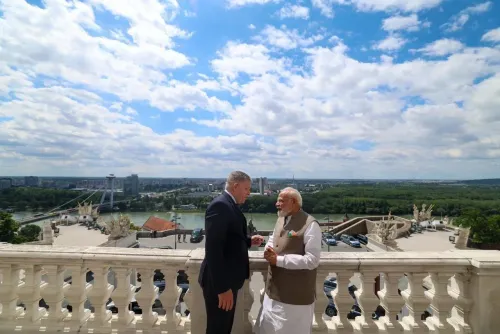
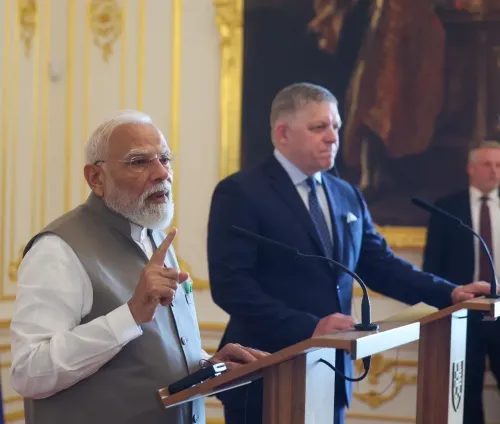
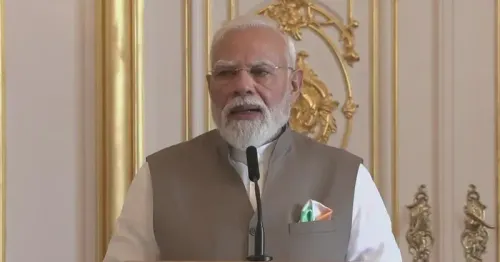
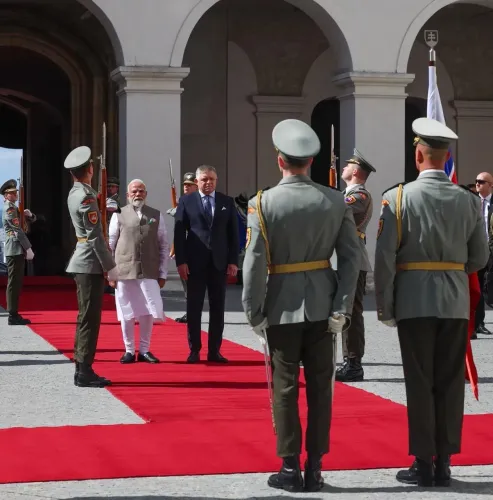
Prime Minister Narendra Modi's State Visit to the Slovak Republic has elevated India-Slovakia ties to a Comprehensive Partnership, with agreements covering labour migration, defence cooperation and digital technologies, Union Minister G. Kishan Reddy announced on 16 June 2026.
Key Takeaways
India-Slovakia ties have been elevated to a Comprehensive Partnership following PM Modi's State Visit.
An MoU on Labour Migration and Mobility was signed to enable safe, orderly and legal movement of workers between the two countries.
A Letter of Intent on Defence Cooperation was agreed, opening the door to joint defence projects and technology collaboration.
An MoU on Digital Technologies was concluded, targeting cooperation in innovation and the digital economy.
The visit advances India's strategy of deepening ties with Central and Eastern European EU and NATO member states.
Kishan Reddy highlighted the outcomes on 16 June 2026, underscoring the government's diplomatic momentum.
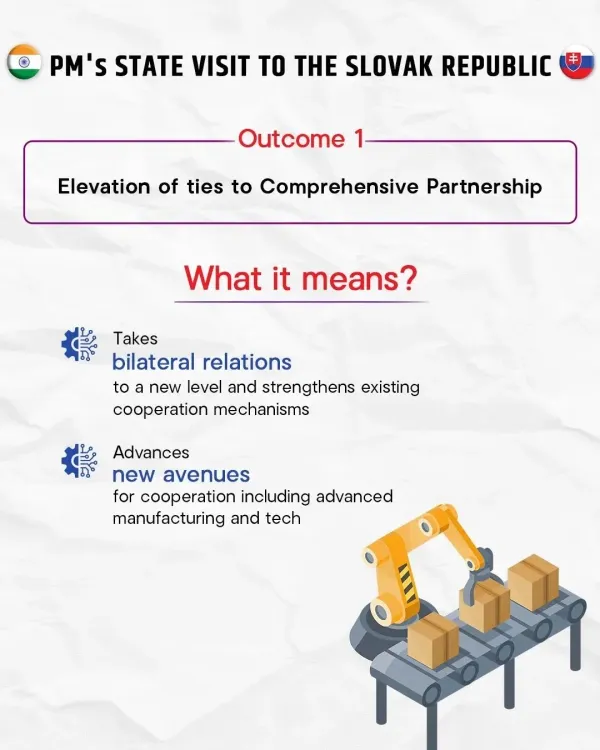
Union Coal and Mines Minister G. Kishan Reddy on Tuesday, 16 June 2026, highlighted the landmark outcomes of Prime Minister Narendra Modi's State Visit to the Slovak Republic, noting that the trip has elevated bilateral relations to a Comprehensive Partnership and opened new avenues for cooperation in technology, defence, mobility and innovation.
Context
The State Visit marks a significant upgrade in India-Slovakia ties, which date to 1993 when the two countries established formal diplomatic relations following Slovakia's independence after the dissolution of Czechoslovakia. The elevation to a Comprehensive Partnership signals a structured, long-term framework for engagement beyond routine diplomatic exchanges.
Minister Reddy, also the BJP Telangana state president, outlined four key outcomes from the visit: the partnership elevation, an MoU on Labour Migration and Mobility, a Letter of Intent on Defence Cooperation, and an MoU on Digital Technologies.
Policy Backdrop
India has steadily broadened its engagement with Central and Eastern European states over recent years, seeking to diversify partnerships beyond its traditional focus on larger EU economies such as Germany and France. Slovakia, as both an EU and NATO member, offers India a gateway into European supply chains, defence industrial networks and digital infrastructure partnerships.
The MoU on Labour Migration and Mobility is part of a wider Indian diplomatic push to secure safe, orderly and legal pathways for Indian workers in Europe, addressing both economic migration demand in EU states and the aspirations of India's large working-age population. The Letter of Intent on Defence Cooperation aligns with India's broader effort to diversify its defence partnerships and reduce dependence on any single supplier nation.
Stakeholders and Impact
Indian workers stand to benefit directly from the labour mobility framework, which is intended to establish regulated, rights-protected channels for migration. Defence manufacturers on both sides will watch closely as the Letter of Intent is translated into concrete project proposals, potentially covering co-production, technology transfer or joint research.
Indian technology companies and startups may find new market access or partnership opportunities through the MoU on Digital Technologies, while Slovak firms could gain a foothold in one of the world's fastest-growing digital economies. The agreements collectively reflect India's 'Europe Plus' diplomatic strategy, targeting niche opportunities in innovation and manufacturing supply chains.
What's Next
The immediate focus will be on operationalising the Labour Migration and Mobility MoU, which will require both governments to establish administrative mechanisms for worker verification, rights protection and return protocols. Diplomatic observers will also monitor whether the defence Letter of Intent advances to a formal agreement, and what specific projects or technology-sharing arrangements emerge from subsequent bilateral meetings.
The visit sets a precedent for India's engagement with smaller but strategically positioned European nations, and its outcomes could serve as a template for similar partnership upgrades across the region.
Point of View
Reducing irregular migration risks while securing economic opportunities for its workforce. The defence Letter of Intent, if operationalised, could signal Slovakia's emergence as a niche partner in India's diversified arms and technology sourcing strategy.
NationPress
15 Sept 2026
Frequently Asked Questions
What was the outcome of PM Modi's visit to Slovakia?
PM Modi's State Visit to the Slovak Republic resulted in the elevation of India-Slovakia ties to a Comprehensive Partnership, along with an MoU on Labour Migration and Mobility, a Letter of Intent on Defence Cooperation, and an MoU on Digital Technologies.
What is the India-Slovakia Labour Migration MoU about?
The MoU on Labour Migration and Mobility is designed to facilitate safe, orderly and legal movement of workers between India and Slovakia, establishing a regulated framework for migration.
When did India and Slovakia establish diplomatic relations?
India and Slovakia established formal diplomatic relations in 1993, following Slovakia's independence after the dissolution of Czechoslovakia.
What is the India-Slovakia Comprehensive Partnership?
The Comprehensive Partnership is an upgraded bilateral framework agreed during PM Modi's 2026 State Visit, providing a structured foundation for long-term cooperation across technology, defence, mobility and innovation.
What did G. Kishan Reddy say about Modi's Slovakia visit?
Union Coal and Mines Minister G. Kishan Reddy posted on X on 16 June 2026 highlighting the landmark outcomes of PM Modi's State Visit to Slovakia, including the Comprehensive Partnership elevation and the four key agreements signed during the trip.