Kishan Reddy flags India-Slovakia consular, science pacts
Synopsis
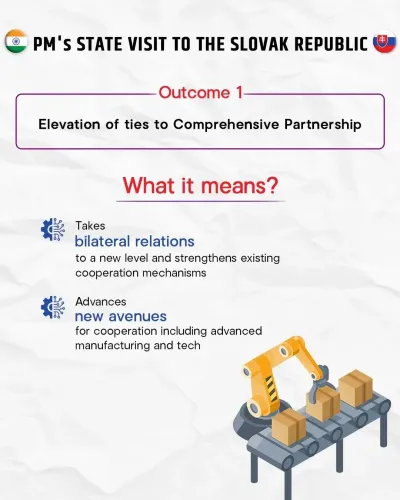
Union Minister G. Kishan Reddy on June 16, 2026 announced two outcomes institutionalising India-Slovakia ties: a new Consular Dialogue and a Scientific Cooperation Agreement between the Indian National Science Academy and the Slovak Academy of Sciences, deepening bilateral engagement across diplomatic and research sectors.
Key Takeaways
Kishan Reddy highlighted two new bilateral outcomes between India and Slovakia on June 16, 2026 .
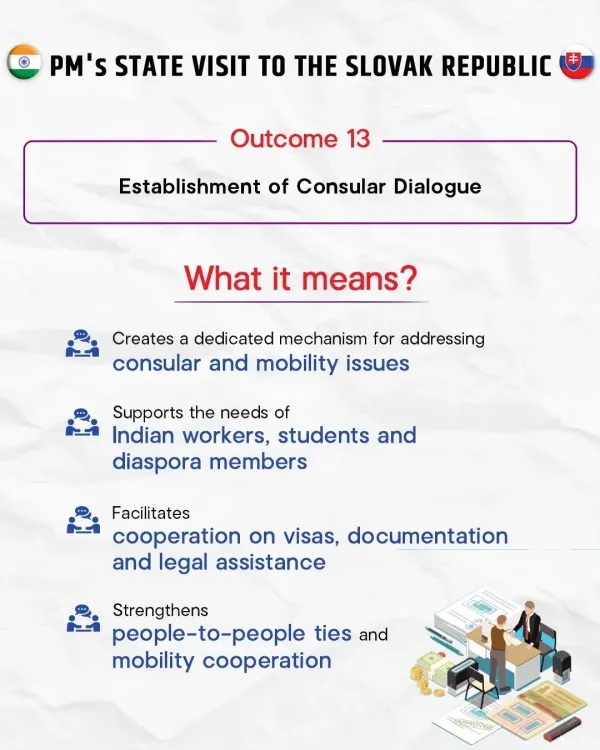
A Consular Dialogue has been established to institutionalise people-to-people and diplomatic engagement between the two countries.
A Scientific Cooperation Agreement has been signed between the Indian National Science Academy (INSA) , founded in 1930 , and the Slovak Academy of Sciences , established in 1953 .
India and Slovakia have maintained diplomatic relations since 1993 , following the dissolution of Czechoslovakia.
The agreements form part of India's broader strategy to deepen institutional ties with Central and Eastern European EU member states.
Follow-up steps include operationalising the consular forum and launching joint research programmes under the INSA-Slovak Academy framework.
Union Coal and Mines Minister G. Kishan Reddy on Tuesday, June 16, 2026 highlighted two significant outcomes in the institutionalisation of bilateral engagement between India and Slovakia, pointing to the establishment of a Consular Dialogue and a Scientific Cooperation Agreement between the Indian National Science Academy (INSA) and the Slovak Academy of Sciences.
Context
Kishan Reddy described the two outcomes as reflecting 'the growing depth and breadth of the India-Slovakia partnership' that would 'drive collaboration across multiple sectors in the years ahead.' The statement, shared via his official social media handle, underscores a deliberate effort to move bilateral ties beyond ad hoc interactions toward structured, institutional frameworks.
India and Slovakia established formal diplomatic relations in 1993 following the dissolution of Czechoslovakia. In the three decades since, the relationship has grown across trade, culture, and science, though it has historically operated at a lower profile compared with India's engagement with larger European economies.
Policy Backdrop
The Consular Dialogue is designed to facilitate people-to-people contact, streamline visa and consular services, and provide a dedicated channel for resolving bilateral consular matters. Such mechanisms are increasingly standard in India's bilateral architecture with EU member states as Indian mobility into Europe grows.
The Scientific Cooperation Agreement between INSA — India's premier scientific body founded in 1930 — and the Slovak Academy of Sciences, established in 1953, formalises a research partnership between two institutions with deep national mandates. The agreement is expected to enable joint research projects, exchange of fellows, and co-publication across natural sciences, engineering, and humanities. India has steadily expanded such institutional science linkages with Central and Eastern European countries as part of a broader European engagement strategy that reaches beyond traditional partners.
These steps align with India's emphasis on science diplomacy and sit within the wider framework of India-EU science and technology cooperation, where bilateral agreements at the institutional level help operationalise broader partnership goals.
Stakeholders and Impact
Indian researchers and scientists stand to gain structured access to Slovak research institutes and funding channels, while Slovak counterparts gain a formal entry point into India's scientific ecosystem. The Consular Dialogue is of direct relevance to the Indian diaspora in Slovakia and Slovak nationals travelling to or residing in India, offering a more predictable mechanism for resolving consular issues.
Diplomatic services on both sides will now have a dedicated forum for regular consultations, reducing dependence on ad hoc exchanges and improving response times on bilateral matters. Businesses operating across both countries may also benefit indirectly, as smoother consular processes ease mobility for professionals and investors.
What's Next
Attention will now turn to the operationalisation of both agreements — particularly the timeline for the first Consular Dialogue session and the inaugural joint research calls under the INSA-Slovak Academy of Sciences framework. Any follow-up political consultations or trade talks between the two governments will be closely watched as indicators of whether this institutional momentum translates into broader economic and strategic engagement. For India, deepening ties with Slovakia — an EU member with a growing industrial and technology base — fits a long-term pattern of diversifying European partnerships beyond the continent's largest economies.
Point of View
Using institutional mechanisms — consular dialogues and academy-level science agreements — as building blocks for deeper engagement. For G. Kishan Reddy, a minister whose portfolio centres on domestic extractive industries, amplifying a foreign policy outcome suggests coordinated government messaging to project India's global outreach across the cabinet. The INSA-Slovak Academy agreement fits a recognisable pattern in Indian science diplomacy: formalising linkages with EU research institutions to access European funding ecosystems and co-author pathways. Collectively, these steps reflect a maturing bilateral relationship that is quietly but steadily moving from symbolic ties to structured, sector-specific cooperation.
NationPress
15 Sept 2026
Frequently Asked Questions
What is the India-Slovakia Consular Dialogue announced in June 2026?
The Consular Dialogue is a newly established bilateral mechanism between India and Slovakia designed to institutionalise regular consultations on consular matters, streamline visa and people-to-people processes, and provide a formal channel for resolving bilateral consular issues.
What does the INSA-Slovak Academy of Sciences agreement cover?
The Scientific Cooperation Agreement between the Indian National Science Academy and the Slovak Academy of Sciences formalises a research partnership enabling joint projects, exchange of fellows, and collaboration across natural sciences, engineering, and humanities.
When did India and Slovakia establish diplomatic relations?
India and Slovakia established formal diplomatic relations in 1993, following the dissolution of Czechoslovakia into the Czech Republic and Slovakia.
Why is G. Kishan Reddy involved in India-Slovakia diplomatic announcements?
As a senior Union Cabinet minister and BJP Telangana state president, G. Kishan Reddy amplified the bilateral outcomes on his official social media handle as part of coordinated government communication on India's foreign engagement.
How do these agreements fit India's broader Europe strategy?
The agreements are part of India's wider effort to deepen institutional ties with Central and Eastern European EU member states, diversifying European partnerships beyond larger economies and leveraging science diplomacy to operationalise broader India-EU cooperation frameworks.