India targets terror funding of overseas networks, J&K model
Synopsis
The playbook that broke the separatist movement in Jammu and Kashmir is going global. Indian agencies plan to choke the money behind overseas terror and Khalistani-linked syndicates, track foreign SIM users, and replace fragmented probes with joint central-state investigations. They are targeting entire networks rather than replaceable foot soldiers.
Key Takeaways
Indian agencies plan to extend the Jammu and Kashmir operational-plus-financial counter-terror model to overseas networks .
The focus is on squeezing the funding of foreign-based support groups that handle terror finances.
Measures are in place to track operatives using foreign SIM cards to contact handlers and foot soldiers in India.
Local police and a central agency will jointly run investigations, property attachments and call tracing to avoid duplication.
The shift targets entire networks rather than individual operatives, who are easily replaced.
Stronger cases are expected to improve extradition prospects via Interpol and foreign governments, including against Khalistani-linked syndicates.
Indian security agencies are preparing to choke the funding of overseas terror and criminal networks. They plan to extend the dual operational-and-financial strategy that was used against terrorism in Jammu and Kashmir to syndicates operating from foreign soil, according to officials in New Delhi on 27 November 2026. The new approach centres on squeezing the financial infrastructure that sustains these networks, tracking operatives who use foreign SIM cards, and replacing scattered probes with jointly coordinated investigations.
Key Developments
Several terror and criminal outfits have suffered major setbacks inside India. Officials say their operations continue largely because of the support networks they have built abroad. Agencies now intend to target those networks' financial backbone and cut off their sources of funding.
Measures have also been put in place to identify and track operatives who use foreign SIM cards to communicate with handlers abroad and foot soldiers in India.
One official acknowledged that operatives working from foreign soil are hard to deal with. “The best way to hit them is to squeeze their finances. These networks have support groups that handle the finances, and unless this is tackled, the main networks would continue to operate,” the official said.
The Jammu and Kashmir Template
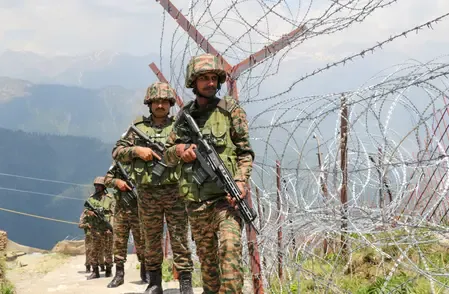
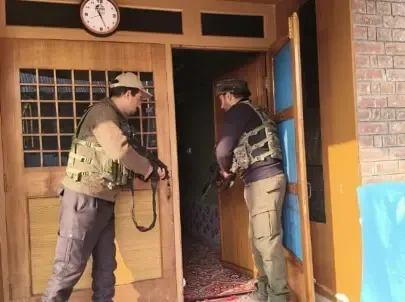
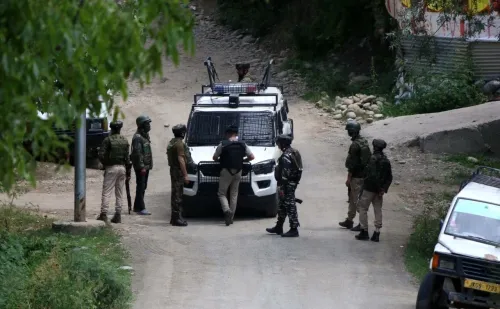
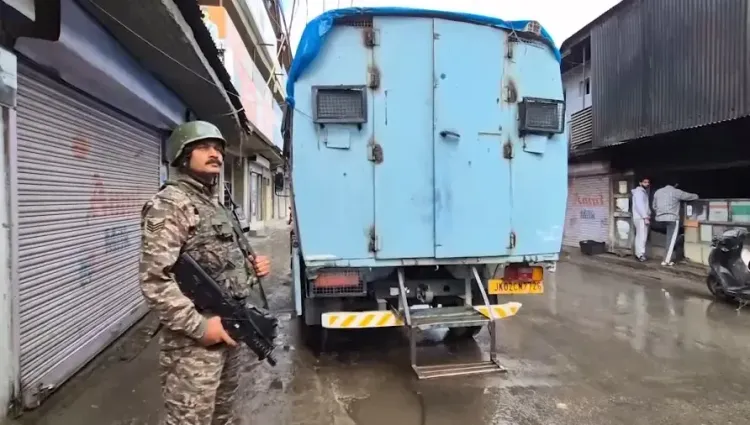
The strategy borrows directly from the approach adopted after the abrogation of Article 370. In that model, the Jammu and Kashmir Police and the Indian Army tackled terror operatives on the ground. Meanwhile, the National Investigation Agency (NIA) and the Enforcement Directorate (ED) targeted separatists through a fund squeeze.
According to officials, once the money stopped flowing and properties linked to anti-India activities were attached, the separatist movement in the Union Territory collapsed. This left terror operatives without a support system, the official said.
Another official indicated that the agencies would not focus extensively on attaching the properties of foreign terror operatives. “This would be a beginning, but with sustained action, it could weaken such foreign networks considerably. Hitting the finances of any group or syndicate is the toughest way of dealing with the problem,” the official said.
Coordination Over Duplication
An Intelligence Bureau official said the core idea is to narrow down investigations. “The handling of foreign operatives by multiple agencies without proper coordination weakens the investigation. The involvement of several agencies through different channels can lead to duplication of efforts and a lack of clarity,” the official said.
Under the new framework, the local police and a central agency will jointly target foreign networks. “They will coordinate investigations, attachment of properties, and tracing of calls made to handlers using foreign SIM cards,” the official added.
Notably, the agencies will move beyond pursuing individuals and go after entire networks. Officials say this removes the need for multiple parallel investigations that can eventually dilute a case. Individual operatives are easily replaced, which allows a network to keep functioning after arrests. The new doctrine aims to dismantle the structure itself.
“The strategy will ensure better coordination among the agencies and a more focused investigation, leaving little scope for gaps or loopholes,” the official said.
Extradition and the Khalistani Angle
Officials describe extradition as a key element of the plan. Thorough, well-coordinated investigations produce stronger cases backed by solid evidence. Such cases help secure favourable court orders, which in turn strengthen India's position before Interpol and foreign governments.
Officials note that once an extradition request is rejected, rebuilding the case is difficult. This makes first-attempt quality critical.
Khalistani groups, according to officials, survive solely on the backing of foreign-based networks popularly known as criminal syndicates. An official said the doctrinal shift would go a long way in dealing with such syndicates, and that once they are weakened, the larger agenda of these groups is bound to fall flat.
The test now lies in execution: whether joint central-state probes can follow money trails across foreign jurisdictions as effectively as they did within Jammu and Kashmir.
Point of View
Properties and people were within Indian jurisdiction. Overseas networks sit behind foreign banking secrecy and sometimes sympathetic host governments. Officials' own admission that foreign asset attachment will not be a major focus quietly concedes that limit. Joint central-state probes are a welcome fix for India's chronic multi-agency turf wars. Still, the real yardstick will be extraditions secured, not strategies announced, and India's record against foreign-based Khalistani figures shows how hard that yardstick is to meet.
NationPress
27 Nov 2026
Frequently Asked Questions
What is India's new strategy against overseas terror networks?
Indian agencies plan to target the financial infrastructure of terror and criminal networks operating from foreign soil and choke their funding sources. The approach also involves tracking operatives who use foreign SIM cards and running jointly coordinated investigations.
How is the strategy linked to Jammu and Kashmir?
It replicates the model used after the abrogation of Article 370. Under that model, the police and Army tackled operatives on the ground while the NIA and ED squeezed separatist funding. Officials say that approach led to the collapse of the separatist movement in the region.
Which agencies will investigate foreign terror networks?
Under the new approach, the local police and a central agency will jointly target foreign networks. They will coordinate investigations, property attachments and the tracing of calls to handlers made using foreign SIM cards.
Why are agencies targeting entire networks instead of individuals?
Individual operatives can be easily replaced, which allows a network to keep functioning after arrests. Targeting the whole network aims to dismantle its structure and avoid multiple investigations that can dilute a case.
How will the strategy help with extradition?
Well-coordinated investigations produce stronger, evidence-backed cases that help secure favourable court orders. This strengthens India's case before Interpol and foreign governments, which officials say is crucial because a rejected request is hard to rebuild.