India-UK CETA comes into force: Zero duty on 99% of India's exports
Synopsis
India's most consequential trade deal in decades just went live. The India-UK CETA, covering 99% of India's exports duty-free and 30 chapters of trade law, marks the first time India has operationalised a comprehensive free trade agreement with a G7 nation — a genuine inflection point in New Delhi's global trade posture.
Key Takeaways
The India-UK CETA and the Agreement on Social Security came into force on 15 July 2025 .
The deal grants zero-duty access for nearly 99 per cent of India's exports, covering almost 100 per cent of bilateral trade value.
India will make 85 per cent of tariff lines completely duty-free over the next decade, covering 90 per cent of all lines.
Scotch whisky tariffs will fall from 150 per cent to 75 per cent immediately, and to 40 per cent over 10 years .
Indian professionals on temporary UK assignments are exempt from double social security contributions for up to five years .
The agreement was signed on 24 July 2025 after 14 rounds of negotiations across 30 chapters .
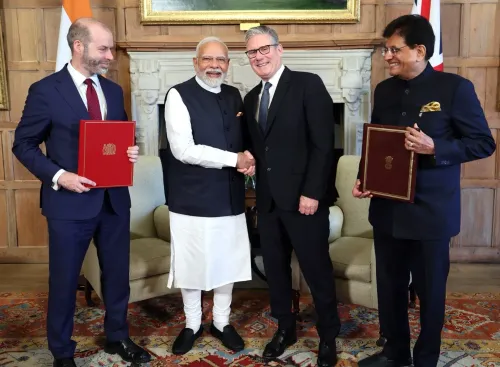
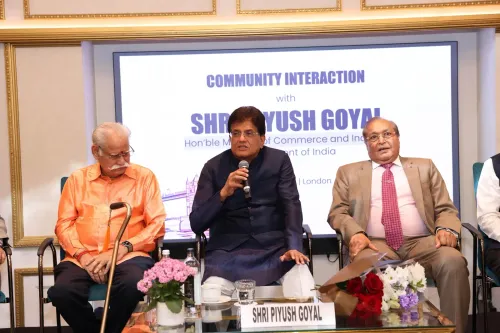
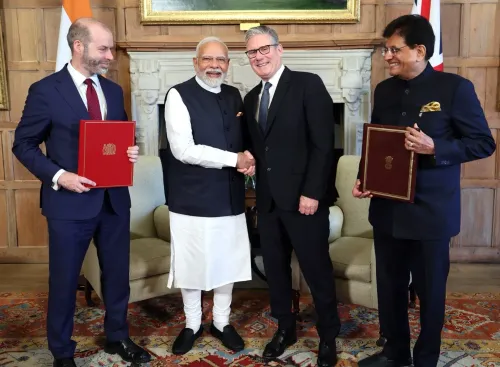
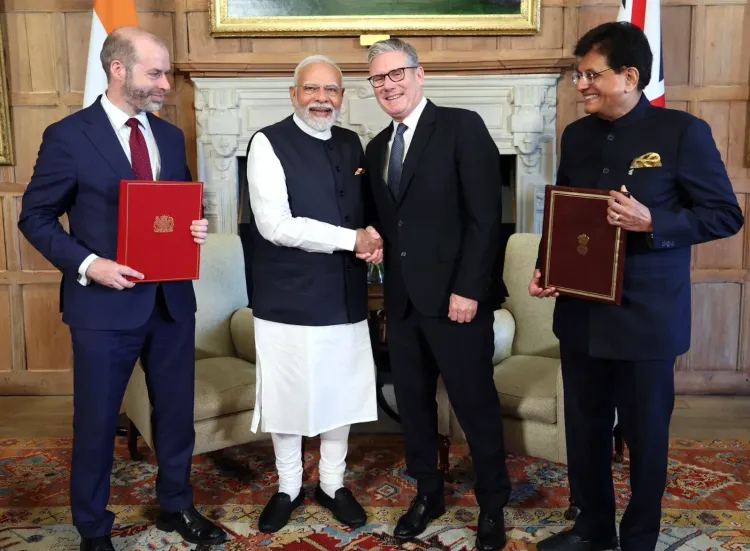
The India-UK Comprehensive Economic and Trade Agreement (CETA) officially came into force on Wednesday, 15 July 2025, granting zero-duty market access for nearly 99 per cent of India's exports and covering almost 100 per cent of bilateral trade value. Union Commerce and Industry Minister Piyush Goyal hailed the development as 'a defining milestone in India-UK ties,' crediting the agreement's operationalisation to the leadership of Prime Minister Narendra Modi.
What the Agreement Covers
The landmark pact, signed on 24 July 2025 after 14 rounds of negotiations, comprises 30 chapters spanning trade in goods and services, digital trade, financial services, intellectual property, innovation, sustainability, and government procurement. Alongside CETA, the Agreement on Social Security has also come into force simultaneously.
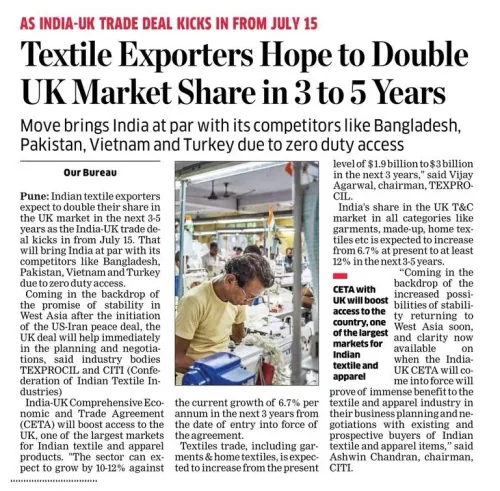
Under the deal, India will reduce or eliminate tariffs on 90 per cent of tariff lines, with 85 per cent becoming completely duty-free over the next decade. Sectors set to benefit include textiles, leather, gems and jewellery, engineering goods, marine products, chemicals, and processed foods, as well as MSMEs, farmers, and manufacturers.
Key Tariff Changes on British Goods
British exports to India will also see significant duty reductions, phased in over the coming years. Tariffs on Scotch whisky will be cut from 150 per cent to 75 per cent initially, with a further reduction to 40 per cent over 10 years. Duties on British automobiles will be lowered gradually under a quota-based mechanism. Other British products including gin, chocolates, biscuits, and cosmetics will also see declining tariffs.
Services and Mobility Gains for India
The agreement opens new avenues for India's information technology, professional, financial, education, and business services sectors, while also expanding mobility for Indian talent in the United Kingdom. The Social Security Agreement is particularly significant: it exempts Indian professionals on temporary assignments in the UK from making double social security contributions for up to five years, directly enhancing the global competitiveness of India's workforce.
Diplomatic and Political Context
Minister Goyal publicly thanked his UK counterpart Peter Kyle and the negotiating teams of both countries for their efforts in concluding the agreements. The CETA is widely regarded as one of the most comprehensive trade deals India has concluded, coming after years of stalled negotiations that were revived under the current government. Notably, this is the first major free trade agreement India has operationalised with a G7 economy, marking a structural shift in New Delhi's trade diplomacy.
With implementation now underway, industry bodies and exporters will be closely watching the phased rollout of tariff reductions and the operationalisation of services commitments in the months ahead.
Point of View
But for what it signals: India is now willing to accept deep, G7-standard trade architecture, including intellectual property and government procurement disciplines. The real test will be in implementation — past Indian FTAs, including those with ASEAN, saw utilisation rates well below potential due to rules-of-origin complexities and awareness gaps among MSMEs. The Social Security Agreement is arguably the more immediately impactful instrument for India's services exporters, but its benefits will only accrue if Indian firms actively claim exemptions. Watch whether the services commitments translate into measurable market access gains for Indian IT and professional services firms, or remain aspirational text.
NationPress
15 Jul 2026
Frequently Asked Questions
What is the India-UK CETA?
The India-UK Comprehensive Economic and Trade Agreement (CETA) is a landmark free trade deal signed on 24 July 2025, covering 30 chapters including trade in goods and services, digital trade, intellectual property, and government procurement. It grants zero-duty market access for nearly 99 per cent of India's exports to the United Kingdom.
When did the India-UK trade agreement come into force?
The India-UK CETA and the accompanying Agreement on Social Security came into force on 15 July 2025. The deal was signed on 24 July 2025 after 14 rounds of negotiations.
How will the India-UK CETA benefit Indian exporters?
Indian exporters in textiles, leather, gems and jewellery, engineering goods, marine products, chemicals, and processed foods will gain near-total duty-free access to the UK market. MSMEs, farmers, and IT and professional services firms are also expected to benefit, along with expanded mobility for Indian talent in the UK.
What happens to Scotch whisky tariffs under the deal?
Tariffs on British Scotch whisky will be reduced from 150 per cent to 75 per cent immediately upon the agreement coming into force, and will be further reduced to 40 per cent over 10 years. British automobiles will also see gradual duty reductions under a quota-based mechanism.
What does the India-UK Social Security Agreement do?
The Social Security Agreement exempts Indian professionals on temporary assignments in the United Kingdom from making double social security contributions for up to five years. This is designed to reduce the cost burden on Indian workers and companies operating in the UK, enhancing India's workforce competitiveness globally.