India-US strategic partnership under strain over sovereignty, Russia and China
Synopsis
A pointed new report warns that the foundational logic holding India-US ties together for 25 years — that a stronger India serves American strategic interests — is under mounting strain. Former Foreign Secretary Nirupama Rao argues Washington is confusing strategic alignment with political compliance, while New Delhi insists partnership between sovereign powers cannot demand ideological conformity on Russia, Iran, or China.
Key Takeaways
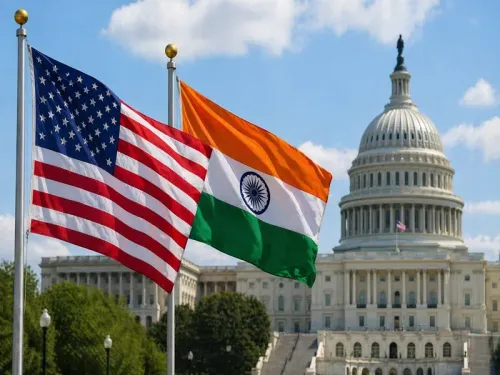
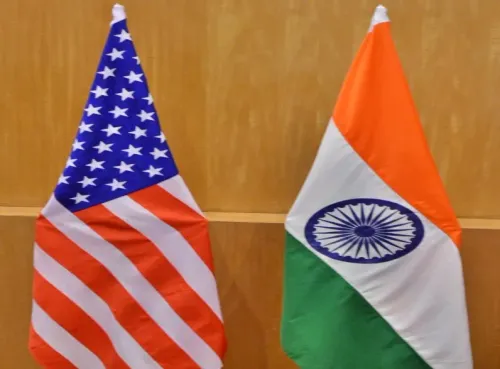
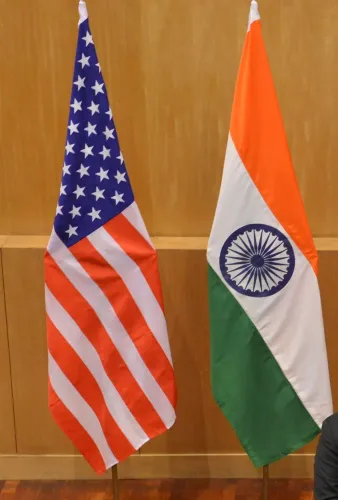
India-US ties, built over 25 years on shared strategic interests in Asia and the Indo-Pacific , are facing growing friction over diverging definitions of partnership.
Former Foreign Secretary Nirupama Rao argues Washington treats strategic convergence as grounds for demanding political compliance, while New Delhi sees partnership as cooperation between sovereign powers that may differ on Russia , Iran , and China .
Rao warned that President Trump’s repeated claims of mediating between India and Pakistan risk reviving an outdated regional framing that India spent decades dismantling.
External Affairs Minister S.
Jaishankar told the Asia Society in New York that India remains committed to deeper US ties, but cautioned that ignoring India’s core security concerns could damage bilateral relations.
The report argues that genuine strategic autonomy requires diversified defence supplies, energy security, and manufacturing strength — not just rhetoric.
India-US relations, long anchored in the shared conviction that a stronger India advances American strategic interests in Asia, are facing a period of visible stress over diverging interpretations of what partnership actually means, according to a recent report. The friction spans Russia policy, Iran ties, the management of China, and Washington's tendency to conflate strategic alignment with political compliance.
The Core Disagreement
Former Indian Foreign Secretary Nirupama Rao, writing in India Narrative, articulated the fault line sharply. “The present difference between India and the United States is about more than oil. There is perhaps a deeper disagreement over the meaning of partnership. Washington often treats strategic convergence as a reason to demand political compliance. In New Delhi, partnership is understood as cooperation between sovereign powers that will continue to differ over Russia, Iran and the management of China,” she wrote.
Rao added that when those differences are turned into public tests of loyalty, diplomacy gives way to theatre. “Accommodation becomes harder precisely because it is made to look like submission,” she noted.
The Pakistan Equation and India’s Global Stature
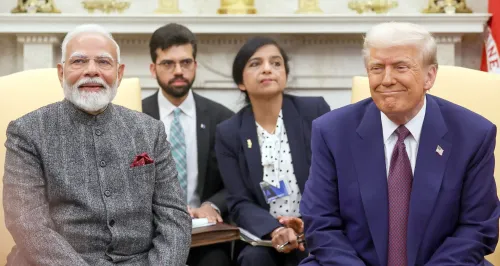
New Delhi has spent years working to move beyond Washington’s historical tendency to view India and Pakistan through the same regional lens. According to Rao, President Donald Trump’s repeated claims of mediating between the two countries risk reviving that outdated framing.
“The objection is more than just a matter of pride. India has global economic, technological and maritime interests that cannot be understood chiefly through the narrow prism of its quarrel with a neighbour. But old habits of thought can survive decades of diplomatic effort, particularly when they serve a President’s political obsessions,” Rao wrote.
Jaishankar’s New York Remarks
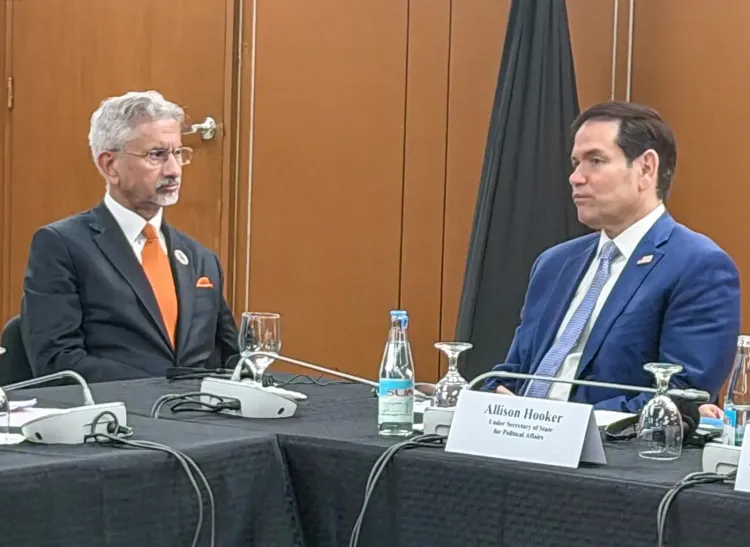
The report cited External Affairs Minister S. Jaishankar’s address to the Asia Society in New York, where he stated that India remained committed to deepening its partnership with the United States, while warning that a failure to recognise one of India’s foremost security concerns could affect bilateral ties. He described cross-border terrorism as a deliberate policy maintained by a neighbouring country over decades — a pointed reference to Pakistan.
Strategic Autonomy Requires Real Foundations
The report argued that India’s response to external pressure should not be driven by wounded nationalism. True strategic autonomy, it said, is measured not by how loudly pressure is denounced, but by how effectively the country can absorb and withstand it.
“That requires diversified defence supplies, greater energy security, technological capability, manufacturing strength and institutional resilience. Autonomy without those foundations would be rhetoric resting upon dependence. India must understand the costs it could bear and build the means to bear them,” Rao wrote.
Notably, the report stressed that none of this implies a break with Washington. “India needs American technology, investment and cooperation in sustaining a favourable Asian balance. The United States, for its part, needs an India capable of resisting Chinese predominance. Both countries have reason to preserve what they have built, and neither gains when each disagreement becomes a public referendum on the relationship,” Rao concluded.
What This Signals for the Relationship
For much of the past 25 years, the broader strategic rationale underpinning India-US ties was considered robust enough to absorb bilateral friction. That assumption, the report argued, is becoming increasingly difficult to sustain. The challenge now is for both governments to distinguish between genuine strategic convergence and performative loyalty — a distinction that will define the relationship’s trajectory well beyond any single point of contention.
Point of View
But it is sharpening as US domestic politics — including Trump’s India-Pakistan mediation posturing — actively undermine the diplomatic work India invested decades in. Jaishankar’s measured but pointed Asia Society remarks signal that New Delhi is done absorbing these contradictions quietly. The real risk is not a rupture but a gradual hollowing-out of the relationship’s strategic depth, as each public disagreement forces both sides to perform for their domestic audiences rather than govern for their national interests.
NationPress
9 Oct 2026
Frequently Asked Questions
What is straining India-US relations currently?
The strain centres on a fundamental disagreement over what partnership means: Washington tends to treat strategic alignment as grounds for expecting political compliance, while New Delhi insists that sovereign partners can legitimately differ on issues like Russia, Iran, and China. The friction has been compounded by President Trump’s claims of mediating between India and Pakistan, which India considers an outdated and inaccurate framing of the relationship.
What did former Foreign Secretary Nirupama Rao say about India-US ties?
Writing in India Narrative, Nirupama Rao argued that the current difference is about more than oil or any single issue — it reflects a deeper disagreement over the nature of partnership itself. She warned that when differences are turned into public loyalty tests, accommodation becomes politically impossible because it looks like submission.
What did EAM Jaishankar say about India-US relations at the Asia Society?
External Affairs Minister S. Jaishankar told the Asia Society in New York that India remains committed to deepening its partnership with the United States, but cautioned that a failure to recognise India’s core security concerns — specifically cross-border terrorism maintained as a deliberate policy by a neighbouring country — could affect bilateral ties.
Why does India object to being viewed through a Pakistan lens by the US?
India has spent decades trying to move beyond Washington’s historical tendency to treat India and Pakistan as part of the same regional equation. New Delhi argues that India’s global economic, technological, and maritime interests extend far beyond its rivalry with Pakistan, and that framing it otherwise distorts the strategic picture and undermines India’s standing as a major global power.
What does the report say India needs to strengthen its strategic autonomy?
The report argues that real strategic autonomy requires diversified defence procurement, greater energy security, advanced technological capability, manufacturing strength, and institutional resilience. Without these material foundations, autonomy remains rhetoric built on dependence — and India must both understand the costs it could bear and actively build the capacity to bear them.