Next Week, Indian Officials Head to US for Crucial Trade Negotiations
Synopsis
A delegation from India's Commerce Ministry is poised to engage in significant trade discussions in Washington, DC, next week. This meeting occurs ahead of Secretary of State Rubio's visit and aims to finalize an interim trade agreement impacted by recent Supreme Court rulings.
Key Takeaways
Indian Commerce Ministry officials will visit Washington, DC for trade talks.
Discussions aim to advance an interim trade agreement with the US.
The meeting follows a significant Supreme Court ruling affecting tariffs.
India and the US were close to finalizing the first phase of the trade agreement .
The meeting will also address a Section 301 investigation by the USTR.
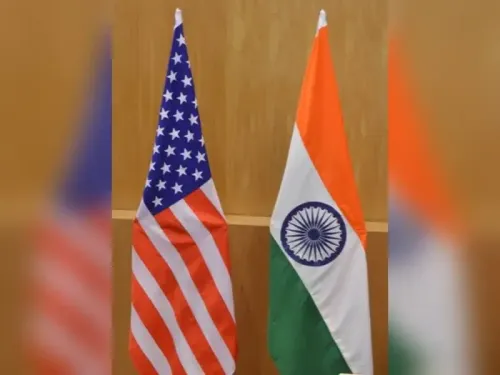
New Delhi, April 15 (NationPress) A delegation from the Ministry of Commerce is set to travel to Washington, DC, next week for discussions on trade matters with their American counterparts, as reported by officials.
The upcoming discussions are taking place ahead of US Secretary of State Marco Rubio’s scheduled visit to New Delhi next month. They will aim to advance conversations regarding the interim trade agreement that has previously been discussed between the two nations, as noted by the official.
Previously, India and the United States postponed the official meeting between their chief trade negotiators, which was originally planned for February 23 in the US. This rescheduling followed a ruling by the US Supreme Court that invalidated President Donald Trump's extensive reciprocal tariff increases.
The Supreme Court determined that the executive branch overstepped its constitutional bounds by employing emergency powers to impose sweeping import duties.
The Indian delegation's visit to Washington, intended to finalize aspects of the bilateral trade agreement, was delayed to allow both nations to examine the implications of the Supreme Court's ruling. At that time, it was agreed to select a new meeting date that would be agreeable to both parties.
Following the Supreme Court's decision, President Trump raised global tariffs from 10% to 15%.
India and the US were nearing completion of the first phase of the bilateral trade agreement, with the Trump administration prepared to lower tariffs on Indian products to 18%. However, the tariff framework in the US has shifted as a result of the Supreme Court's decision.
The forthcoming meeting is also anticipated to address the United States Trade Representative's (USTR) recent initiation of a Section 301 investigation, which includes India and China among 60 economies targeted.
This investigation seeks to ascertain whether the actions, policies, and practices of these economies concerning the failure to effectively enforce a ban on the importation of goods produced using forced labor are unreasonable or discriminatory and hinder US commerce.
Point of View
Especially between major economies like India and the US. The scheduled discussions hold the potential for significant economic implications, highlighting the importance of diplomacy in navigating complex trade agreements.
NationPress
20 Sept 2026
Frequently Asked Questions
What is the purpose of the Indian officials' visit to the US?
The purpose of the visit is to engage in trade talks focusing on advancing discussions regarding an interim trade agreement between India and the US.
Why was the previous meeting between the trade negotiators postponed?
The meeting was postponed due to a ruling by the US Supreme Court that invalidated President Trump's reciprocal tariff increases, prompting both sides to reassess their positions.
What are the implications of the Supreme Court ruling on tariffs?
The ruling has led to changes in the tariff structure, affecting negotiations and the terms of the bilateral trade agreement between India and the US.
What is the Section 301 investigation initiated by the USTR?
The investigation aims to determine whether certain economies, including India, are engaging in unreasonable practices related to the import of goods produced with forced labor.
What are the expected outcomes of the upcoming trade talks?
The talks are expected to finalize aspects of the bilateral trade deal and address issues arising from recent changes in tariff policies.