Indian Railways approves ₹272 crore, 11 km bypass line in Purulia, West Bengal
Synopsis
Indian Railways has greenlit an ₹272 crore, 11-km bypass in Purulia that could reshape freight movement for SAIL's iron ore supply chain and BCCL's coal rakes. With the existing network already at 71% utilisation and surface-crossing conflicts slowing freight speeds, this bypass is less a routine infrastructure add-on and more a pressure-relief valve for one of eastern India's most industrially loaded rail corridors.
Key Takeaways
Indian Railways has approved an 11 km bypass line between Adra and Joychandipahar in Purulia district, West Bengal , at a cost of ₹272 crore .
The project is projected to facilitate freight movement of 6.065 rakes per day and unlock an additional 8.88 MTPA of traffic capacity.
The bypass will support SAIL's iron ore demand of 23.40 MTPA and BCCL's projection of 45 coal rakes per day .
The existing network on this corridor operates at 71% utilisation , with freight speeds affected by surface-crossing conflicts.
Line capacity on the section is expected to rise from 47.50% to 56.45% by 2028-29 .
The project is part of the Energy, Mineral and Cement (EMC) Corridor under Indian Railways' freight expansion plan.
Indian Railways has approved the construction of an 11 km bypass line between Adra and Joychandipahar in Purulia district, West Bengal, at a total cost of ₹272 crore, delivering a significant boost to freight operations on the South Eastern Railway (SER) network. The project is designed to eliminate longstanding operational bottlenecks and support a projected freight movement of 6.065 rakes per day, with capacity to unlock an additional 8.88 MTPA of industrial traffic upon completion.
What the Project Covers
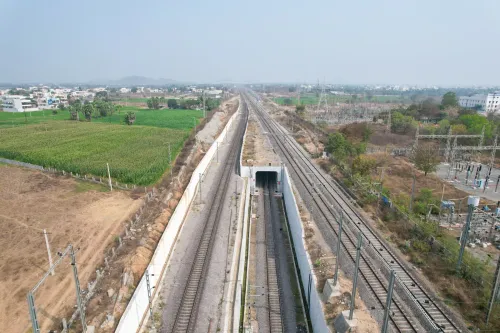
The Adra-Joychandipahar-Sanka bypass will provide dedicated path segregation and a bi-directional connection to an upcoming third line on the corridor. The existing Joychandipahar-Adra section currently operates at 47.50% line capacity — a figure the Ministry of Railways expects to rise to 56.45% by 2028-29 following the bypass's commissioning.
Critically, the broader Adra network is already running at 71% utilisation, with freight speeds hampered by surface-crossing conflicts. The bypass is intended to eliminate those conflicts and prevent further congestion as industrial demand grows.
Why This Corridor Matters
The Adra-Joychandipahar section sits at the heart of one of India's most freight-intensive industrial belts. Iron ore originating from the Chakradharpur Division travels through Adra to steel plants concentrated around Asansol and Durgapur. Coking coal from mines operated by Bharat Coking Coal Ltd (BCCL) in the same belt also relies on this section.
According to the Railways, the bypass will specifically support freight linked to Steel Authority of India Ltd's (SAIL) iron ore demand of 23.40 MTPA and BCCL's projection of 45 coal rakes per day — volumes that the current infrastructure is increasingly strained to handle.
Fit Within the National Freight Strategy
The project forms part of the Energy, Mineral and Cement (EMC) Corridor identified under Indian Railways' long-term freight expansion roadmap. The Ministry of Railways has stated that the bypass will 'strengthen the transportation of industrial commodities and enable future traffic growth to translate into higher throughput.'
Notably, this is consistent with the Centre's broader push to shift bulk commodities — coal, iron ore, cement — off road and onto rail, reducing logistics costs for heavy industry and easing highway congestion in the mineral-rich eastern corridor.
Impact and Next Steps
Once operational, the bypass is expected to add 8.88 MTPA of freight capacity to the corridor. Industry observers note that the Asansol-Durgapur steel cluster and BCCL's coal dispatch operations stand to benefit most directly, with smoother rake turnaround times and reduced detention at surface crossings.
The Ministry of Railways has not yet announced a specific construction timeline beyond the 2028-29 capacity projection, and project execution will be watched closely given the corridor's strategic importance to eastern India's industrial output.
Point of View
Not merely an inconvenience. What deserves scrutiny is execution pace: Indian Railways has a mixed record on completing freight corridor projects within projected timelines, and the 2028-29 capacity target is contingent on that record improving. The deeper question is whether this single bypass is sufficient given BCCL's 45-rake-per-day projection and SAIL's 23.40 MTPA iron ore appetite — both of which will continue to grow. Piecemeal additions risk being absorbed by demand before they are even commissioned.
NationPress
1 Sept 2026
Frequently Asked Questions
What is the Adra-Joychandipahar bypass line approved by Indian Railways?
It is an 11 km freight bypass line in Purulia district, West Bengal, approved at a cost of ₹272 crore. The bypass will provide dedicated path segregation and a bi-directional connection to an upcoming third line, aimed at eliminating operational bottlenecks on the South Eastern Railway network.
Why is the Adra-Joychandipahar corridor important for freight?
The corridor is a critical link for iron ore moving from the Chakradharpur Division to steel plants in Asansol and Durgapur, and for coking coal from BCCL mines. It directly supports SAIL's 23.40 MTPA iron ore demand and BCCL's projected 45 coal rakes per day.
How much additional freight capacity will the bypass create?
Upon completion, the bypass is expected to facilitate an additional 8.88 MTPA of freight traffic. Line capacity on the section is projected to increase from 47.50% to 56.45% by 2028-29.
What is the Energy, Mineral and Cement Corridor?
The Energy, Mineral and Cement (EMC) Corridor is a dedicated freight route identified by Indian Railways to strengthen the movement of bulk industrial commodities such as coal, iron ore, and cement. The Adra-Joychandipahar bypass is one of the projects under this corridor.
What problem does the bypass solve on the existing network?
The existing Adra network operates at 71% utilisation, with freight speeds slowed by surface-crossing conflicts. The bypass eliminates these conflicts, prevents further congestion, and creates additional capacity to handle growing industrial traffic.