Veena Sikri Discusses India's Diplomatic Role Amid Iran Tensions
Synopsis
In a critical examination of India's international relations, former High Commissioner Veena Sikri discusses the nation's multifaceted diplomatic strategy to promote peace amid the Iran-US-Israel tensions. Discover how India is engaging with various nations to foster dialogue and cooperation.
Key Takeaways
Veena Sikri emphasizes India's role in promoting peace amid escalating tensions.
India maintains diplomatic ties with multiple countries involved in the conflict.
Regional stability relies on coexistence and understanding.
Minorities play a crucial role in India's civilizational ethos.
Sikri criticizes biased reports on religious freedom and defends institutions.
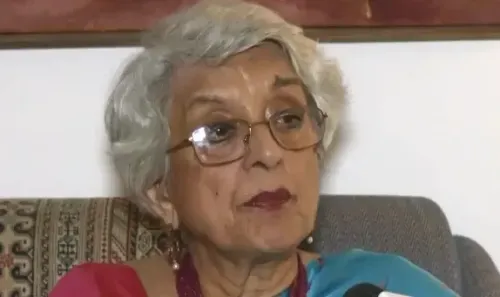
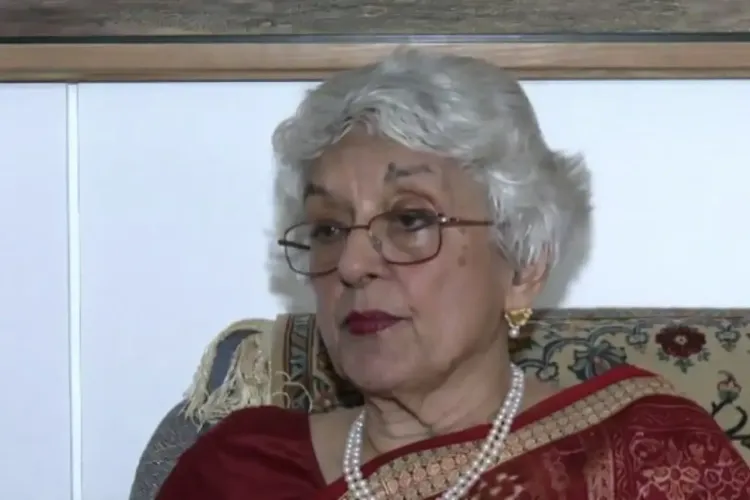
New Delhi, March 22 (NationPress) Former High Commissioner of India to Bangladesh, Veena Sikri, highlighted India's vigorous diplomatic efforts to engage with all involved parties amid the escalating tensions between Iran, the US, and Israel. She stressed the nation's commitment to fostering peace, dialogue, and diplomacy.
In an interview with IANS concerning India's foreign policy, Sikri stated: "India is maintaining communication with all factions in the conflict. This includes dialogue with Saudi Arabia, the UAE, Qatar, and various others like Kuwait, France, and Oman. This approach is vital for shaping opinions that can lead to resolutions, ending hostilities, and promoting dialogue and diplomacy."
Regarding regional stability, Sikri underlined the significance of coexistence and mutual understanding, particularly within the Gulf region.
She noted: "In the UAE, discussions about eliminating Iran are prevalent, but it is crucial for all parties to recognize the importance of living in peace, friendship, and understanding. The people of a nation are paramount. Iran, with a population of 93 million, is a substantial country that possesses its own defense, development, and scientific initiatives, and it is open to sharing these with other nations," she remarked.
Sikri further emphasized India’s proactive engagement with Iranian leadership.
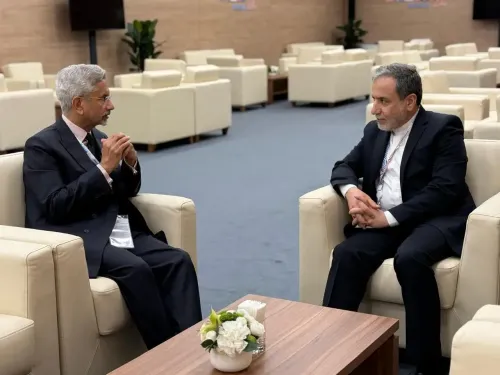
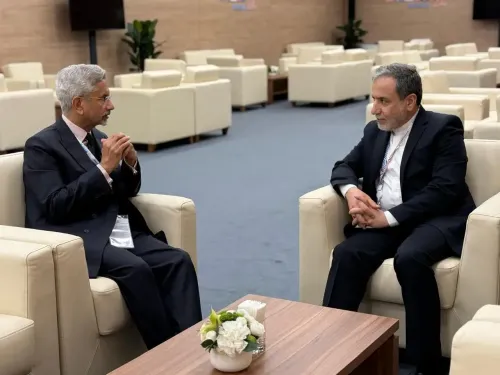
"This marks the second conversation between PM Modi and President Masoud Pezeshkian since the onset of the Iran-US-Israel conflict, highlighting our Prime Minister's robust rapport with all parties involved. He is earnestly working towards peace, cessation of hostilities, and fostering dialogue and diplomacy. As part of this endeavor, he has communicated with the President of Iran. Additionally, both our Prime Minister and External Affairs Minister have been in discussions with Iranian leaders, including the President and Foreign Minister Araghchi," she added.
Shifting focus to domestic matters, Sikri reflected on India’s socio-cultural fabric and the significant role of minorities. Referring to the Rashtriya Swayamsevak Sangh (RSS), she stated: "I recall its chief, Mohan Bhagwat, mentioning that Hindutva thrives due to the presence of minorities. We must coexist, as that is the core principle. Minorities are integral to what defines the Indian ethos and civilizational identity, as they have always been part of our landscape."
Sikri also expressed her disapproval of the recent report on religious freedom by the United States Commission on International Religious Freedom (USCIRF), calling it "entirely illogical and biased."
She asserted: "The Government of India has issued a robust response against it, as it lacks any logical basis. One cannot simply disparage institutions; they even criticize governmental bodies like the R&AW or the RSS, which is a legitimate NGO involved in significant social work."
Point of View
India's diplomatic engagement underlines a significant commitment to fostering peaceful resolutions and dialogue in a time of escalating tensions. The involvement of influential leaders like PM Modi showcases India's strategic positioning in global politics.
NationPress
22 Sept 2026
Frequently Asked Questions
What is India's current stance on the Iran-US-Israel tensions?
India is actively engaging with all parties involved to promote peace and dialogue, as emphasized by former High Commissioner Veena Sikri.
How is India maintaining relations with Iran?
India is conducting high-level discussions with Iranian leaders, including conversations between PM Modi and President Masoud Pezeshkian.
What does Veena Sikri say about the importance of minorities in India?
Sikri highlights that minorities are integral to the Indian ethos, reinforcing the idea of coexistence and shared identity.
What was Sikri's view on the USCIRF report?
She criticized the USCIRF report as biased and illogical, asserting that it unjustly targets legitimate institutions like the RSS.
Which countries is India engaging with in the context of the Iran tensions?
India is in dialogue with several nations, including Saudi Arabia, UAE, Qatar, Kuwait, France, and Oman.