Modi Government's Steady Diplomacy Amid West Asia Tensions
Synopsis
As tensions rise in West Asia, the Modi government showcases a cautious diplomatic approach. While critics may rush to blame, India navigates complex geopolitical waters with maturity, balancing national interests and regional stability.
Key Takeaways
India's diplomatic approach is characterized by caution and maturity.
Recent tensions in West Asia require a delicate balance of relationships.
The IRIS Dena incident highlights the complexities of international diplomacy.
Criticism from the opposition often lacks context and understanding.
Effective diplomacy requires patience, strategic calculation, and careful engagement.
New Delhi, March 8 (NationPress) Criticism is a common practice, and expressing dissent is often simpler than finding constructive solutions. Opposition parties in India have historically excelled at voicing concerns, which is a vital aspect of a thriving democracy. However, there are pivotal moments when historical events occur, and decisions become both tactical and strategic, particularly when the nation's security and long-term interests are in jeopardy. In such instances, the instinct to assign blame might be better set aside.
Regrettably, this kind of restraint is not always evident in public discussions.
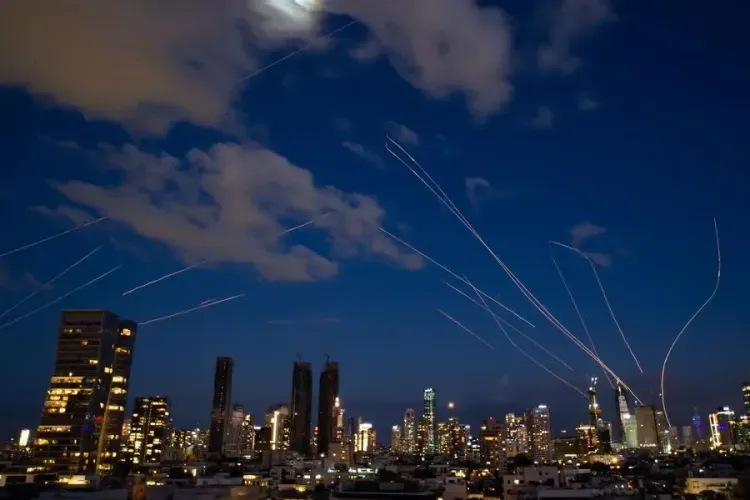
As tensions rise between the US, Israel, and Iran, threatening to escalate into a broader conflict, the geopolitical landscape has become increasingly unstable for many nations. For countries like India, the challenge is to maintain a delicate diplomatic equilibrium. It is akin to navigating a narrow path, where a single miscalculation could have significant repercussions.
Thus far, India seems to be managing this intricate balance with prudence and maturity.
The Modi government’s diplomatic efforts are being executed with notable caution, even as they strive to maintain stability amid rapidly changing global events. The complexity of the situation became clear when an Iranian warship, IRIS Dena, which had recently participated in a naval exercise in Visakhapatnam, was struck by a US submarine off the southern coast of Sri Lanka in the early hours of March 4.
This incident triggered immediate shock and disbelief, quickly followed by alarm and criticism.
The shock arose from the fact that the vessel had been a guest of India just days before. It was reportedly not on a combat mission and was thought to be unarmed during the attack. The alarm is understandable, given the proximity of the incident to India's maritime borders. Criticism emerged from segments of the Opposition, who seized the moment to challenge the government's diplomatic stance.
But did this incident genuinely reveal a weakness on India’s part?
Not necessarily. In reality, there was little New Delhi could have done in that specific scenario.
The criticism persisted until it was revealed that another Iranian ship, IRIS Lavan, had been granted permission to dock in India. External Affairs Minister S. Jaishankar later confirmed this development.
The ship had approached India on February 28 — the same day Israel and the US initiated their strikes on Iran, reportedly resulting in the death of Supreme Leader Ayatollah Ali Khamenei. India approved the docking request on March 1, with the vessel arriving in Kochi on March 4 — coincidentally, the same day IRIS Dena was attacked. Currently, all 183 crew members of IRIS Lavan are being housed in naval facilities in the area.
This decision illustrates that India's diplomatic approach is neither reactive nor indifferent; rather, it reflects a careful attempt to balance humanitarian considerations while navigating complex geopolitical realities.
Before these facts emerged, criticism was already gaining momentum. Some voices even attempted to inject a religious or ideological narrative into what was fundamentally a complex geopolitical issue. It was unfortunate that the Congress party rushed to make statements prior to New Delhi's formal position on the rapidly unfolding West Asia crisis following the initial US-Israel strikes on Iran.
The Congress party's swift response is understandable, as electoral strategies often influence political reactions. This is not the first time such reactions have been observed.
The party has questioned various military operations conducted by India in the past, including the Balakot airstrikes, Operation Sindoor, and other actions targeting terror infrastructure based in Pakistan. Within that context, its rapid response to the US-Israel-Iran conflict was somewhat predictable.
In contrast, New Delhi has largely refrained from rhetorical flamboyance, opting instead for a cautious response at opportune moments, often communicating through actions rather than loud proclamations. Diplomacy, particularly in conflict situations, rarely unfolds in highly public arenas. Much of it occurs quietly and deliberately behind closed doors.
India's stance thus far demonstrates that understanding.
India shares deep and intricate ties with all the primary players involved in the ongoing crisis. Its strategic partnerships in the region are well known, and millions of Indians work across West Asia, meaning that regional instability directly impacts their safety as well as India's economic interests.
Balancing these relationships during such a significant conflict is anything but simple. India has managed to maintain a measured approach — neither hastily adopting dramatic public stances nor retreating into silence.
Domestically, the government seems to have kept the situation largely under control. In neighboring countries like Pakistan and Bangladesh, economic disruptions and fuel shortages have sparked public unrest. For instance, Pakistan recently announced an overnight increase of Rs 55 per litre in petrol and high-speed diesel prices — the steepest rise in its history. Despite this increase, shortages continue to plague consumers.
Concerns about a broader energy crisis loom in Pakistan, where electricity generation heavily relies on imported LNG.
In contrast, India's energy supplies remain stable, and daily life continues without major disruptions. Amid global uncertainty, this relative stability is noteworthy.
Critics argue that the government should adopt clearer or stronger positions regarding the conflict. However, if diplomacy were truly that straightforward, many of the world's crises would have been avoided. Effective diplomacy often necessitates patience, restraint, and careful calculation.
India's current stance embodies precisely that — a pragmatic effort to remain non-aligned while constructively engaging with all stakeholders in pursuit of its national interests.
Thus far, India seems to be walking this geopolitical tightrope with steady steps. The path ahead remains narrow, the currents of global politics are unpredictable, and the risks are tangible. Yet, careful diplomacy, strategic patience, and political maturity can help the nation navigate these tumultuous times.
In such moments, the Opposition's inclination to criticize vehemently may be strong. Sometimes, the wiser course is not to be louder, but to act more judiciously.
(Deepika Bhan can be contacted at deepika.b@ians.in)
Point of View
A measured response from India reflects a commitment to national interests over political rhetoric. The government's approach to the West Asia crisis underscores its ability to balance complex relationships amidst rising tensions.
NationPress
22 Sept 2026
Frequently Asked Questions
What recent events have escalated tensions in West Asia?
Tensions escalated due to military actions between the US, Israel, and Iran, particularly the strikes on Iranian targets that resulted in significant casualties.
How has India responded to the situation?
India has maintained a cautious diplomatic stance, managing relationships with all parties involved without making hasty public statements.
What is the significance of the IRIS Dena incident?
The IRIS Dena was attacked shortly after visiting India, raising concerns about India's diplomatic position and its ability to manage relations in a volatile region.
Is the Indian government's approach to diplomacy effective?
So far, the Modi government's careful handling of diplomatic relations appears effective, avoiding drastic reactions while ensuring national security.
What are the implications of regional instability for India?
Regional instability directly affects the safety of millions of Indians working abroad and poses economic risks, emphasizing the need for a balanced diplomatic strategy.