Smriti Irani reframes opposition rallies as 'Save Infiltrators' drives
Synopsis
BJP leader Smriti Irani on 2 November 2026 flipped the opposition's 'Vote Bachao' narrative, calling it a 'Ghuspethiya Bachao' rally — accusing rivals of shielding illegal immigrants. The charge echoes the BJP's long-standing NRC and CAA positions ahead of what appears to be an imminent election.
Key Takeaways
BJP leader Smriti Irani posted on 2 November 2026 labelling opposition 'Vote Bachao' rallies as 'Ghuspethiya Bachao' (Save the Infiltrator) rallies.
The post directly accuses opposition parties of prioritising illegal immigrants over genuine voter integrity.
The Assam Accord (1985) set 24 March 1971 as the cut-off date for detecting and deporting illegal immigrants from Bangladesh .
The NRC final list , published in 2019 , excluded approximately 1.9 million applicants in Assam, fuelling ongoing debates about voter rolls.
The Citizenship Amendment Act (CAA) 2019 offers a citizenship path for non-Muslim minorities from Bangladesh, Pakistan and Afghanistan who entered India before 2014 .
BJP leaders have consistently linked illegal immigration to demographic change and electoral arithmetic in northeastern states.
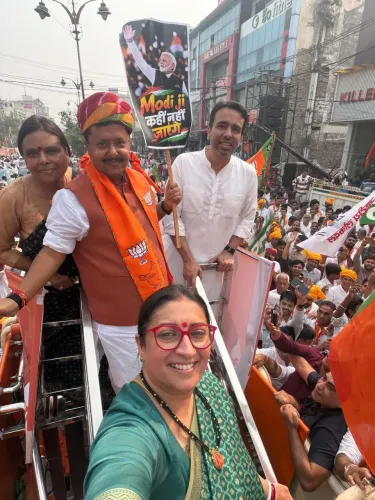
A two-line post. A detonating political charge. BJP leader Smriti Irani fired a sharp salvo on Monday, 2 November 2026, rebranding what the opposition has called 'Vote Bachao' (Save the Vote) rallies as 'Ghuspethiya Bachao' (Save the Infiltrator) rallies — a pointed accusation that her rivals are protecting illegal immigrants rather than defending voter rights.
The post, in Hindi, reads: 'Vote bachao ralli ❌ Ghuspethiya bachao ralli ✅' — translating roughly to: 'Save-the-vote rally? No. Save-the-infiltrator rally? Yes.' The crossed-red and green-tick symbols leave no room for ambiguity about her framing.The infiltrator charge and its electoral roots
The accusation is not new, but its timing sharpens its edge. BJP leaders have long linked illegal immigration from Bangladesh to concerns about demographic shifts and the integrity of electoral rolls — particularly in northeastern India. Irani's post slots squarely into that playbook: frame any opposition defence of voters as, in practice, a defence of undocumented entrants.
The policy scaffolding behind the charge runs deep. The Assam Accord of 1985 set 24 March 1971 as the cut-off date for detecting and deporting illegal immigrants. Decades later, the National Register of Citizens (NRC) exercise in Assam culminated in a final list published in 2019 — a process that excluded roughly 1.9 million applicants and reignited fierce debate over who belongs on the voter rolls. The Citizenship Amendment Act (CAA) of 2019 added another layer, offering a path to citizenship for non-Muslim minorities from Bangladesh, Pakistan, and Afghanistan who entered India before 2014.
Why 'Vote Bachao' became the flashpoint
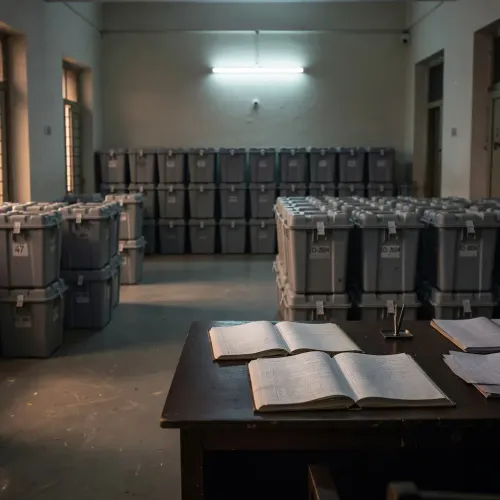
Opposition parties have organised 'Vote Bachao' events framing their effort as protecting the democratic rights of marginalised communities they say have been wrongly excluded from electoral rolls — including those left off the NRC list. Irani's post directly inverts that framing: if you are saving 'those votes,' she implies, you are saving infiltrators.
It is a classic wedge argument — one that forces the opposition to either defend the disenfranchised at the cost of appearing soft on illegal immigration, or retreat from the voter-rights framing altogether. The video attached to the post, though its contents are not disclosed in the metadata, likely amplifies this message with visuals or footage.
The bigger pattern: immigration as electoral arithmetic
Across northeastern states, the politics of border, identity, and the voter list have been inseparable for four decades. The BJP has consistently positioned itself as the enforcer of the Assam Accord's promise and the NRC's mandate. Every election cycle, the 'infiltrator' frame gets deployed to consolidate voters anxious about demographic change — and to put the opposition on the defensive about precisely whom it represents.
What Irani's post does in two lines is compress that entire argument into a social-media-ready verdict. Whether the 'Vote Bachao' rallies she targets belong to a specific state election campaign — the exact event remains unspecified — the rhetorical move is unmistakable and its audience well-understood.Point of View
Forcing rivals onto the defensive. The move lands within a well-established policy arc — the Assam Accord, the NRC, the CAA — that the party has spent decades building into electoral infrastructure. In the northeast especially, where identity, borders, and voter lists are inextricably linked, this kind of two-line salvo can shift the entire terrain of a campaign conversation. The unanswered question is whether the opposition can reclaim the 'Vote Bachao' frame without appearing to validate the infiltration charge.
NationPress
2 Nov 2026
Frequently Asked Questions
What did Smriti Irani say about the Vote Bachao rally?
Smriti Irani on 2 November 2026 posted that 'Vote Bachao' rallies are in reality 'Ghuspethiya Bachao' (Save the Infiltrator) rallies, accusing the opposition of protecting illegal immigrants rather than genuine voters.
What is a 'ghuspethiya' in Indian political context?
'Ghuspethiya' is a Hindi word meaning infiltrator or illegal entrant. In Indian political discourse, particularly in the northeast, it commonly refers to undocumented immigrants from Bangladesh who are alleged to have settled in India illegally.
What is the NRC and why is it politically significant?
The National Register of Citizens (NRC) is an exercise conducted in Assam to identify illegal immigrants. Its final list, published in 2019, excluded roughly 1.9 million applicants, triggering intense political debate about citizenship, voter rolls, and demographic change.
What is the Assam Accord and how does it relate to illegal immigration?
The Assam Accord signed in 1985 set 24 March 1971 as the cut-off date for detecting and deporting illegal immigrants from Assam. Anyone who entered after this date is liable to be identified as a foreigner and removed from voter rolls.
How does the Citizenship Amendment Act (CAA) 2019 connect to this debate?
The CAA 2019 provides a path to Indian citizenship for non-Muslim minorities from Bangladesh, Pakistan, and Afghanistan who entered India before 2014. Critics argue it complements NRC in ways that could leave Muslim immigrants stateless, while supporters say it protects persecuted minorities.