IRDAI consultation paper proposes commission caps, structural reset for insurance distribution

Synopsis
IRDAI's draft paper on insurance distribution economics proposes slashing first-year commissions from an effective 60 per cent to a capped 5–20 per cent, replacing the MISP framework with a new IDE regime, and forcing auto dealers to decouple insurance sales from vehicle financing — a structural reset that could redraw margins across bancassurance, NBFCs, and OEM-linked brokers.
Key Takeaways
IRDAI has released a consultation paper proposing a major overhaul of India's insurance distribution framework.
New-vehicle motor insurance remuneration would be capped at nil for third-party premium and 5 per cent for own-damage covers.
First-year commissions for distribution entities would be capped at 5 per cent to 20 per cent , down from effective payouts of up to 60 per cent .
The existing Motor Insurance Service Provider (MISP) framework would be replaced by a broader Insurance Distribution Entity (IDE) regime.
Auto dealers would be barred from denying cashless repairs to customers who bought insurance elsewhere, and must promote Bima Sugam at the point of sale.
Final rules will depend on the provisions adopted by IRDAI and the accompanying transition framework.
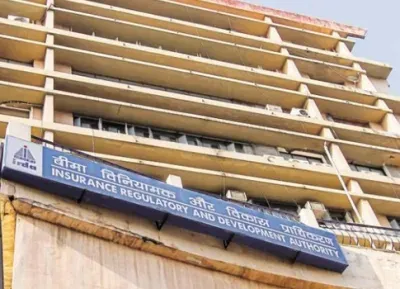
The Insurance Regulatory and Development Authority of India (IRDAI) has released a consultation paper titled 'Recalibrating the Economics of Insurance Distribution', proposing a sweeping structural overhaul of how insurance products are sold and how distributors are compensated in India. The draft framework shifts towards an effort-aligned payout model and introduces product-level commission ceilings, according to industry experts who reviewed the proposals.
Key Proposals in the Consultation Paper
The paper proposes a simpler three-tier distribution architecture designed to lower costs for policyholders, improve transparency, and reduce mis-selling. Among its most significant changes, it would cap remuneration for new-vehicle motor insurance at nil for third-party premium and 5 per cent for own-damage and related covers.
The draft also proposes replacing the existing Motor Insurance Service Provider (MISP) framework with a broader Insurance Distribution Entity (IDE) regime, and would bring technology, awareness, and related spends within the commission ceiling — a move that could sharply compress effective payouts.
For general insurance, first-time health insurance commissions are proposed at 15 per cent to 20 per cent, while renewal and porting payouts would be restricted to just 5 per cent to 10 per cent. First-year commissions for distribution entities would be capped between 5 per cent and 20 per cent depending on tenure — a significant reduction from current effective payouts that reportedly reached up to 60 per cent when promotional spends and rewards were factored in.
Impact on Bancassurance Partners and Auto Dealers
Experts note that while the intent is consumer-friendly, distributors face an immediate margin squeeze. Bancassurance partners, NBFCs, and automobile dealers are among those most directly affected.
'The changes would directly affect automobile dealers, OEM-linked brokers, insurers and other motor insurance distributors quite drastically. By reducing upfront earnings from new-vehicle policies and tightening dealer-linked arrangements, the proposals could further compress distribution margins,' said Shailaja Lall, Partner at Shardul Amarchand Mangaldas & Co.
The proposals also seek to structurally separate insurance sales from other dealer relationships. Under the draft, dealers would not be permitted to deny cashless repair services merely because a customer purchased insurance elsewhere — a practice critics argue has been widespread. Dealers would additionally be required to prominently inform customers about alternative digital channels such as Bima Sugam at the point of vehicle sale.
The Push Towards Digital and Consumer-First Models
'Ultimately, the proposal aims to drive digital adoption, improve policy persistency and create a more sustainable, consumer-first marketplace. As the saying goes, necessity is the mother of innovation, and these changes will compel companies to be innovative,' said Debashish Banerjee, Partner at Deloitte India.
Lall further noted that revenue pressures may encourage distributors to pivot toward renewals, servicing, technology, and other permissible value-added services — potentially dismantling the traditional bundled dealer model in which insurance sales, vehicle financing, and after-sales servicing have historically been tightly interwoven.
What Happens Next
The proposals are currently in consultation stage and the final impact, according to experts, will depend on the provisions ultimately adopted by IRDAI and the transition framework accompanying them. Industry stakeholders are expected to submit responses before the regulator finalises the framework. If adopted in their current form, the changes would represent one of the most significant reconfigurations of insurance distribution economics in India in recent years.
Point of View
Not intent. Capping commissions is straightforward on paper; managing the channel disruption that follows is not. Bancassurance has been the growth engine for several large private insurers, and compressing those margins risks a short-term contraction in distribution reach precisely when India's insurance penetration remains far below global benchmarks. The proposal to decouple dealer-linked insurance from vehicle financing is overdue and consumer-positive, but without a credible transition timeline, it could trigger a chaotic exit of mid-tier distributors. IRDAI will need to balance structural hygiene with channel continuity — or risk fixing mis-selling by shrinking the market itself.
NationPress
25 Sept 2026
Frequently Asked Questions
What is the IRDAI consultation paper on insurance distribution about?
The IRDAI consultation paper titled 'Recalibrating the Economics of Insurance Distribution' proposes capping product-level commissions, replacing the MISP framework with an IDE regime, and introducing a three-tier architecture to reduce policyholder costs and curb mis-selling. It is currently open for industry feedback before final rules are adopted.
How would the proposed commission caps change payouts for distributors?
Under the proposals, first-year commissions for distribution entities would be capped between 5 per cent and 20 per cent depending on tenure, compared to effective payouts that reportedly reached up to 60 per cent when promotional spends and rewards were included. Health insurance renewal and porting payouts would be restricted to just 5 per cent to 10 per cent.
How would automobile dealers be affected by the IRDAI proposals?
Dealers face a significant reduction in upfront earnings from new-vehicle motor insurance policies, with commissions capped at nil for third-party premium and 5 per cent for own-damage covers. They would also be barred from denying cashless repairs to customers who purchased insurance from another channel, and must actively inform buyers about Bima Sugam at the point of sale.
What is the Insurance Distribution Entity (IDE) regime?
The IDE regime is a broader regulatory framework proposed to replace the existing Motor Insurance Service Provider (MISP) structure. It is designed to cover a wider range of distribution intermediaries under a unified set of conduct and remuneration rules, with technology and awareness spends brought within the overall commission ceiling.
When will these IRDAI reforms take effect?
The proposals are still in the consultation stage and have not been finalised. The final rules and their timeline will depend on the provisions adopted by IRDAI and the transition framework it puts in place after reviewing industry submissions.