ISI revives K-2 plan, deploys multiple terror groups to target Punjab cops

Synopsis
Pakistan's ISI has quietly revived its K-2 project — a dual-front campaign targeting Punjab and Jammu and Kashmir — and broken with its own rules by flooding Punjab with multiple terror groups simultaneously. With six cops already killed in 2026 and elections approaching, intelligence officials say the worst may still be ahead.
Key Takeaways
Pakistan's ISI revived the K-2 (Khalistan-Kashmir) project approximately one month ago , with Punjab as the primary operational theatre.
Six Punjab Police personnel have been killed in targeted attacks across the Majha region (Amritsar, Tarn Taran, Gurdaspur) in 2026 ; two more were injured.
The ISI has deployed multiple outfits — including Babbar Khalsa International (BKI) , Sikhs for Justice (SFJ) , and the Shehzad Bhatti network / Tehreek-e-Taliban Hindustan (TTH) — scrapping earlier restrictions that limited Punjab operations to Khalistani groups alone.
Head Constable Vinod Kumar of Gurdaspur — the latest victim — is being probed as a hit carried out by the TTH under ISI direction.
Officials say the goal is to erode public faith in the state's security apparatus and manufacture popular support for Khalistan ahead of Punjab assembly elections next year .
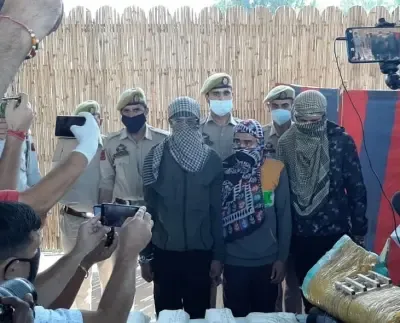
Pakistan's Inter-Services Intelligence (ISI) revived its K-2 (Khalistan-Kashmir) project approximately a month ago, deploying multiple terror outfits in Punjab with a focused mandate to attack police personnel and erode public confidence in the state's security apparatus. Intelligence agencies have assessed the situation in Punjab as increasingly serious, with new patterns of coordinated terror activity emerging on a near-daily basis, according to officials.
What the K-2 Project Involves
The K-2 initiative is a dual-front strategy designed to destabilise Punjab and Jammu and Kashmir simultaneously. While the initiative has been in development for several years, the ISI has now accelerated its operational tempo, particularly in Punjab. Officials note that the situation in Jammu and Kashmir remains fragile but constrained by high security, making Punjab the primary theatre of ISI activity in the current phase.
Crucially, the ISI has dismantled what officials describe as traditional 'jurisdictional restrictions.' In the past, only Khalistani outfits were permitted to operate in Punjab, while other groups were kept at a distance. That boundary no longer exists. 'There are no longer jurisdictional restrictions like has been the case in the past, whereby only the Khalistan elements would focus on Punjab, while other groups would stay away,' an Intelligence Bureau official said.
Who Is Being Deployed and Why
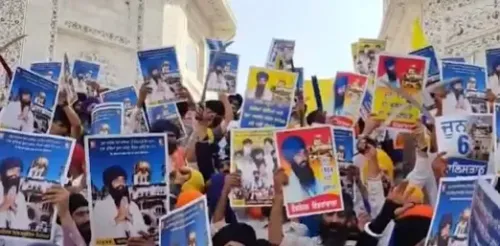
The ISI has brought in a range of actors, including Babbar Khalsa International (BKI), Sikhs for Justice (SFJ), and the Shehzad Bhatti network, reportedly operating under the banner of Tehreek-e-Taliban Hindustan (TTH). The strategy involves a rotating wave of attacks, alternating between the TTH and Khalistani outfits, to dilute investigative focus and create sustained pressure on the state machinery.
According to officials, Khalistani groups have currently been directed to concentrate on drug trafficking, while the TTH has been tasked with directly targeting security personnel. 'The objective of these Khalistani elements is to carry out repeated attacks on security personnel to undermine public confidence in the state's security apparatus,' an official said.
Six Cops Killed in Punjab This Year
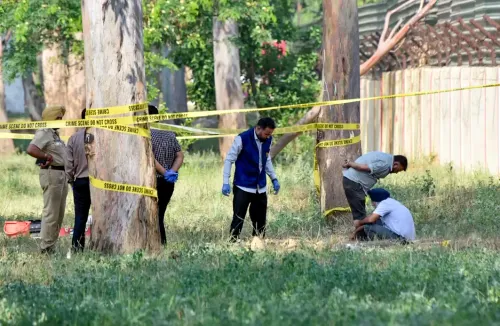
The pattern of violence is being backed by a grim statistical record. Six Punjab Police personnel have been killed in targeted attacks in 2026 alone, with the majority of incidents concentrated in the Majha region, covering Amritsar, Tarn Taran, and Gurdaspur. Two additional officers were injured in separate incidents.
The sequence of killings began in February when Assistant Sub Inspector (ASI) Gurnam Singh and Home Guard Ashok Singh were shot dead inside a police outpost in Adhian village, Gurdaspur. In May, ASI Joga Singh was shot dead by motorcycle-borne assailants near Majitha, Amritsar. In September, ASI Harjit Singh was killed near the Bhagranwala grain market, Amritsar while on night duty. In October, ASI Iqbal Singh was shot dead on Laukha Road, Naushera Pannuan village, Tarn Taran.
The most recent fatality, Head Constable Vinod Kumar of Gurdaspur, is being probed as an ISI-backed operation executed by the TTH. Additional Director General of Police (ADGP) Parveen Kumar confirmed that Vinod Kumar had accepted a lift from the individuals who allegedly shot him. 'These are not stray incidents, but are coordinated strikes aimed at sending a larger message to society,' an official said.
The Psychological and Political Logic
Officials say the ISI's calculus goes beyond individual attacks. By repeatedly targeting security personnel, the ISI aims to create an atmosphere of fear in which the public gradually loses faith in the state's protective capacity and, over time, turns toward Khalistani outfits for a sense of security. 'If the ISI is indeed successful in this plan, it would change the outlook of the people, whereby they would lean more towards the Khalistan groups for protection,' an official said.
This matters because a major historical weakness of the Khalistan movement has been its near-total lack of popular support in Punjab. Residents who lived through the violence of the 1980s have consistently warned younger generations against aligning with separatist groups. The ISI's current strategy, according to officials, is a deliberate attempt to fracture that institutional memory.
What Comes Next
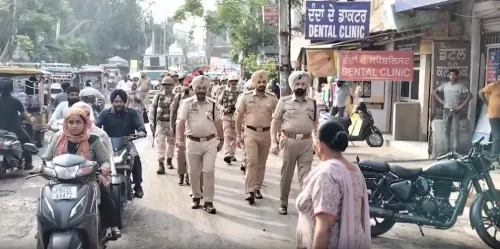
With Punjab heading to assembly elections next year, officials warn that the frequency and intensity of these targeted attacks is likely to increase. The primary targets are expected to remain security personnel, with the dual aim of demoralising the force and amplifying the perception of an ungovernable state. Investigators are treating the recent cluster of killings as a coordinated ISI operation rather than isolated criminal acts, and security deployments in the Majha region are reportedly under review.
Point of View
Concentrated in one geographic belt, is not noise; it is a campaign. What is conspicuously absent from public discourse is a credible counter-narrative strategy from the Centre or the Punjab government — because the ISI's end-goal is not just body counts, but ballot-box psychology. With elections coming, the window for pre-emptive action is narrowing fast.
NationPress
17 Nov 2026
Frequently Asked Questions
What is Pakistan's K-2 project targeting Punjab?
The K-2 (Khalistan-Kashmir) project is a Pakistan ISI-backed dual-front strategy aimed at destabilising both Punjab and Jammu and Kashmir simultaneously. It has been in development for several years but was revived and intensified approximately one month ago, with Punjab designated as the primary operational target in the current phase.
How many Punjab Police personnel have been killed in 2026?
Six Punjab Police personnel have been killed in targeted attacks in 2026, with the majority of incidents in the Majha region covering Amritsar, Tarn Taran, and Gurdaspur. Two additional officers were injured but survived.
Which terror groups is the ISI deploying in Punjab?
According to intelligence officials, the ISI has brought in Babbar Khalsa International (BKI), Sikhs for Justice (SFJ), and the Shehzad Bhatti network — reportedly operating as Tehreek-e-Taliban Hindustan (TTH) — alongside established Khalistani outfits. This marks a departure from the past practice of limiting Punjab operations solely to Khalistan-linked groups.
Who was Head Constable Vinod Kumar and why is his killing significant?
Vinod Kumar was a Punjab Police head constable killed in Gurdaspur; his death is being investigated as an ISI-directed hit carried out by the TTH. ADGP Parveen Kumar confirmed he had accepted a lift from the individuals who allegedly shot him, making it a planned targeted attack rather than a chance encounter.
Why are Punjab's elections relevant to the terror threat assessment?
Officials warn that with Punjab heading to assembly elections next year, the ISI is likely to intensify attacks on security personnel to maximise public fear and political destabilisation. The goal, according to intelligence assessments, is to erode confidence in the state's security apparatus and gradually build popular sympathy for Khalistani groups — a support base they have historically been unable to cultivate.