Jaishankar addresses UNCITRAL 60th anniversary conference
Synopsis
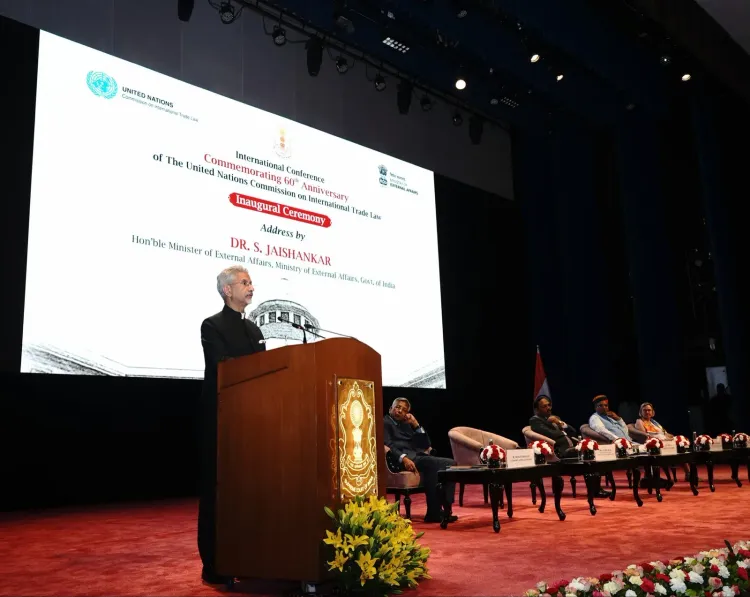
External Affairs Minister Dr. S. Jaishankar addressed the UNCITRAL 60th anniversary conference on 25 July 2026, calling for harmonised trade law frameworks that reflect Global South priorities, digital commerce realities, and India's commitment to a modern, internationally compatible legal environment.
Key Takeaways
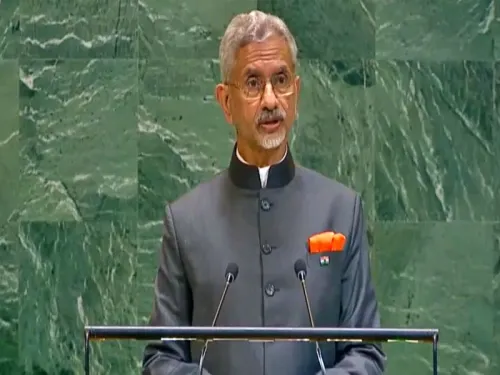
Jaishankar addressed the inaugural of the international conference marking UNCITRAL's 60th anniversary on 25 July 2026 .
UNCITRAL was established in 1966 by the UN General Assembly to harmonise and modernise international trade law.
India enacted the Arbitration and Conciliation Act, 1996 based on the UNCITRAL Model Law on International Commercial Arbitration .
Jaishankar highlighted the impact of digital commerce, evolving supply chains, and new investment patterns on cross-border trade law needs.
He stressed the Global South's stake in ensuring international trade law reflects developing-country priorities and realities.
India reaffirmed its commitment to building a modern, transparent, and internationally compatible legal environment .
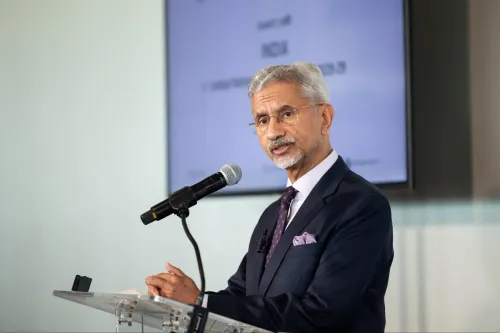
Union External Affairs Minister Dr. S. Jaishankar addressed the inaugural session of an international conference commemorating the 60th anniversary of UNCITRAL — the United Nations Commission on International Trade Law — on Friday, 25 July 2026, underlining India's commitment to a modern and internationally compatible legal environment for cross-border commerce.
Context
UNCITRAL was established by UN General Assembly Resolution 2205 (XXI) in 1966 with a mandate to promote the harmonisation and modernisation of international trade law. Over six decades, it has served as the principal UN body for international commercial law, developing model laws and conventions that countries — including India — have incorporated into their domestic legal frameworks. The anniversary conference brought together member states and legal experts to take stock of the body's contributions and chart its future direction.
Dr. Jaishankar noted that UNCITRAL has made 'key contributions towards harmonisation, modernisation and progressive development of international trade law' over the years, lending weight to the occasion beyond a ceremonial milestone.
Policy Backdrop
India's engagement with UNCITRAL has concrete legislative roots. The Arbitration and Conciliation Act, 1996 was enacted adopting the 1985 UNCITRAL Model Law on International Commercial Arbitration, embedding international standards directly into Indian law. Successive governments have linked domestic commercial law reforms to UNCITRAL standards while highlighting asymmetries in global economic governance that disadvantage developing economies.
At the conference, Dr. Jaishankar underlined four interlocking concerns. First, he pointed to 'profound global transformations, driven by technological changes, digital commerce, evolving supply chains and new patterns of investments' that are reshaping how goods, services, capital, and data cross borders. Second, he stressed 'the necessity of predictable and harmonised legal frameworks, efficient dispute-resolution mechanisms, and greater certainty in cross-border transactions.' Third, he raised 'the stakes of the Global South in ensuring that the evolution of international trade law reflects their developmental priorities and practical realities.' Finally, he reaffirmed India's unwavering commitment to creating a 'modern, transparent and internationally compatible legal environment.'
Stakeholders and Impact
Global South countries, Indian exporters, and cross-border traders stand at the centre of the policy debate Dr. Jaishankar articulated. Developing economies have long argued that international commercial law frameworks — shaped largely by industrialised nations — do not adequately accommodate their developmental stages, digital infrastructure gaps, or investment realities. India has increasingly positioned itself as a bridge between these concerns and established international commercial law regimes.
The emphasis on digital commerce and evolving supply chains is particularly significant given the rapid growth of India's digital economy and its ambitions as a global services and manufacturing hub. Legal certainty in cross-border transactions directly affects the ease with which Indian businesses can engage in international trade and attract foreign investment.
What's Next
Attention will now turn to forthcoming UNCITRAL sessions focused on the digital economy and new dispute-resolution instruments, where India's stated positions are expected to shape negotiating stances. Domestically, any parliamentary consideration of updated legislation on cross-border contracts or arbitration — aligned with UNCITRAL's evolving model laws — will be watched closely by the legal and business communities. Dr. Jaishankar's remarks signal that New Delhi intends to remain an active and vocal participant in shaping the next chapter of international trade law, with the Global South's developmental priorities as a central plank of its engagement.
Point of View
New Delhi lends them diplomatic weight that bilateral advocacy cannot easily achieve. The speech is, in effect, an early marker for India's negotiating posture in upcoming UNCITRAL sessions on the digital economy.
NationPress
24 Jul 2026
Frequently Asked Questions
What is UNCITRAL and why is its 60th anniversary significant?
UNCITRAL — the United Nations Commission on International Trade Law — was established in 1966 to harmonise and modernise international trade law globally. Its 60th anniversary marks six decades of model laws and conventions that countries, including India, have adopted into domestic legislation, making it a milestone occasion for reviewing progress and setting future priorities.
What did Jaishankar say at the UNCITRAL 60th anniversary conference?
Dr. Jaishankar underlined four key points: the profound impact of technological changes and digital commerce on cross-border trade; the need for predictable and harmonised legal frameworks and efficient dispute resolution; the Global South's stake in shaping trade law to reflect developing-country realities; and India's commitment to a modern, transparent, and internationally compatible legal environment.
How has India engaged with UNCITRAL in the past?
India enacted the Arbitration and Conciliation Act, 1996 based on the 1985 UNCITRAL Model Law on International Commercial Arbitration, directly embedding international standards into domestic law. India has since been an active participant in UNCITRAL's work on commercial law harmonisation.
What does Global South mean in the context of international trade law?
In this context, 'Global South' refers to developing and emerging economies — including India, African nations, and other lower- and middle-income countries — that argue existing international trade law frameworks were shaped primarily by industrialised nations and do not adequately address their developmental stages, infrastructure gaps, or investment realities.
What are the next steps after Jaishankar's UNCITRAL speech?
Upcoming UNCITRAL sessions focused on the digital economy and new dispute-resolution instruments will be key forums where India's stated positions are expected to shape negotiations. Domestically, any new or updated legislation on cross-border contracts or arbitration aligned with UNCITRAL standards will be closely watched by the legal and business communities.