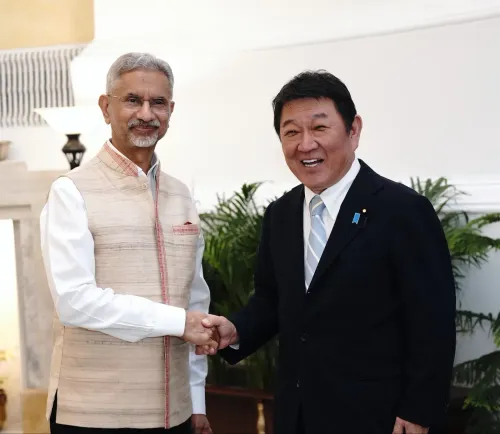
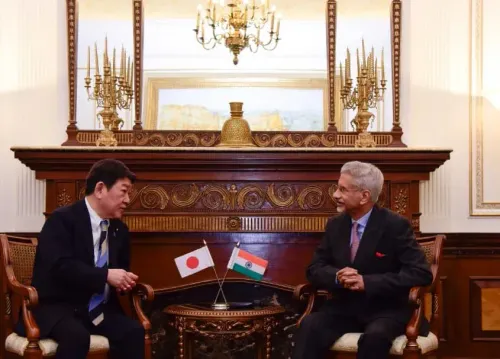
Jaishankar holds 19th Strategic Dialogue with Japan FM
Synopsis
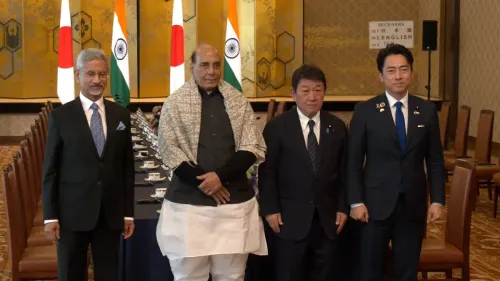
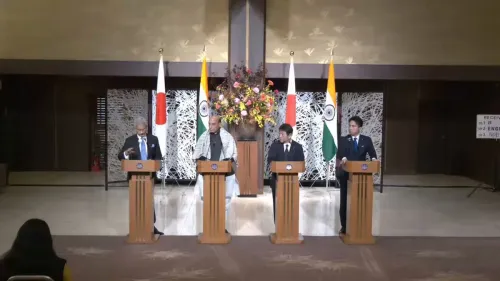
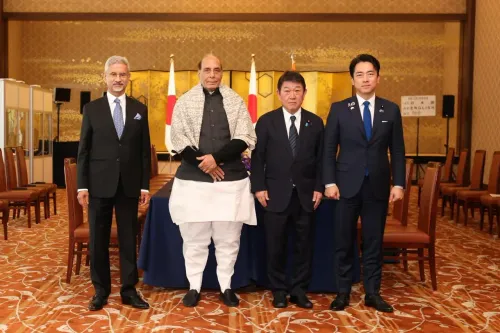
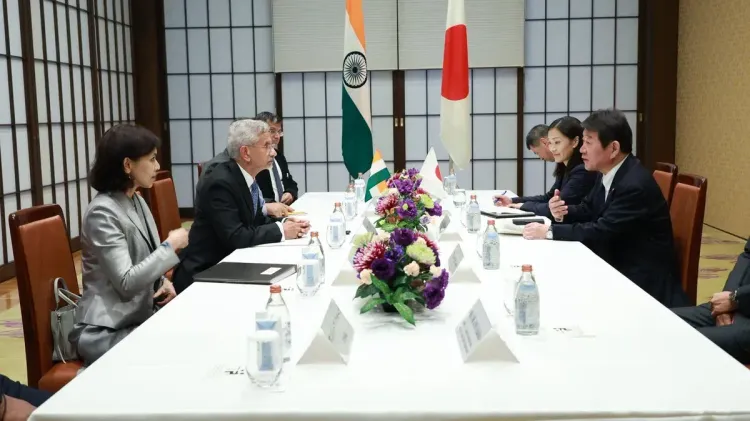
External Affairs Minister Dr. S. Jaishankar held the 19th Foreign Ministers' Strategic Dialogue with his Japanese counterpart on November 19, 2026, reviewing bilateral cooperation with a fresh focus on economic security, Indo-Pacific stability, and deepening G2G, B2B and P2P ties.
Key Takeaways
19th Foreign Ministers' Strategic Dialogue between India and Japan was held on November 19, 2026 .
Jaishankar and Japanese FM reviewed 'the entire gamut of bilateral cooperation,' with a headline focus on economic security .
Discussions targeted deepening G2G, B2B and P2P linkages — signalling a full-spectrum partnership approach.
The two ministers addressed 'challenges and opportunities in the Indo-Pacific , regional hotspots, global issues, and multilateral cooperation.' The bilateral strategic dialogue mechanism dates to the 2008 Joint Declaration on Security Cooperation , institutionalised after the strategic partnership was declared in 2006 .
Analysts will watch for follow-up on economic security initiatives and joint positioning ahead of the next Quad foreign ministers' meeting .
Two of Asia's most consequential democracies sat down on Thursday, November 19, 2026, to take stock of a partnership that has quietly become one of India's most strategically dense — and Union External Affairs Minister Dr. S. Jaishankar made clear the conversation covered far more than pleasantries.
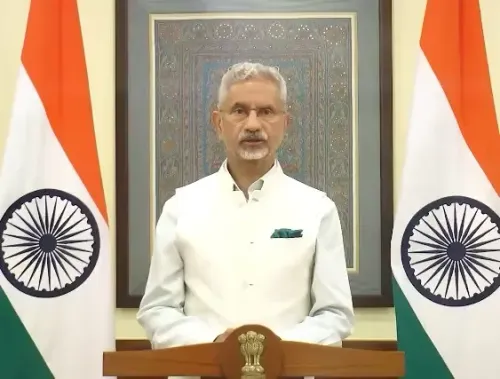
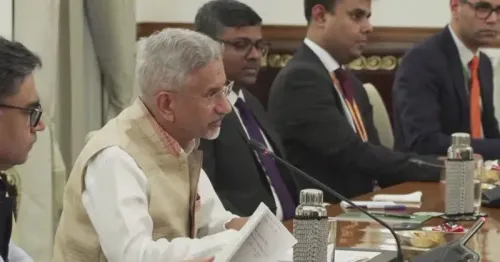
Jaishankar confirmed he held the 19th Foreign Ministers' Strategic Dialogue with his Japanese counterpart, reviewing what he called 'the entire gamut of bilateral cooperation.' The minister flagged three distinct layers of the relationship: government-to-government (G2G), business-to-business (B2B), and people-to-people (P2P) linkages — a framing that signals New Delhi and Tokyo are treating this partnership as a full-spectrum connection, not merely a diplomatic formality.
Economic security moves to the front of the agenda
The explicit emphasis on 'strengthening economic security' marks a notable evolution in how the two sides publicly articulate their goals. India and Japan have spent two decades building a relationship anchored in infrastructure finance, defence equipment cooperation, and technology transfer. The shift in language toward economic security — covering supply-chain resilience, critical minerals, and semiconductor ecosystems — reflects a global conversation that both countries have been shaping alongside partners in the Quad.
The two nations have held institutionalised foreign ministers' dialogues since a 2008 Joint Declaration on Security Cooperation, itself a product of the strategic partnership first declared in 2006. Twenty years on, the 19th edition of this forum arriving at a moment of acute supply-chain anxiety and Indo-Pacific flux is not coincidental.
Indo-Pacific framing and the weight of 'regional hotspots'
Jaishankar noted that discussions ranged across 'challenges and opportunities in the Indo-Pacific, regional hotspots, global issues, and multilateral cooperation.' That list, delivered in ascending order of abstraction, packs a great deal into one sentence. 'Regional hotspots' at this geopolitical moment points unmistakably toward the South China Sea, the Korean peninsula, and the shadow of an assertive Beijing — terrain where India and Japan share both anxiety and strategic interest.
Multilateral cooperation, meanwhile, signals coordination across forums where both countries punch hard — the United Nations, the G20, and the increasingly activated Quad architecture. Business communities on both sides, as well as Indo-Pacific partners watching the alignment, will parse any joint messaging that emerges from this round for signals ahead of the next India-Japan summit.
The dialogue mechanism that keeps the partnership calibrated
Reaching a 19th iteration of any bilateral mechanism is itself a data point. It signals institutional continuity across multiple governments, ideological shifts, and global shocks — a testament to the durable convergence of interests that has made the India-Japan strategic partnership one of the more quietly resilient alignments in the Indo-Pacific order. What comes next — specific economic security initiatives, potential joint statements, or synchronised positions at the next Quad foreign ministers' meeting — will tell the fuller story.
Eighteen dialogues built the architecture. The nineteenth may be where it gets tested against the demands of a sharper world.
Point of View
Critical technologies, and digital infrastructure. For India, deepening this alignment with Tokyo also serves as a force-multiplier within the Quad, lending credibility to a multilateral Indo-Pacific posture without the optics of a formal military alliance. The dialogue's breadth — from G2G to P2P, from regional hotspots to multilateral forums — suggests both sides are determined to insulate the partnership from the turbulence of any single flashpoint.
NationPress
19 Nov 2026
Frequently Asked Questions
What is the India-Japan Foreign Ministers' Strategic Dialogue?
The India-Japan Foreign Ministers' Strategic Dialogue is an institutionalised bilateral forum established under the 2008 Joint Declaration on Security Cooperation, following the declaration of a strategic partnership in 2006. It brings together the foreign ministers of both countries to review the full range of bilateral, regional and global issues.
What was discussed at the 19th India-Japan Strategic Dialogue?
EAM Dr. S. Jaishankar and his Japanese counterpart reviewed the full scope of bilateral cooperation, focusing on economic security, strengthening G2G, B2B and P2P linkages, Indo-Pacific challenges and opportunities, regional hotspots, global issues, and multilateral cooperation.
Why is economic security a focus of India-Japan relations?
Both India and Japan have been prioritising economic security — covering supply-chain resilience, critical minerals, and semiconductor ecosystems — as global disruptions exposed vulnerabilities in production and trade networks. As Quad partners, the two countries see coordinated economic security frameworks as central to Indo-Pacific stability.
What is the history of India-Japan strategic relations?
India and Japan declared a strategic partnership in 2006, which was deepened by a Joint Declaration on Security Cooperation in 2008. Since then, the two countries have expanded cooperation across defence, infrastructure, technology, and now economic security, with foreign ministers' dialogues serving as the primary review mechanism.
What is the significance of the Quad for India-Japan ties?
The Quad — comprising India, Japan, the United States, and Australia — provides a multilateral framework through which India and Japan coordinate on Indo-Pacific security, emerging technology, and supply-chain resilience, amplifying the bilateral relationship's strategic weight.