Jaishankar meets Bulgaria FM, pushes India-EU FTA and IMEC
Synopsis
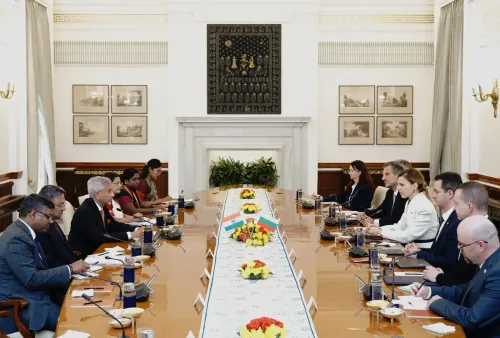
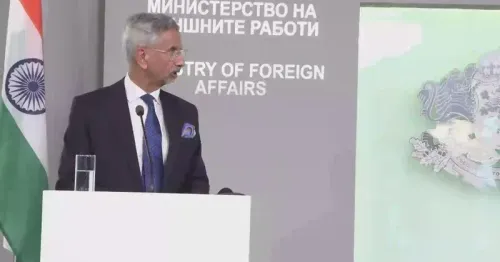
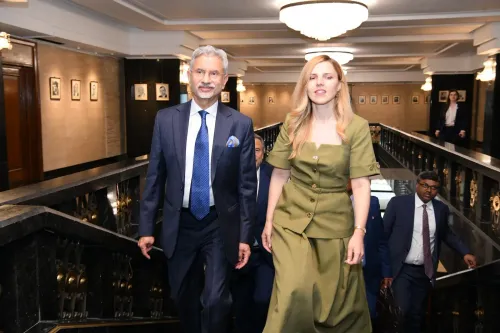
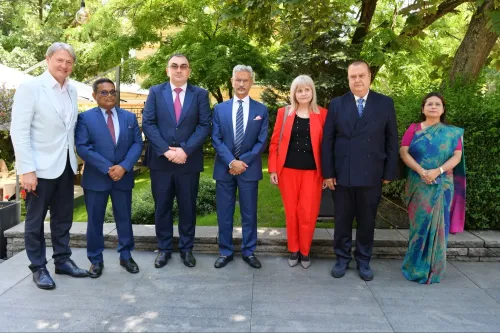
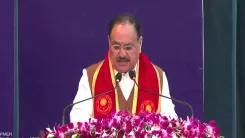
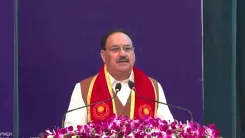
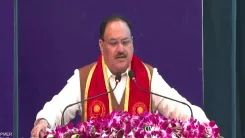
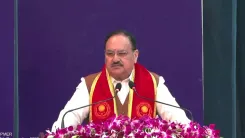
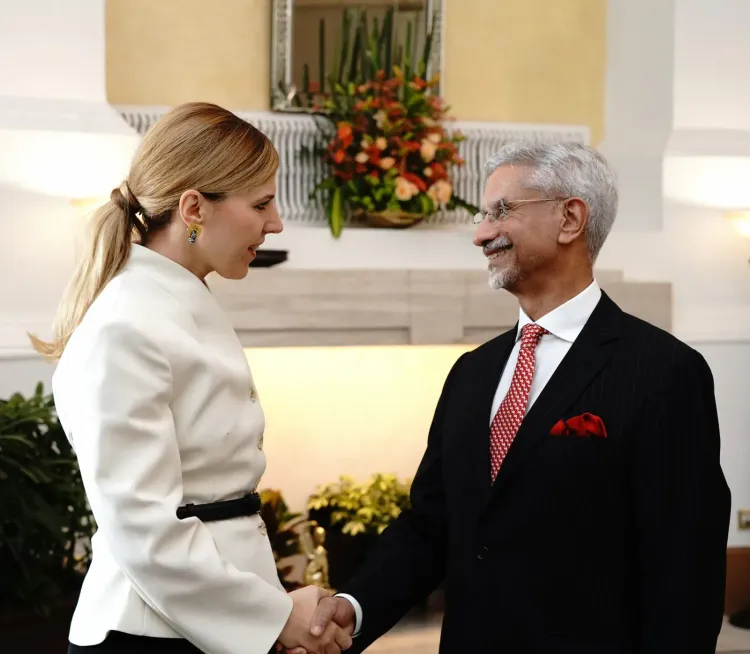
EAM Dr. S. Jaishankar met Bulgarian FM V. Petrova on 21 November 2026, covering trade, talent mobility, the India-EU FTA, IMEC connectivity and the Black Sea-Ukraine situation in a wide-ranging bilateral that underscores India's targeted EU member-state diplomacy.
Key Takeaways
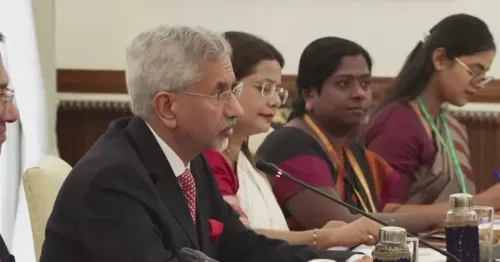
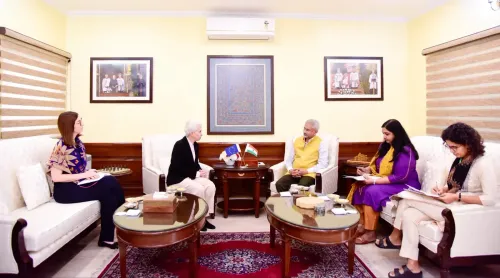
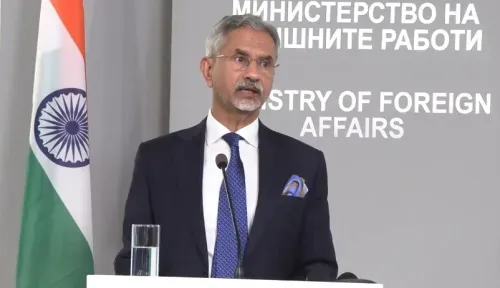
Jaishankar met Bulgarian FM V.
Petrova on 21 November 2026 , reviewing bilateral cooperation across trade, technology, security and talent mobility.
Both sides agreed the India-EU FTA must be advanced through active business-to-business exchanges, not just government-level talks.
The India-Middle East-Europe Economic Corridor (IMEC) , announced at the 2023 G20 New Delhi Summit , featured in discussions, with Bulgaria's Black Sea position making it a natural stakeholder.
The ministers exchanged views on the Black Sea situation and the Ukraine conflict , consistent with India's strategic-autonomy diplomatic posture.
Growing people-to-people linkages and cultural exchanges between India and Bulgaria were highlighted as a foundation for deeper bilateral ties.
The meeting reflects India's broader strategy of engaging individual EU member states alongside bloc-level diplomacy to build trade and connectivity consensus.
Trade, technology, talent and a corridor that could reshape Eurasian connectivity — Union External Affairs Minister Dr. S. Jaishankar packed all of it into a single afternoon meeting with Bulgarian Foreign Minister V. Petrova on Saturday, 21 November 2026, signalling that India's European diplomacy is running on multiple tracks at once.
Sofia in the room: what the bilateral agenda covered
The two ministers reviewed the full spectrum of India-Bulgaria cooperation — trade, connectivity, investments, technology, security and talent mobility. Jaishankar specifically noted growing people-to-people linkages and cultural exchanges, framing the bilateral relationship as one that has depth beyond the transactional. Bulgaria, an EU member state that has maintained diplomatic ties with India since 1954, occupies a strategically useful position at the intersection of Central Europe and the Balkans.
India-EU FTA: from negotiating table to boardroom floors
Both sides agreed that the India-EU Free Trade Agreement must be driven forward through 'vigorous exchanges between businesses' — a pointed signal that government-level goodwill now needs private-sector momentum to translate into outcomes. The FTA negotiations were formally relaunched in 2022 after a hiatus of over a decade, and individual EU member states like Bulgaria have become important nodes in building consensus within the bloc. Every bilateral meeting that produces explicit business-level commitments adds pressure on the broader negotiating track.
IMEC and the Black Sea: the bigger geopolitical canvas
Jaishankar and Petrova also exchanged views on the India-Middle East-Europe Economic Corridor (IMEC), the flagship connectivity initiative announced at the G20 New Delhi Summit in September 2023. For Bulgaria, a Black Sea littoral state, IMEC is not an abstract project — it is a potential artery running through its immediate neighbourhood. The discussion on the Black Sea situation and the Ukraine conflict added a layer of strategic weight to what might otherwise read as a routine bilateral. India's consistent posture — encouraging dialogue while preserving strategic autonomy — was reflected in Jaishankar's framing of the conversation as an 'exchange of views' rather than an alignment of positions.
One meeting, four flags — India, Bulgaria, the EU, and the G20 architecture that birthed IMEC. The geometry of India's European engagement is getting more precise by the month.
Point of View
And wants to close that gap. Bringing IMEC into a bilateral with a Black Sea nation is also strategically astute — Bulgaria's geography gives the corridor narrative a concrete European anchor. The Ukraine-Black Sea reference, handled as an 'exchange of views,' keeps India's non-alignment intact while signalling enough engagement to satisfy European partners.
NationPress
21 Nov 2026
Frequently Asked Questions
Why did Jaishankar meet the Bulgarian Foreign Minister?
EAM Dr. S. Jaishankar met Bulgarian FM V. Petrova on 21 November 2026 to review bilateral cooperation covering trade, connectivity, investments, technology, security and talent mobility, and to discuss the India-EU FTA and IMEC corridor.
What is IMEC and why does it matter to Bulgaria?
IMEC, the India-Middle East-Europe Economic Corridor, was announced at the G20 New Delhi Summit in September 2023 as a major connectivity initiative. Bulgaria, as a Black Sea littoral state, sits in IMEC's prospective European reach, making it a natural partner in the project's implementation discussions.
What is the current status of the India-EU Free Trade Agreement?
India-EU FTA negotiations were formally relaunched in 2022 after a hiatus of over a decade. Jaishankar and FM Petrova agreed that the deal should be pushed forward through active exchanges between businesses from both sides.
What did Jaishankar say about the Ukraine conflict?
Jaishankar noted that he and FM Petrova 'exchanged views on the Black Sea situation and the Ukraine conflict,' consistent with India's established posture of encouraging dialogue while maintaining strategic autonomy.
How long have India and Bulgaria had diplomatic relations?
India and Bulgaria have maintained diplomatic relations since 1954, making it one of India's longer-standing bilateral ties in Central and Eastern Europe.