Jaishankar meets EU defence panel chief, discusses Ukraine and security ties
Synopsis
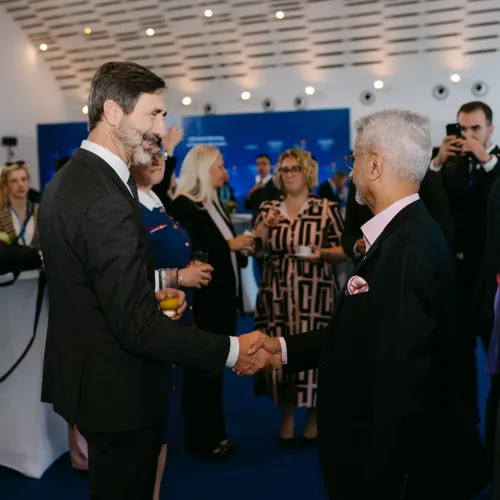
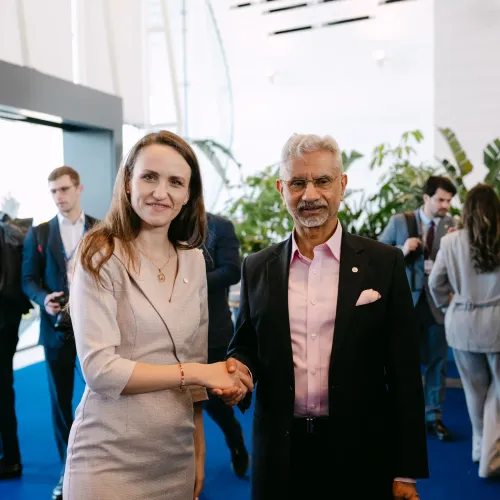
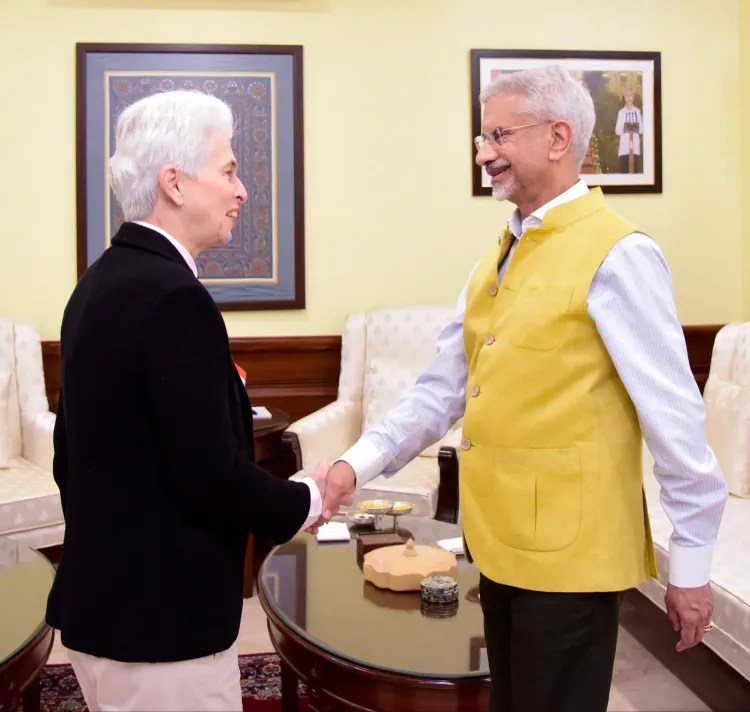
External Affairs Minister Dr. S. Jaishankar met Dr. Marie-Agnes Strack-Zimmermann, Chair of the European Parliament's Committee on Security and Defence, on November 12, discussing bilateral security, technology and economic cooperation as well as the Ukraine conflict and global issues.
Key Takeaways
Marie-Agnes Strack-Zimmermann , Chair of the European Parliament's Committee on Security and Defence, on November 12, 2026 .
Discussions covered security, economic, technological and people-to-people cooperation and 'next steps' in India-EU engagement.
Both sides exchanged views on the Ukraine conflict and other regional and global issues.
Strack-Zimmermann is a German Free Democratic Party politician and one of Europe's most prominent voices on EU defence policy.
The meeting builds on the India-EU Strategic Partnership established in 2004 and reflects India's multi-alignment approach toward European institutions.
Parliamentary-level engagements complement government-to-government summits and have influence over EU defence spending frameworks and strategic partnership mandates.
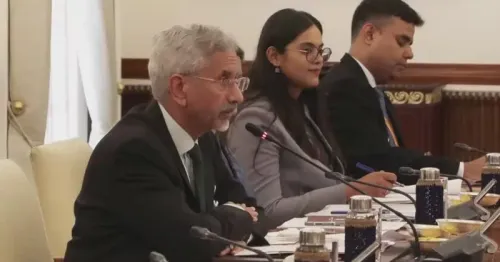
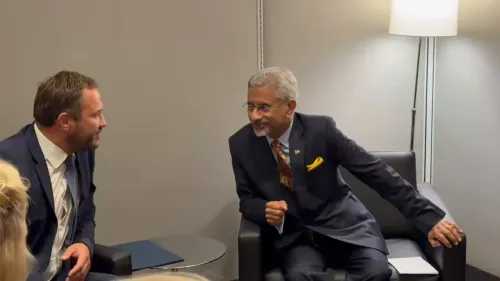
India's diplomatic outreach to European institutions moved up a gear on Thursday, November 12, as Union External Affairs Minister Dr. S. Jaishankar held talks with Dr. Marie-Agnes Strack-Zimmermann, Chair of the European Parliament's Committee on Security and Defence — the body that shapes the EU's defence posture and security strategy from Brussels to NATO's eastern flank.
What was on the table between Jaishankar and Strack-Zimmermann
Jaishankar described the exchange as 'a good discussion' covering security, economic, technological and people-to-people cooperation, as well as 'next steps' in the bilateral engagement. The two also 'exchanged views on the Ukraine conflict, and other regional and global issues' — a pointed phrase that signals India's willingness to engage European interlocutors on the war's diplomatic dimensions without committing to a specific position.
Strack-Zimmermann is one of Europe's most prominent voices on defence policy. A politician of the German Free Democratic Party, she has chaired the European Parliament's security and defence committee and has been a consistent advocate for stronger EU military capability and robust support for Ukraine. Her meeting with Jaishankar brings together two figures whose governments have notably different public postures on the Russia-Ukraine war.
India's strategic autonomy meets Europe's Ukraine calculus
That divergence is the quiet subtext here. India has maintained a position of strategic autonomy throughout the conflict — abstaining on key UN votes, continuing energy trade with Russia, and calling for dialogue rather than escalation. European institutions, by contrast, have framed the conflict as an existential challenge to the rules-based order. The fact that both sides are talking — at a parliamentary level, not just head-of-government — reflects how much each values the broader relationship.
The India-EU Strategic Partnership, established in 2004 and strengthened through annual summits, has steadily widened its canvas from trade to connectivity, clean energy, and now defence-industrial cooperation. A 2022 India-EU leaders' meeting put the Ukraine conflict explicitly on the agenda alongside technology and economic initiatives. Parliamentary-level engagements like today's meeting complement those government-to-government tracks and are increasingly how India builds texture into its European relationships.
Why this meeting matters beyond the photo opportunity
India's multi-alignment strategy in Europe is not passive. It is a deliberate architecture: engage NATO-adjacent institutions, keep lines open on security dialogues, and position Indian industry as a technology and defence partner — all while preserving room to manoeuvre on questions like Russia. Meetings with figures like Strack-Zimmermann serve that architecture directly. The European Parliament's security committee has real influence over EU defence spending frameworks, export controls, and strategic partnership mandates.
Jaishankar's reference to 'next steps' suggests the conversation was substantive enough to generate follow-up — a marker worth watching as the next India-EU summit agenda takes shape.
India and Europe are building a relationship complex enough to hold disagreement and partnership in the same room. That, in itself, is the story.
Point of View
Not contradiction. It reflects New Delhi's calculated bet that Europe needs India as a technology and strategic partner enough to tolerate divergence on Russia. Watch whether 'next steps' translates into formal India-EU security dialogue tracks or defence-industrial cooperation frameworks in the months ahead.
NationPress
12 Nov 2026
Frequently Asked Questions
Who is Dr. Marie-Agnes Strack-Zimmermann?
Dr. Marie-Agnes Strack-Zimmermann is a German politician of the Free Democratic Party and Chair of the European Parliament's Committee on Security and Defence, which oversees EU defence policy and security strategy.
What did Jaishankar and Strack-Zimmermann discuss?
They discussed India-EU security, economic, technological and people-to-people cooperation, next steps in the bilateral relationship, the Ukraine conflict, and other regional and global issues.
What is India's position on the Ukraine conflict?
India has maintained a position of strategic autonomy — abstaining on key UN votes related to the conflict, continuing energy trade with Russia, and calling for dialogue rather than escalation, even while engaging European partners on the issue.
What is the India-EU Strategic Partnership?
The India-EU Strategic Partnership was established in 2004 and has been strengthened through annual summits covering trade, connectivity, clean energy, technology and, increasingly, security cooperation.
Why does the European Parliament's defence committee matter for India?
The committee has real influence over EU defence spending frameworks, export controls and strategic partnership mandates, making engagement with its chair directly relevant to India's expanding defence-industrial and technology ties with Europe.