Jaishankar Meets Venezuela Acting President Delcy Rodriguez in Delhi
Synopsis
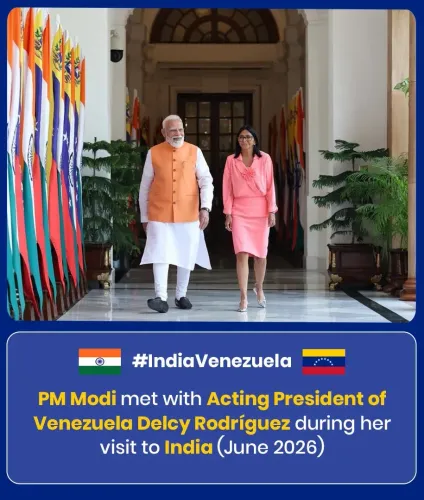
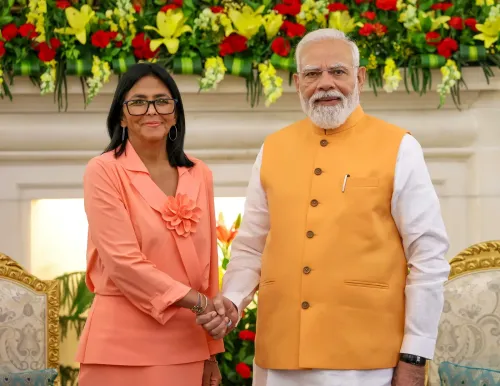
Union External Affairs Minister Dr. S. Jaishankar met Venezuelan Acting President Delcy Rodriguez in New Delhi on Thursday, ahead of her meeting with Prime Minister Narendra Modi. Jaishankar said he valued her longstanding commitment to ties between the two nations, signalling continuity in India's episodic but oil-anchored engagement with Caracas under its wider Global South diplomacy.
Key Takeaways
Jaishankar met Delcy Rodriguez in New Delhi on Thursday and described her as Venezuela's Acting President.
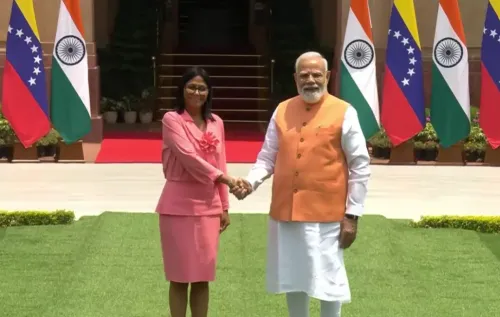
Rodriguez is scheduled to meet Prime Minister Narendra Modi as part of the visit.
India and Venezuela established diplomatic relations in 1959.
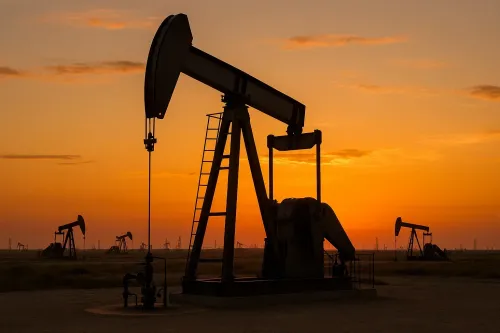
Venezuela, an OPEC member, holds the world's largest proven crude oil reserves.
Indian state-owned refiners have periodically sourced Venezuelan crude despite international sanctions.
The visit fits India's broader Latin America outreach under its Global South diplomacy.
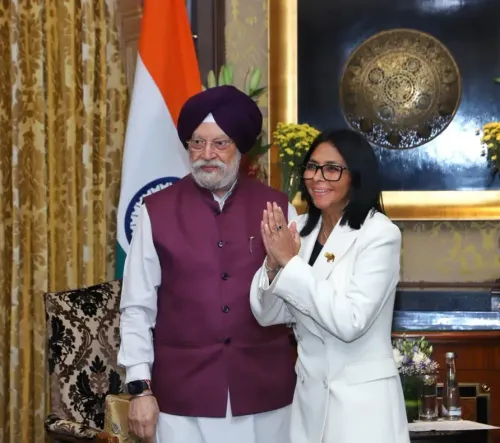
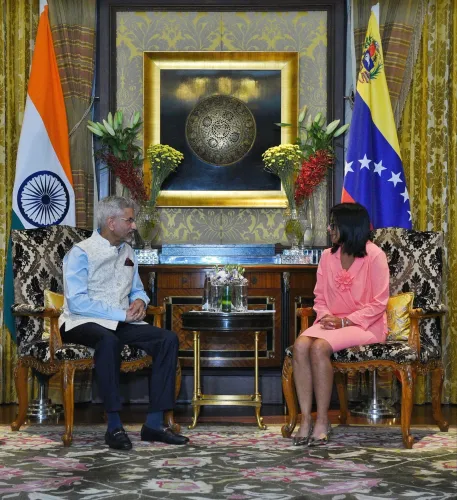
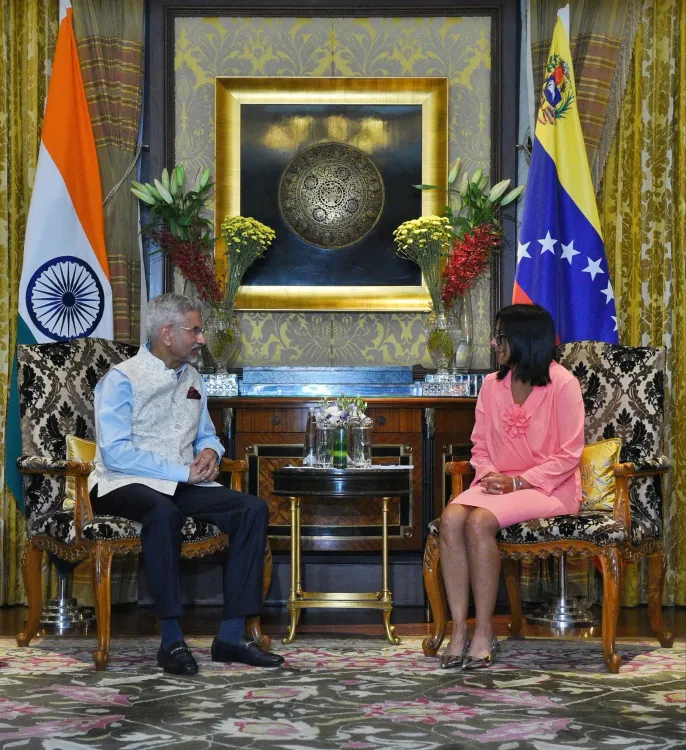
Union External Affairs Minister Dr. S. Jaishankar on Thursday held a meeting in New Delhi with Delcy Rodríguez, whom he described as the Acting President of Venezuela. The minister said the engagement reflected a 'longstanding commitment' to the India-Venezuela relationship and flagged a forthcoming meeting between Rodríguez and Prime Minister Narendra Modi.
In his post, Jaishankar wrote that he was 'Pleased to call on Acting President Delcy Rodríguez of Venezuela in New Delhi today,' adding that he 'deeply value[s] her longstanding commitment to the India - Venezuela relationship' and that 'her meeting with PM @narendramodi will further strengthen our cooperation.' The post was accompanied by the Indian and Venezuelan flag emojis and an image from the meeting.
Context
Rodríguez is a senior Venezuelan politician who has been a recurring interlocutor on Caracas's outreach to New Delhi over the past decade. Her visit to the Indian capital, capped by an audience with the Prime Minister, marks one of the more visible high-level exchanges between the two governments in recent years.
India and Venezuela established diplomatic relations in 1959. While bilateral contact has been episodic, the relationship has been sustained largely through energy commerce and occasional engagements on multilateral platforms.
Policy backdrop
Venezuela holds the world's largest proven crude oil reserves and is a member of OPEC. Indian state-owned refiners have, at various points through the 2000s and 2010s, sourced Venezuelan crude as part of New Delhi's effort to diversify its supply basket, even as Caracas navigated waves of international sanctions.
The meeting fits into a broader pattern of Indian outreach to Latin America under the Modi government, which has framed engagement with the region within its wider Global South diplomacy. Energy security, pharmaceuticals and food trade have typically anchored these exchanges.
Stakeholders and impact
For India, the immediate stakes lie with energy importers and refiners tracking any signals on the future of Venezuelan crude flows. For Caracas, a high-profile reception in New Delhi offers diplomatic ballast at a time when its international engagements remain constrained.
Diplomatic officials on both sides will be watching whether the Modi-Rodríguez meeting yields a joint statement, a fresh memorandum of understanding, or an opening for renewed commercial contracts. The optics of the call on Jaishankar suggest the two sides are signalling political continuity rather than a reset.
What's next
The next marker will be the readout from the meeting at 7, Lok Kalyan Marg, which is expected to indicate whether the discussions touched on hydrocarbons, multilateral coordination, or people-to-people ties. Any reference to cooperation at forums such as the United Nations General Assembly later this year would underline a more sustained diplomatic track.
For now, Jaishankar's framing — emphasising continuity and personal rapport — positions the visit as a relationship-maintenance exercise, with the substantive agenda left to be detailed by the Prime Minister's Office. Whether this translates into concrete economic deliverables will shape how the engagement is read in capitals from Caracas to Washington.
Point of View
Low-key approach to Venezuela — keeping diplomatic channels open without overcommitting, even as Caracas remains diplomatically isolated in parts of the West. Jaishankar's emphasis on 'longstanding commitment' is classic relationship-maintenance language, signalling continuity rather than a strategic upgrade. The real test will be whether the Modi-Rodriguez engagement produces movement on crude supplies or stays at the level of symbolism. It also fits a wider pattern of New Delhi diversifying its Global South footprint while avoiding alignment with any one geopolitical bloc.
NationPress
20 Sept 2026
Frequently Asked Questions
Who is Delcy Rodriguez and why is she in India?
Delcy Rodriguez is a senior Venezuelan politician described by Union External Affairs Minister Dr. S. Jaishankar as the Acting President of Venezuela. She is in New Delhi for bilateral meetings, including with Prime Minister Narendra Modi.
When were India-Venezuela diplomatic relations established?
India and Venezuela established formal diplomatic relations in 1959. The relationship has been sustained primarily through energy trade and occasional high-level exchanges.
Does India buy oil from Venezuela?
Yes, Indian state-owned refiners have at various points sourced crude from Venezuela as part of efforts to diversify oil supplies. Venezuela holds the world's largest proven crude reserves and is an OPEC member.
What did Jaishankar say about the meeting?
Jaishankar said he was pleased to call on Rodriguez in New Delhi, valued her longstanding commitment to India-Venezuela ties, and expected her meeting with Prime Minister Modi to further strengthen cooperation.
Why is India engaging with Venezuela now?
The engagement is part of India's broader Global South diplomacy and energy-security diversification strategy. New Delhi has steadily expanded political and commercial contacts with Latin American nations in recent years.