Jaishankar Opens Inaugural India-Belgium Strategic Dialogue
Synopsis
Union External Affairs Minister Dr. S. Jaishankar opened the inaugural India-Belgium Strategic Dialogue on 15 July 2026, launching a new bilateral mechanism covering trade, security and multilateral cooperation. Belgium's role as host of EU and NATO headquarters gives the new channel significance beyond the bilateral relationship.
Key Takeaways
Union External Affairs Minister Dr.
Jaishankar delivered opening remarks at the inaugural India-Belgium Strategic Dialogue on 15 July 2026 .
The dialogue is a new formalised bilateral mechanism covering trade, security and multilateral cooperation between India and Belgium.
Belgium hosts the headquarters of both the European Union and NATO , giving the channel institutional weight beyond the bilateral relationship.
The dialogue fits India's broader strategy of deepening dedicated partnerships with individual EU member states under a multi-alignment foreign policy.
Existing India-Belgium economic ties span the diamond trade, chemicals and technology sectors.
Follow-up meetings and potential working groups on supply-chain resilience and defence technology are expected to emerge from the inaugural session.
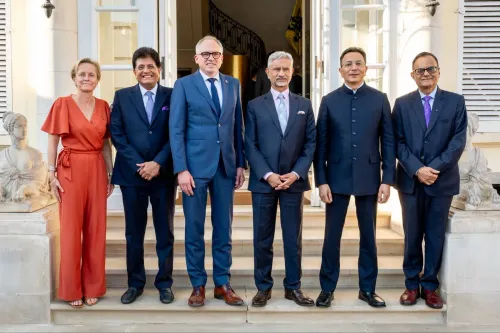
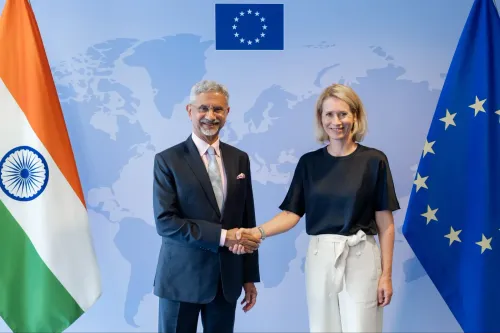
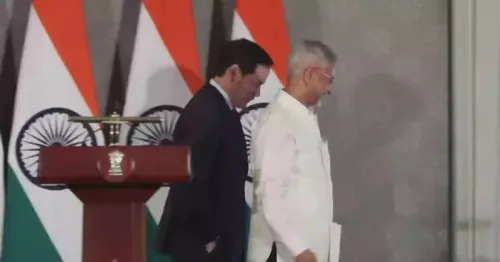
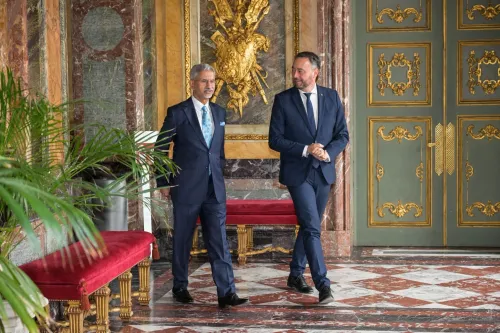
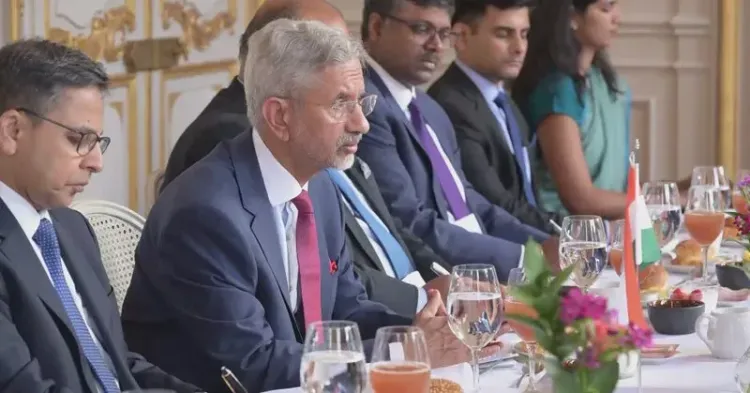
Union External Affairs Minister Dr. S. Jaishankar delivered the opening remarks at the inaugural India-Belgium Strategic Dialogue on Wednesday, 15 July 2026, marking the launch of a new dedicated bilateral mechanism between the two countries. The dialogue signals a deliberate deepening of India's engagement with Belgium, a nation that hosts the headquarters of both the European Union and NATO.
Context
Dr. Jaishankar shared his opening remarks from the inaugural session on social media, flagging the event with both the Indian and Belgian flags — a gesture that underscored the parity and mutual significance attached to the new channel. The India-Belgium Strategic Dialogue represents a formalised platform for the two governments to engage on trade, security, and multilateral cooperation in a structured format.
Belgium occupies a unique position in European geopolitics: as the seat of EU institutions and NATO, engagement with Brussels carries institutional weight that extends beyond the bilateral relationship itself. For India, opening a dedicated strategic dialogue with Belgium is therefore as much about accessing European institutional networks as it is about bilateral commerce.
Policy Backdrop
India and the European Union upgraded their relationship to a Strategic Partnership in 2004, providing the overarching framework within which New Delhi has since pursued deeper ties with individual EU member states. France, Germany, and the Netherlands have each had dedicated strategic or foreign-policy consultations with India, and the new dialogue with Belgium fits into this expanding architecture.
India's broader diplomatic posture under the current government has emphasised multi-alignment — building substantive partnerships across geographies to reduce strategic dependence on any single power centre. Expanding dedicated dialogues with key European partners is a core plank of that approach. Belgium's existing economic ties with India span the diamond trade, chemicals, and technology sectors, giving the dialogue a strong commercial dimension alongside its strategic one.
Stakeholders and Impact
The primary stakeholders in the new dialogue are the diplomatic services of both countries, as well as trade and technology sectors that have historically formed the backbone of India-Belgium commercial relations. Antwerp, Belgium's port city, processes a significant share of the world's rough diamonds, making it a critical node for India's gem and jewellery industry.
For the broader European policy community, the launch of a Strategic Dialogue with India signals that New Delhi is systematically institutionalising its European partnerships at a time when supply-chain resilience and technology cooperation have risen to the top of the transatlantic agenda. Indian and Belgian businesses operating in chemicals, pharmaceuticals, and advanced manufacturing stand to benefit from any working-group outcomes the dialogue may produce.
What's Next
The inaugural nature of the dialogue means that its immediate deliverables — working groups, joint statements, or specific cooperation frameworks — are yet to be publicly announced. Observers will watch for follow-up meetings and any concrete outcomes on supply-chain resilience, defence technology, or multilateral coordination at forums such as the United Nations and the G20.
The launch of this channel adds Belgium to a growing list of European partners with whom India maintains a formalised strategic conversation, reinforcing New Delhi's intent to treat Europe not as a monolithic bloc but as a constellation of individually significant relationships worth cultivating on their own terms.
Point of View
Germany and the Netherlands — of India treating Europe as a constellation of individually cultivable relationships, each offering distinct access to technology, capital or institutional influence.
NationPress
15 Jul 2026
Frequently Asked Questions
What is the India-Belgium Strategic Dialogue?
The India-Belgium Strategic Dialogue is a new formalised bilateral mechanism launched on 15 July 2026 to allow India and Belgium to engage on trade, security and multilateral cooperation in a structured format.
Why is Belgium important for India's foreign policy?
Belgium hosts the headquarters of both the European Union and NATO, meaning engagement with Brussels carries institutional weight that extends well beyond bilateral trade, which itself spans diamonds, chemicals and technology.
What did Jaishankar say at the India-Belgium Strategic Dialogue?
Dr. Jaishankar delivered the opening remarks at the inaugural session on 15 July 2026. The specific content of his remarks was shared via a live broadcast linked on his official social media account.
How does the India-Belgium dialogue fit into India's Europe policy?
It fits into India's broader multi-alignment strategy of building dedicated strategic dialogues with key EU member states — alongside existing channels with France, Germany and the Netherlands — rather than relying solely on the overarching India-EU Strategic Partnership established in 2004.
What outcomes are expected from the India-Belgium Strategic Dialogue?
Observers are watching for follow-up meetings and potential working groups on supply-chain resilience and defence technology cooperation, though specific outcomes from the inaugural session have not yet been publicly announced.