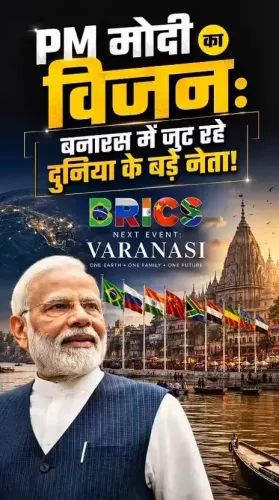
Jal Shakti Min Paatil shares PM Modi's call to widen BRICS
Synopsis
Union Jal Shakti Minister C. R. Paatil shared PM Modi's post-BRICS summit message urging that cooperation extend beyond governments to include Indian entrepreneurs, farmers, women and youth as active partners in the grouping.
Key Takeaways
Union Jal Shakti Minister C.
Paatil shared PM Narendra Modi 's statement on 26 September 2026 , days after the latest BRICS Summit concluded.
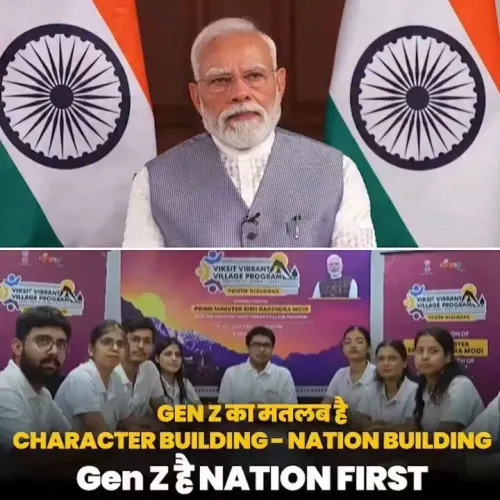
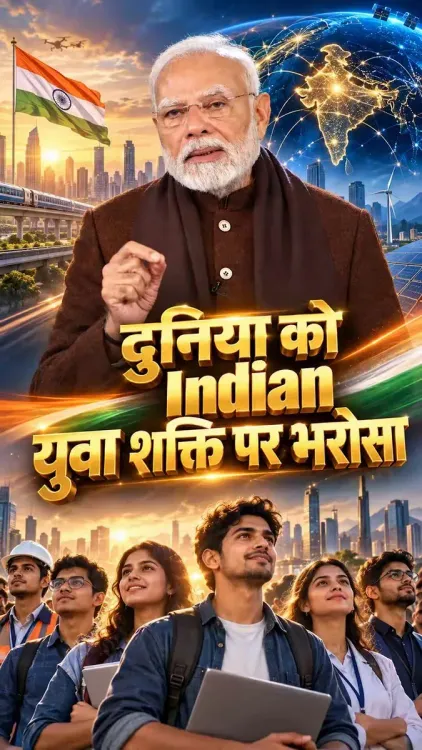
PM Modi's message states that India's youth and talent have 'won the trust of the entire world' and that the world holds high hopes for Indian innovators and entrepreneurs.
India's stated goal is to make BRICS cooperation extend beyond governments to encompass entrepreneurs, farmers, women and youth as active participants.
India used its 2021 BRICS chairmanship to advance people-to-people and business linkages, establishing a pattern this statement continues.
The emphasis fits India's broader strategy of positioning BRICS as a platform for Global South voices centred on trade, innovation and practical development outcomes.
Watch for follow-up working groups or summit mechanisms to operationalise youth and entrepreneur participation announced in the wake of the recent summit.
When Union Jal Shakti Minister C. R. Paatil shared a quote from Prime Minister Narendra Modi on Saturday, 26 September 2026, the message was pointed: India does not want BRICS to remain a club of governments. It wants entrepreneurs, farmers, women and young people sitting at the table too.
Sharing PM Modi's words, Paatil quoted: 'Aaj aap dekh rahe hain, hamare yuvaon ke talent aur skills ne poori duniya ka bharosa jeeta hai' — 'Today you can see how the talent and skills of our youth have won the trust of the entire world.' The statement went on to note that days after the recent BRICS Summit concluded, India's position remains unambiguous: the grouping's cooperation must stretch beyond ministerial halls to touch the lives of ordinary citizens.The vision: BRICS as a people's platform
PM Modi's words, as shared by Paatil, spell out four pillars of inclusive BRICS participation — entrepreneurs, farmers, women and youth. The language is deliberate. Rather than framing the grouping solely as a vehicle for trade volumes or geopolitical signalling, the statement positions BRICS as a live partnership where every Indian stakeholder can claim active membership.
India has long pushed this line inside BRICS chambers. During India's 2021 BRICS chairmanship, New Delhi used its platform to accent people-to-people ties and business linkages alongside high-table diplomacy. The emphasis in 2026 continues that thread — suggesting India views inclusive engagement not as a soft add-on but as a core strategic posture within the grouping.
Why India's 'Global South' framing matters inside BRICS
India has increasingly positioned BRICS as a megaphone for the Global South — economies that share development challenges and seek a seat in setting global rules on trade, technology and finance. Highlighting innovators and farmers in the same breath as diplomats is a way of saying the partnership must deliver tangible outcomes: market access, skills transfer, agricultural technology, startup ecosystems.
The immediate test will be whether follow-up working groups or concrete mechanisms emerge from the recent summit to operationalise this vision — turning the rhetoric of youth and entrepreneur participation into trackable deliverables.
For a minister who oversees water security — a resource that cuts across agriculture, rural livelihoods and urban development — amplifying a message about farmer and youth inclusion in global platforms is not incidental. It is a signal about where India's political energy is directed: outward-facing, but rooted in domestic constituency concerns.
India's young, skilled workforce is the country's most-cited structural advantage in every global forum. The question is whether BRICS, still navigating its own expanded membership and geopolitical tensions, can build the plumbing to channel that advantage into shared prosperity. That is the ambition PM Modi's words set out — and the benchmark by which this moment will eventually be measured.
Point of View
Constituencies that matter enormously at home. By sharing PM Modi's words on a post-summit day, Paatil amplifies a message that gives BRICS a human face at a moment when the grouping's internal coherence is under scrutiny. The emphasis on youth and innovation also dovetails with India's global branding as a technology-forward emerging power. Whether the architecture to deliver on these promises materialises is the credibility test that follows every summit communiqué.
NationPress
26 Sept 2026
Frequently Asked Questions
What did PM Modi say about BRICS and Indian youth?
PM Modi said Indian youth and their talent have won the trust of the world, and that the world holds great expectations from Indian innovators, entrepreneurs and young people. He also stated India's aim is to make BRICS cooperation extend beyond governments to include entrepreneurs, farmers, women and youth as active partners.
Why did C. R. Paatil share PM Modi's BRICS statement?
Union Jal Shakti Minister C. R. Paatil shared the statement to amplify PM Modi's vision for an inclusive BRICS partnership shortly after the recent BRICS Summit concluded, signalling alignment within the BJP government on the goal of people-centred multilateral cooperation.
What is India's approach to BRICS cooperation?
India advocates expanding BRICS beyond government-to-government diplomacy to involve entrepreneurs, farmers, women and youth. India used its 2021 BRICS chairmanship to push people-to-people ties and business linkages, a position it continues to champion.
What is the significance of BRICS for India?
BRICS groups major emerging economies including Brazil, Russia, India, China and South Africa. For India it serves as a platform to amplify Global South interests, push for inclusive global governance and create business and innovation linkages beyond traditional diplomatic channels.
What should we watch after the latest BRICS Summit?
The key thing to track is whether concrete working groups or mechanisms emerge from the recent summit to operationalise entrepreneur and youth participation in BRICS cooperation, turning India's stated ambition into measurable outcomes.