Jal Shakti Minister Paatil Backs India Semiconductor Push

Synopsis
Union Jal Shakti Minister C. R. Paatil invoked the #SemiconHubBharat hashtag on 4 July 2026 in a colloquial Hindi post, amplifying India's Rs 76,000 crore semiconductor mission and signalling a BJP push to mainstream chip-manufacturing policy beyond industry circles.
Key Takeaways
Paatil , Union Jal Shakti Minister and senior BJP leader, posted on X on 4 July 2026 backing #SemiconHubBharat .
India's India Semiconductor Mission carries a financial outlay of Rs 76,000 crore , approved in 2021 .
The PLI scheme for electronics and IT hardware, expanded in 2020-21 , underpins semiconductor-adjacent investment incentives.
India has signed multiple MoUs with entities in the United States , Taiwan , and Europe for technology transfer and joint ventures.
The post reflects the BJP 's coordinated effort to build mass public awareness around a technical policy domain.
Upcoming parliamentary sessions and state budget announcements are expected to provide further clarity on project timelines.
Union Jal Shakti Minister C. R. Paatil posted a pointed message on X on Saturday, 4 July 2026, invoking the hashtag #SemiconHubBharat alongside the phrase 'सुन रहे हो बिनोद...' ('Are you listening, Binod...') — a colloquial nudge widely read as a call to attention directed at stakeholders in India's semiconductor ambitions.
Context
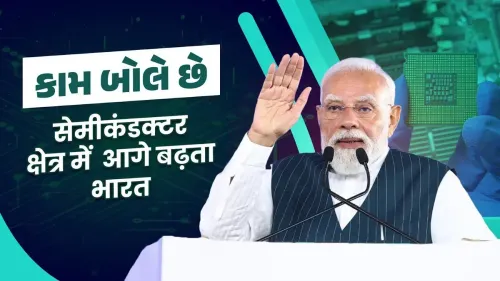
The post, brief but pointed, uses a conversational Hindi phrase to draw attention to the #SemiconHubBharat campaign — a social-media thread amplifying India's goal of becoming a global semiconductor manufacturing hub. The informal register, referencing a generic 'Binod', signals a deliberate attempt to make a technical policy conversation accessible to a mass audience.
While Paatil holds the Jal Shakti portfolio — covering water resources and drinking water — senior BJP leaders routinely amplify whole-of-government technology priorities on social media, reflecting the party's coordinated digital outreach strategy.
Policy Backdrop
India's semiconductor drive is anchored by the India Semiconductor Mission (ISM), approved in 2021 with a financial outlay of Rs 76,000 crore. The mission targets domestic capacity across the full value chain — chip design, fabrication, and assembly and test — to reduce the country's near-total dependence on imports from Taiwan, South Korea, and China.
The Production Linked Incentive (PLI) scheme for electronics and IT hardware, expanded in 2020-21, provided an early scaffold for semiconductor-adjacent investments. Since then, multiple memoranda of understanding have been signed with entities in the United States, Taiwan, and Europe for technology transfer and joint ventures, framing semiconductor self-reliance as both an economic and a strategic imperative under the broader Atmanirbhar Bharat framework.
Stakeholders and Impact
The primary beneficiaries of a successful #SemiconHubBharat push would be domestic and foreign semiconductor firms, electronics manufacturers, and the wider supply chain of component makers and logistics providers. A thriving domestic chip industry would also reduce India's vulnerability to global supply-chain disruptions of the kind that rattled automotive and consumer electronics sectors after 2020.
For ordinary citizens, the downstream effect would be felt in the cost and availability of smartphones, appliances, and automobiles — all heavily reliant on imported chips. Policymakers see semiconductor localisation as a jobs multiplier, with fabrication plants and design centres projected to generate high-skill employment across Gujarat, Maharashtra, and other states that have offered land and power incentives.
What's Next
Parliamentary updates on the progress of already-approved semiconductor projects — including greenfield fabrication units — are expected in upcoming budget and standing-committee sessions. State governments are also being watched for fresh incentive announcements that could tilt investment decisions toward their jurisdictions.
Posts like Paatil's, amplifying #SemiconHubBharat, suggest the BJP's communication machinery is moving to build broader public awareness around a policy domain that has until now remained largely confined to industry and policy circles. Whether that translates into accelerated project timelines or fresh funding announcements remains the key question for the months ahead.
Point of View
Colloquial tone of the post ('सुन रहे हो बिनोद...') is a studied communication choice: it democratises a complex industrial policy debate and primes a mass digital audience. This fits a broader pattern where the Atmanirbhar Bharat narrative is kept alive through sustained, multi-minister social-media amplification rather than relying solely on formal announcements. The real test will be whether this communication momentum is matched by on-ground progress in approved fabrication projects.
NationPress
4 Jul 2026
Frequently Asked Questions
What is #SemiconHubBharat?
#SemiconHubBharat is a social-media campaign amplifying India's goal of becoming a global semiconductor manufacturing hub, backed by the government's Rs 76,000 crore India Semiconductor Mission approved in 2021.
Why is Jal Shakti Minister CR Paatil talking about semiconductors?
Senior BJP ministers routinely amplify whole-of-government technology priorities on social media as part of the party's coordinated digital outreach, even when the subject falls outside their direct portfolio.
What is the India Semiconductor Mission?
The India Semiconductor Mission is a central government scheme approved in 2021 with an outlay of Rs 76,000 crore to build domestic chip design, fabrication, and assembly and test capabilities and reduce import dependence.
What is Atmanirbhar Bharat's role in India's chip policy?
Atmanirbhar Bharat is the overarching self-reliance framework under which semiconductor policy is positioned as both an economic and strategic priority, supported by PLI incentives and international technology-transfer agreements.
Which countries has India signed semiconductor agreements with?
India has signed multiple memoranda of understanding with entities in the United States, Taiwan, and Europe for technology transfer and joint ventures in the semiconductor sector.