Jal Shakti Minister Paatil hails Rs 2,100-cr AMRUT 2.0 push for Varanasi
Synopsis
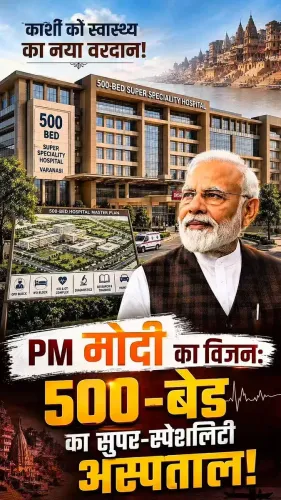
Union Jal Shakti Minister C. R. Paatil has celebrated an AMRUT 2.0 package of over Rs 2,100 crore for Varanasi, covering 350 km of new pipelines, a heritage-themed airport corridor with Mahakal Pillars, automated parking at Sarnath, and heritage lighting in the old city.
Key Takeaways
Union Jal Shakti Minister C.
Paatil highlighted an AMRUT 2.0 package of over Rs 2,100 crore for Varanasi .
The project includes laying more than 350 kilometres of new sewer and water pipelines across the city.
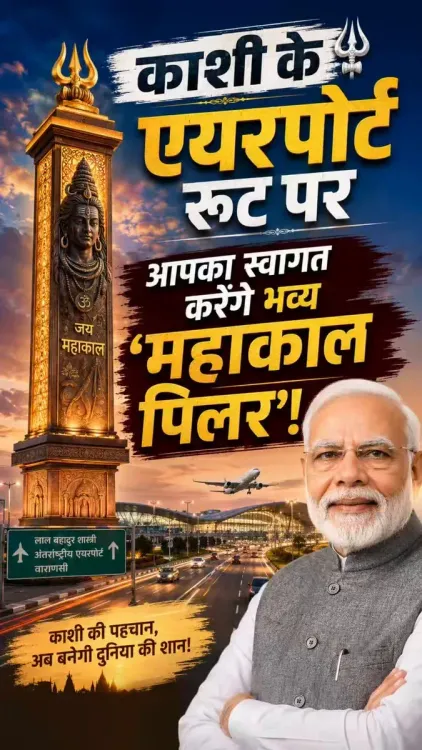
The road from Babatpur Airport is being developed as a 'spiritual gateway' featuring giant Mahakal Pillars .
Automated parking is being introduced at Sarnath , the prominent Buddhist heritage site near Varanasi.
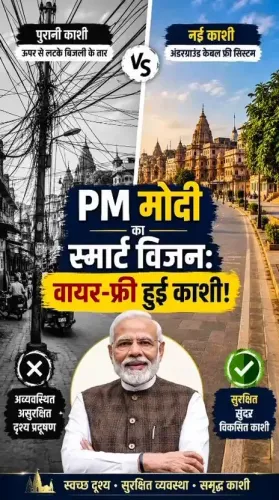
Heritage theme lighting is planned along the Maidagin to Godaulia corridor in the old city.
The investment continues a pattern of central funding combining civic infrastructure with cultural promotion in Varanasi since 2014 .
Union Jal Shakti Minister C. R. Paatil on Monday, 22 June 2026 celebrated a major urban infrastructure package for Varanasi, highlighting what he described as a historic gift to the ancient city under the AMRUT 2.0 scheme worth more than Rs 2,100 crore, led by Prime Minister Narendra Modi.
Context
Posting in Hindi on X, Minister Paatil wrote: 'आस्था और विकास के इस अद्भुत सफर में, हमारी काशी अब एक नई उड़ान भरने को तैयार है!' ('In this wonderful journey of faith and development, our Kashi is now ready to take a new flight!'). He described the AMRUT 2.0 project as a 'ऐतिहासिक सौगात' — a historic gift — to Varanasi, the constituency represented by PM Modi since 2014.
The post highlighted the laying of more than 350 kilometres of new sewer and water pipelines across the city, a core deliverable under the project. Paatil also flagged the transformation of the road from Babatpur Airport into the city into a so-called 'spiritual gateway', featuring giant Mahakal Pillars to welcome tourists.
Policy Backdrop
AMRUT 2.0 — the Atal Mission for Rejuvenation and Urban Transformation 2.0 — was approved by the Union Cabinet in 2021 as an upgraded successor to the original 2015 AMRUT mission. Its central focus is achieving universal water supply and sewerage coverage in urban areas across India.
Varanasi has been a recurring beneficiary of central urban funding since 2014, receiving successive packages for sewerage networks, riverfront development, and connectivity upgrades. The Kashi Vishwanath Corridor, the Smart City Mission, and now AMRUT 2.0 form successive layers of this investment, combining civic infrastructure with the promotion of religious and heritage tourism.
Stakeholders and Impact
For Varanasi's residents, the 350-km pipeline network promises improved access to piped water and better sewerage — a long-standing civic need in one of India's most densely populated pilgrimage cities. Pilgrims and tourists stand to benefit from the upgraded airport approach road and the Mahakal Pillars installation at the city's entry point.
The post also mentioned automated parking at Sarnath — the celebrated Buddhist archaeological site on the city's outskirts — and heritage theme lighting along the stretch from Maidagin to Godaulia, a busy corridor in the old city. Both components are aimed at managing tourist footfall while preserving the city's centuries-old character.
What's Next
Attention will now turn to the on-ground rollout of the 350-km sewer and water pipeline network and the pace of work on the heritage lighting and automated parking components. Physical progress reports on these sub-projects will be the key indicator of whether the announced investment translates into tangible civic improvement for Varanasi's estimated population of over 12 lakh.
The announcement reinforces the central government's broader pattern of combining infrastructure upgrades with cultural and religious branding in heritage cities — a template that, if successfully executed in Varanasi, could serve as a model for similar packages in other pilgrimage towns across India.
Point of View
Blending the language of faith with development optics. The AMRUT 2.0 package for Varanasi fits squarely into the BJP's 'Kashi model' of governance: layering civic upgrades with religious and cultural branding to reinforce both electoral and ideological messaging. As Jal Shakti Minister, Paatil's highlighting of the pipeline component directly connects to his ministry's mandate, lending the post an institutional weight beyond routine cheerleading. The real test will be delivery timelines on the 350-km network, where past urban infrastructure projects in India have frequently faced delays.
NationPress
22 Jun 2026
Frequently Asked Questions
What is the AMRUT 2.0 project for Varanasi?
AMRUT 2.0 (Atal Mission for Rejuvenation and Urban Transformation 2.0) is a central government scheme launched in 2021. For Varanasi, a package of over Rs 2,100 crore has been highlighted, covering 350 km of new sewer and water pipelines, heritage lighting, and tourism infrastructure upgrades.
What are the Mahakal Pillars being built near Babatpur Airport?
As part of the AMRUT 2.0 project, the road from Babatpur Airport into Varanasi is being developed as a 'spiritual gateway' featuring large decorative structures called Mahakal Pillars, intended to give arriving tourists and pilgrims a heritage-themed welcome.
What infrastructure is being built at Sarnath under this project?
Sarnath, the Buddhist archaeological site near Varanasi, is set to receive automated parking facilities as part of the AMRUT 2.0 package, aimed at managing the high volume of tourist and pilgrim traffic at the site.
What is heritage theme lighting in Varanasi?
Heritage theme lighting refers to decorative and culturally themed street lighting planned along the Maidagin to Godaulia corridor in Varanasi's old city, designed to highlight the area's historic character while improving the pedestrian experience for visitors.
Why does Varanasi receive so much central government funding?
Varanasi is the Lok Sabha constituency of Prime Minister Narendra Modi and is one of India's most important pilgrimage and heritage cities. Since 2014, it has received successive central funding packages under schemes including AMRUT, the Smart City Mission, and the Kashi Vishwanath Corridor project.