Jal Shakti Minister Paatil lauds Gujarat farmer's rainwater harvesting work
Synopsis
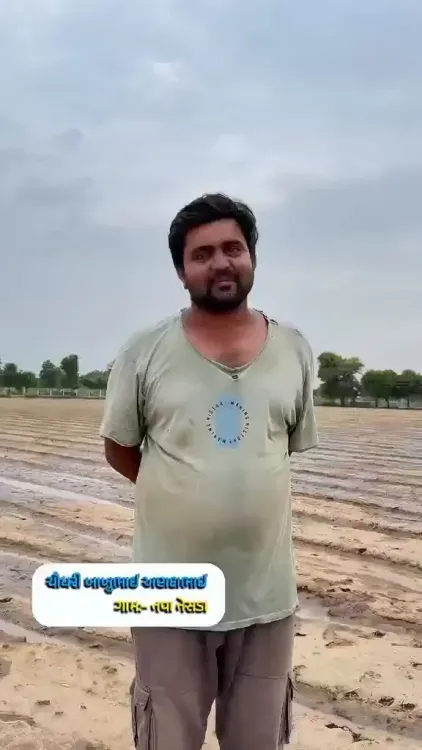
Union Jal Shakti Minister C. R. Paatil on 11 July 2026 commended a farmer in Nawa Nesda, Disa taluka, Gujarat, for independently building scientific rainwater harvesting and groundwater recharge structures, citing it as a model of community-driven water conservation aligned with the Catch the Rain campaign.
Key Takeaways
Union Jal Shakti Minister C.
Paatil publicly congratulated a farmer in Nawa Nesda village, Disa taluka, Banaskantha, Gujarat on 11 July 2026 .
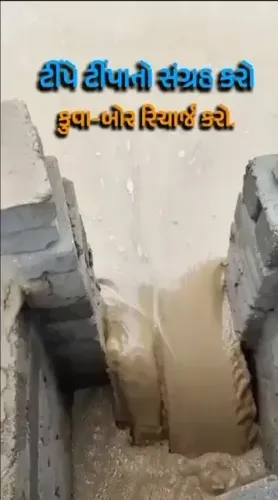
The farmer independently built scientific rainwater harvesting and groundwater recharge structures using his own resources.
The post was tagged with the official hashtags of the Catch the Rain campaign and the Jal Shakti Abhiyan , both central government water conservation schemes.
The Jal Shakti Abhiyan (launched 2019 ) covers 256 water-stressed districts ; the Catch the Rain campaign (launched 2021 ) focuses on pre-monsoon rainwater harvesting infrastructure.
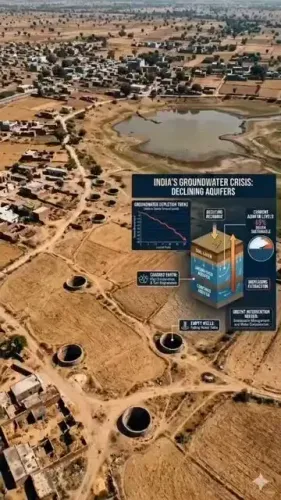
Banaskantha is an arid district in north Gujarat where groundwater depletion and seasonal drought are recurring challenges.
The minister framed the farmer's effort as proof that the most effective water conservation message travels 'from the field to society.'
Union Jal Shakti Minister C. R. Paatil on Saturday, 11 July 2026 publicly commended a progressive farmer in Nawa Nesda village, Disa taluka, Banaskantha district, Gujarat, for independently undertaking scientific rainwater harvesting and groundwater recharge on his farmland, calling the initiative inspirational.
Context
In a post shared on X, Minister Paatil wrote that 'जल संरक्षण का सबसे प्रभावी संदेश तब मिलता है, जब वह खेत से निकलकर समाज तक पहुंचता है' — 'the most effective message of water conservation comes when it travels from the field to society.' He noted that the unnamed farmer had used his own resources and foresight to create scientific water management and rainwater-to-groundwater recharge structures, and extended his congratulations to the farmer.
Nawa Nesda falls in the arid Banaskantha belt of north Gujarat, a region historically vulnerable to drought and groundwater depletion, making community-level recharge efforts particularly significant in the local context.
Policy Backdrop
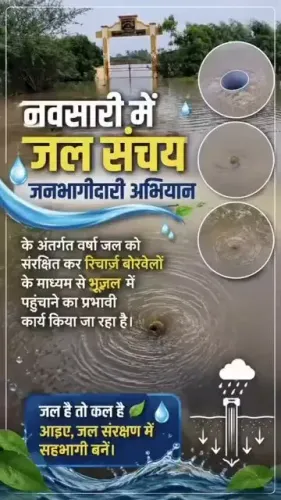
The post is tagged with #JalShakti, #WaterConservation, #CatchTheRain, and #JalHaiToKalHai — the official hashtags of two flagship central schemes. The Jal Shakti Abhiyan, launched in 2019, targeted 256 water-stressed districts across India to build conservation awareness and physical structures. The Catch the Rain campaign, initiated in 2021 under the Jal Shakti Ministry, directs states to complete rainwater harvesting infrastructure before each monsoon season under the slogan Jal Hai To Kal Hai ('Water today, tomorrow exists').
The Jal Shakti Ministry itself was constituted in May 2019 by merging the erstwhile Ministry of Water Resources with the Ministry of Drinking Water and Sanitation, consolidating India's water governance under a single portfolio. C. R. Paatil, a senior BJP leader and former Gujarat BJP state president, heads the ministry.
Stakeholders and Impact
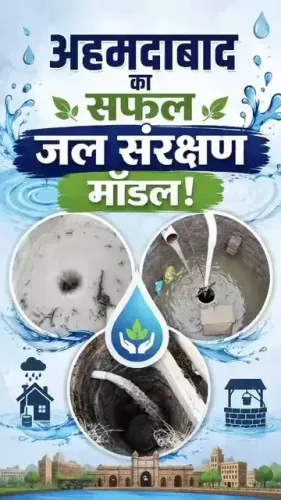
Farmer-led groundwater recharge models have gained policy traction as a cost-effective complement to large-scale canal and dam infrastructure, especially in drought-prone states like Gujarat, Rajasthan, and Maharashtra. When a working farmer independently constructs recharge structures, it serves as a replicable demonstration for neighbouring communities without requiring government expenditure.
Rural communities in arid talukas such as Disa depend heavily on groundwater for both drinking and irrigation. Decentralised rainwater harvesting directly reduces their exposure to seasonal water scarcity and crop failure, making such grassroots initiatives a practical extension of national water policy goals.
What's Next
The minister's public acknowledgement of a village-level initiative signals continued central government interest in spotlighting citizen-led conservation as the 2026 monsoon season progresses. State-level implementation reports of the Catch the Rain campaign are expected to reflect district-wise progress in Gujarat and other water-stressed states. Any new central guidelines for scaling farmer-led recharge structures across arid belts could follow ahead of the next pre-monsoon planning cycle.
Point of View
The messaging shifts water conservation from a top-down mandate to a grassroots cultural norm, which is precisely the framing the Catch the Rain campaign has pursued since 2021. Gujarat, as Paatil's home-state political base and a chronically water-stressed region, provides an ideal backdrop for this narrative. The public commendation also creates soft pressure on state agencies to identify and replicate similar farmer-led models before the monsoon window closes. Taken together, it fits a broader BJP governance pattern of using ministerial social media to personalise and humanise large-scale policy programmes.
NationPress
11 Jul 2026
Frequently Asked Questions
What did C. R. Paatil say about the Gujarat farmer?
Minister Paatil praised a farmer in Nawa Nesda, Disa taluka, Gujarat, for independently building scientific rainwater harvesting and groundwater recharge structures on his farmland, calling the effort inspirational and extending his congratulations.
What is the Catch the Rain campaign?
Catch the Rain is a water conservation campaign launched in 2021 by the Jal Shakti Ministry under the slogan 'Jal Hai To Kal Hai,' directing states to complete rainwater harvesting structures before the monsoon season each year.
What is the Jal Shakti Abhiyan?
The Jal Shakti Abhiyan is a nationwide campaign launched in 2019 to promote rainwater harvesting and groundwater recharge across 256 water-stressed districts in India.
Where is Nawa Nesda village?
Nawa Nesda is a village in Disa taluka, Banaskantha district, Gujarat — an arid region in north Gujarat known for water scarcity and local water management initiatives.
Why is farmer-led groundwater recharge important in Gujarat?
Gujarat's arid districts, including Banaskantha, face recurring drought and groundwater depletion. Farmer-led recharge structures provide a low-cost, replicable model that complements large government irrigation schemes and reduces community dependence on erratic rainfall.