Jal Shakti Minister Paatil Reviews JJM Progress with Chhattisgarh MPs
Synopsis
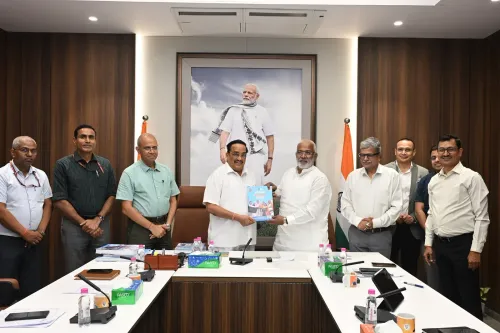
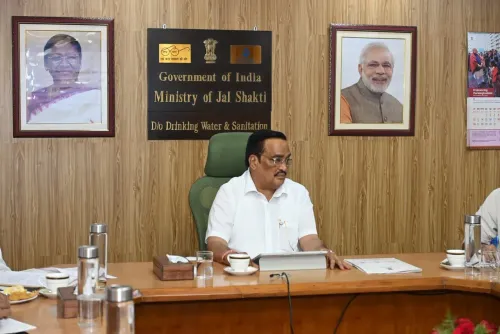
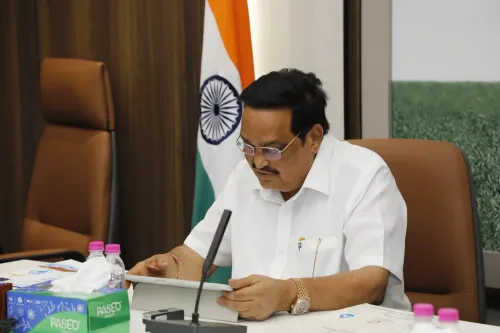
Union Jal Shakti Minister C. R. Paatil held a detailed review meeting in New Delhi with Chhattisgarh Deputy CM Arun Sao, MoS Tokhan Sahu, and state MPs on the effective implementation of the Jal Jeevan Mission, seeking local feedback to improve last-mile water delivery to rural households.
Key Takeaways
Union Jal Shakti Minister C.
Paatil chaired a review meeting in New Delhi on 28 July 2026 on the Jal Jeevan Mission in Chhattisgarh.
Chhattisgarh Deputy Chief Minister Arun Sao and Minister of State Tokhan Sahu participated alongside state MPs.
MPs were urged to ensure active participation in JJM implementation within their parliamentary constituencies.
Suggestions and feedback from elected representatives are being used to address local challenges and improve scheme delivery.
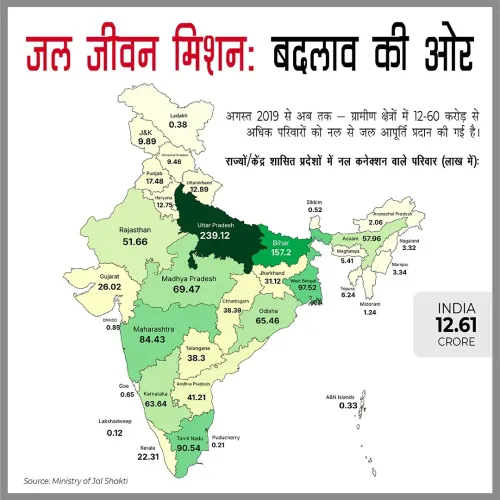
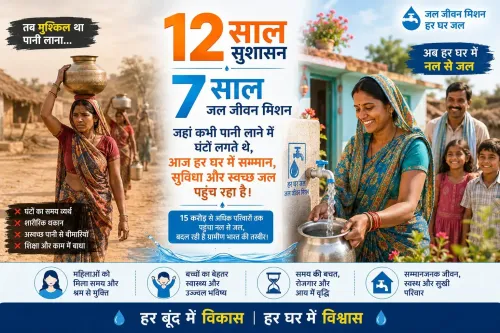
The Jal Jeevan Mission , launched in 2019 , aims to provide functional tap water connections to every rural household in India.
The meeting reflects the centre's continued push to close implementation gaps through state-level coordination mechanisms.
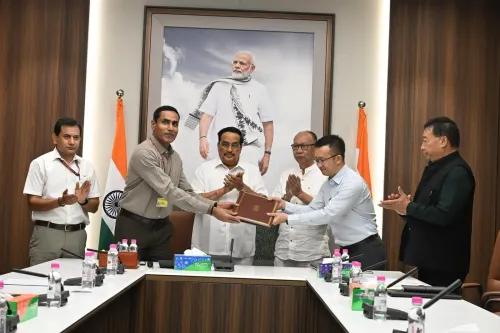
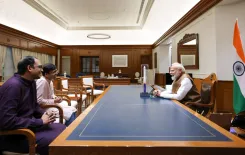
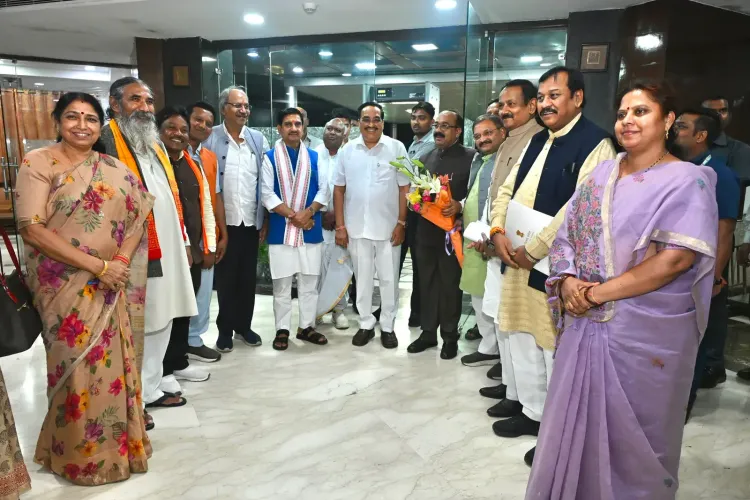
Union Jal Shakti Minister C. R. Paatil on Monday, 28 July 2026, held a detailed review meeting in New Delhi on the effective implementation of the Jal Jeevan Mission (JJM) in Chhattisgarh, alongside the state's Deputy Chief Minister and Members of Parliament.
Context
The meeting brought together Chhattisgarh Deputy Chief Minister Arun Sao and Minister of State for Housing and Urban Affairs Tokhan Sahu, along with Members of Parliament from the state. Minister Paatil solicited suggestions from the MPs and urged them to ensure active participation in the effective rollout of the Jal Jeevan Mission within their respective parliamentary constituencies.
Paatil noted that feedback from elected representatives plays a critical role — in his words, 'जनप्रतिनिधियों से प्राप्त सुझाव एवं फीडबैक योजनाओं के बेहतर संचालन में महत्वपूर्ण भूमिका निभाते हैं' ('suggestions and feedback received from people's representatives play an important role in better management of schemes') — in addressing local challenges and strengthening public participation.
Policy Backdrop
The Jal Jeevan Mission was announced in the 2019 Union Budget with the goal of delivering functional household tap connections for drinking water to every rural household across India. The deadline, originally set for 2024, was subsequently extended as implementation gaps persisted in several states, including those with challenging terrain and dispersed habitations.
The mission represents one of the central government's largest rural infrastructure commitments, with the stated objective of ensuring clean drinking water access for every rural family. Prime Minister Narendra Modi has been identified as the political anchor of the scheme, and Paatil reaffirmed in his post that the government remains 'committed that the benefits of Jal Jeevan Mission reach every rural family and clean drinking water is available at every home.'
Stakeholders and Impact
Chhattisgarh, a state with a significant rural and tribal population, presents distinct implementation challenges for water supply schemes, including remote habitations and varying groundwater availability. The involvement of Chhattisgarh MPs in the review signals an effort to bridge the gap between central planning and ground-level delivery by routing local intelligence through elected representatives.
Such coordination meetings between central ministries and state-level leaders follow an established pattern of using parliamentary constituencies as units for monitoring flagship infrastructure programmes. The feedback mechanism is designed to help adapt national policy frameworks to regional realities, particularly in states where last-mile connectivity remains a persistent challenge.
What's Next
The suggestions gathered from Chhattisgarh MPs are expected to feed into operational decisions on scheme management and local problem-solving under the mission. Observers will watch for updated JJM coverage data for Chhattisgarh, any revised state budget allocations for rural water infrastructure, and parliamentary questions that may surface the on-ground status of tap connections in the state's constituencies.
With the mission's extended timeline under active scrutiny, the pace of household tap connection coverage in states like Chhattisgarh will be a key indicator of whether the centre's renewed coordination push translates into measurable progress on the ground.
Point of View
Which has faced scrutiny over the gap between tap connections reported and those actually functional, such feedback loops carry operational significance beyond optics. The presence of both Deputy CM Arun Sao and MoS Tokhan Sahu signals coordinated BJP alignment between the state government and the centre on a scheme that carries high political salience in a state with a large rural and tribal voter base. Whether the feedback gathered translates into measurable improvements in Chhattisgarh's JJM coverage figures will be the real test of this coordination exercise.
NationPress
28 Jul 2026
Frequently Asked Questions
What is the Jal Jeevan Mission and what is its goal?
The Jal Jeevan Mission is a central government scheme launched in 2019 to provide functional household tap connections for clean drinking water to every rural household in India. Its original deadline was 2024, which was subsequently extended.
Why did C. R. Paatil meet Chhattisgarh MPs regarding Jal Jeevan Mission?
Union Jal Shakti Minister C. R. Paatil met Chhattisgarh MPs in New Delhi on 28 July 2026 to review the effective implementation of the Jal Jeevan Mission in the state, seek their suggestions, and urge them to actively participate in the scheme's rollout in their constituencies.
Who attended the Jal Jeevan Mission review meeting for Chhattisgarh?
The meeting was attended by Chhattisgarh Deputy Chief Minister Arun Sao, Minister of State for Housing and Urban Affairs Tokhan Sahu, and Members of Parliament from Chhattisgarh, along with Union Jal Shakti Minister C. R. Paatil.
What is the current status of Jal Jeevan Mission in Chhattisgarh?
Updated coverage data for Chhattisgarh under the Jal Jeevan Mission is expected to be released following the review. The state, with its large rural and tribal population, presents specific implementation challenges that the meeting aimed to address through MP feedback.
What role do MPs play in the Jal Jeevan Mission?
MPs are being asked to serve as active participants in the mission's implementation within their parliamentary constituencies, providing ground-level feedback on local challenges and helping ensure that the scheme's benefits reach every rural family.